
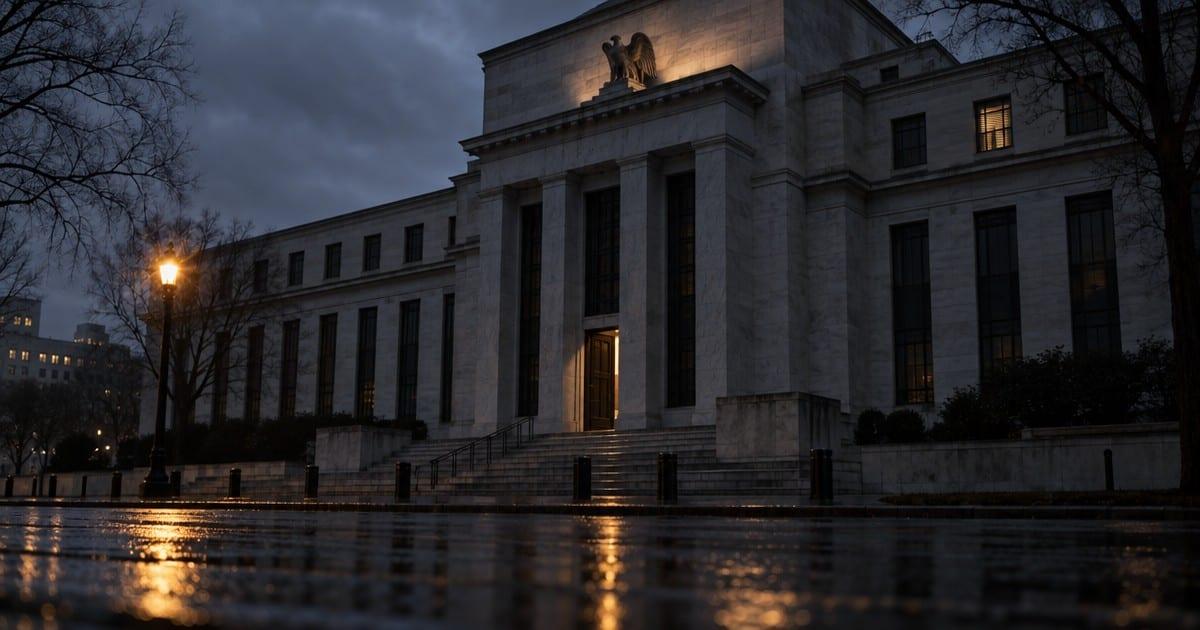
WASHINGTON, D.C. — The Federal Reserve Board on Wednesday announced the termination of its enforcement actions against Gardner Bancshares, Inc. and Small Business Bank, quietly closing the books on two regulatory matters that had placed the institutions under federal supervision. The announcement, issued without elaboration or explanation of the underlying issues, marks the end of a period of heightened scrutiny for the banks — but leaves the public with few answers about what prompted the original actions or why they were resolved now.
Enforcement actions are typically imposed when the Fed identifies unsafe or unsound banking practices, violations of law, or weaknesses in capital, management, or compliance. The Fed's public orders often require banks to take corrective measures, submit plans, or restrict certain activities. The termination of those actions means the Fed has determined the banks have satisfied the requirements of the original orders — but the specifics of what those requirements were, and how they were met, are not laid out in the announcement.
The identities of the banks involved add a layer of intrigue. Gardner Bancshares is a bank holding company, and Small Business Bank operates under its umbrella. Neither institution is a household name, but both serve local markets where access to credit and banking services is critical for small businesses and families. For those communities, the Fed's decision could mean a return to normal operations and a signal that the institutions are on solid footing.
The announcement comes amid a broader climate of regulatory scrutiny in the banking sector. Just this week, federal officials in Oregon announced a series of enforcement actions tied to COVID-19 relief fraud, with the U.S. Attorney's Office for the District of Oregon and the Small Business Administration's Office of Inspector General pursuing millions in fraudulent loans. The crackdown, dubbed "Operation No Doze," has resulted in arrests and civil recoveries, and federal officials are preparing to send thousands of demand letters to applicants whose loans showed signs of fraud. That context — of aggressive federal pursuit of financial wrongdoing — makes the Fed's quiet closure of the Gardner and Small Business Bank cases all the more notable.
Meanwhile, the banking industry continues to consolidate. First Mid Bancshares, Inc. of Mattoon, Illinois, announced its third-quarter 2026 results on Thursday, reporting record earnings and a pending acquisition of Evergreen Bancshares and its subsidiary American Bank of Freedom. CEO Matthew Smith said the deal would deepen First Mid's presence in Missouri, Illinois, and Indiana and position the company to move past the $10 billion asset threshold. Asset quality was described as strong, with lower classifieds and negligible net charge-offs. The contrast between the health of regional banks like First Mid and the Fed's termination of enforcement actions against Gardner and Small Business Bank suggests a sector in flux — with winners emerging and regulatory problems being resolved, at least on paper.
What exactly the Fed found at Gardner Bancshares and Small Business Bank, and what corrective steps were taken, remains unknown. The Fed's announcement did not disclose the nature of the original enforcement actions or the terms of their termination. A review of the Fed's public enforcement actions database would normally reveal the underlying orders, but the agency's announcement offered no such detail. Calls to the Federal Reserve Board for comment were not immediately returned.
For small business owners who rely on community banks for loans and credit lines, the closure of the enforcement actions may come as a relief. But for those who have watched the Fed's regulatory apparatus expand in recent years — and who have seen small banks squeezed by compliance costs — the lack of transparency is frustrating. The Fed's decision to close these cases without explanation only reinforces the sense that the agency operates behind a veil, accountable to no one.
Our Take
Here's the thing about the Federal Reserve: it holds immense power over the financial lives of every American, yet it answers to almost no one. When the Fed opens an enforcement action against a bank, the public rarely learns the details. When it closes one, the public learns even less. Wednesday's announcement is a perfect example — two banks, two terminated actions, zero explanation.
Patriots, ask yourselves: why should the American people trust a regulatory agency that operates in such secrecy? The Fed's enforcement process is a black box. Banks are investigated, penalized, and cleared, all without the public ever knowing what happened. That's not accountability — that's the administrative state at its worst.
This isn't about these two banks specifically. It's about a system that treats the American people as spectators in their own economy. The Fed's decisions can determine whether a small business gets a loan, whether a community has a local bank, whether a family can buy a home. And yet the agency hides behind vague announcements and closed-door proceedings.
If the Fed has nothing to hide, it should release the full details of these enforcement actions and their termination. If Gardner Bancshares and Small Business Bank are truly in the clear, what's the harm in telling the public what went wrong and how it was fixed? The silence speaks louder than any press release.
We deserve a banking system that is transparent, accountable, and free from the shadows of federal overreach. The Fed's quiet closure of these cases is just the latest reminder that the administrative state answers to itself, not to We the People. It's time to demand better.
