
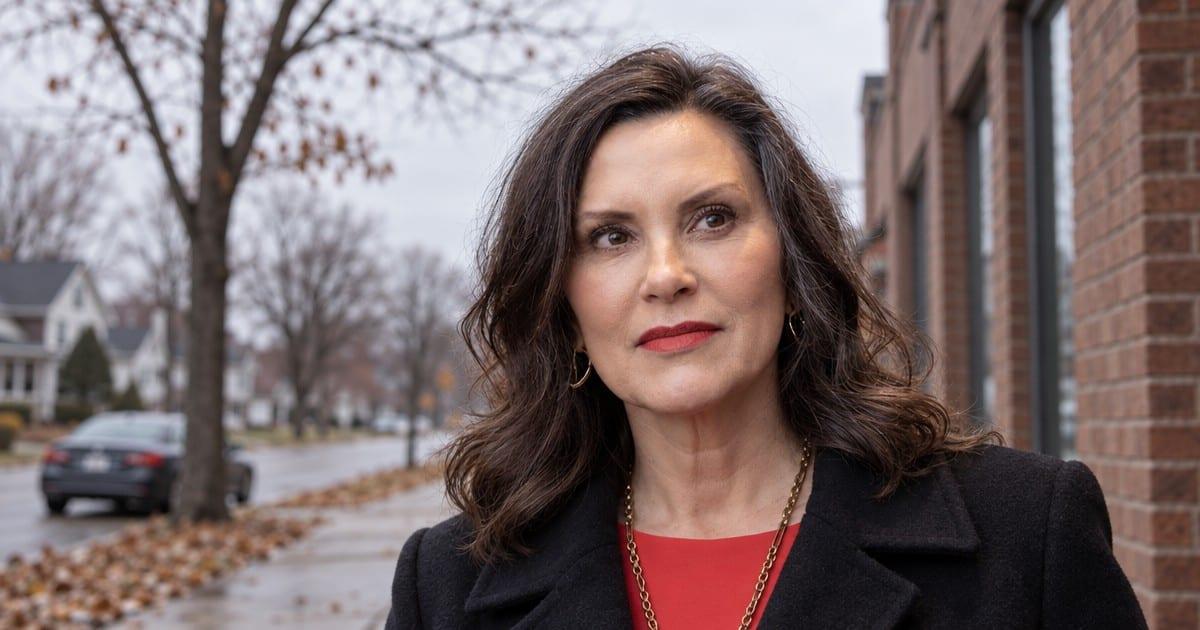
More than 750,000 Michigan residents will pay double-digit increases in their health insurance premiums next year after the administration of Democratic Gov. Gretchen Whitmer signed off on new rates, Breitbart reported Wednesday.
The Michigan Department of Insurance and Financial Services (DIFS) approved a statewide average increase of 14.2 percent for individual policies and 9.6 percent for small business plans for 2027, according to the Midwesterner. Some carriers were granted far more: UnitedHealthcare Community Plan received a 25.2 percent hike for individual policies, Meridian Health Plan of Michigan 24 percent, and Molina Healthcare 22.4 percent. McLaren Health Plan Community was approved for 15.7 percent, followed by Alliance Health and Life Insurance at 14.1 percent, Blue Cross Blue Shield Mutual at 12.8 percent, Health Alliance at 12.6 percent, and Oscar Insurance at 11.9 percent.
For small business plans with fewer than 51 employees, DIFS approved a 10.7 percent increase for 133,899 Michiganders with Blue Care Network, 7 percent for 133,192 on Blue Cross Blue Shield Mutual, and 11.6 percent for 87,423 on Priority Health. Alliance Health and Life Insurance and Health Alliance Plan each drew 11.6 percent, Priority Health Insurance Company 10.7 percent, UnitedHealthcare Community Plan 14.5 percent, and UnitedHealthcare Insurance Company 14.8 percent.
The increases compound a years-long trend in the Great Lakes State. In 2025, individual policies jumped 20.2 percent and small business rates rose 11.1 percent, the Detroit Free Press reported. Bill Tuthill, vice president of Individual Business for Blue Cross, told the Free Press the carrier was working through the approved rates.
Under Michigan law, health insurance rates must be approved through DIFS. The agency reviews insurer requests, public comment, and financial details before determining whether premium requests are reasonable and comply with state and federal law.
The hikes arrive as open enrollment approaches and as voters rank health care costs among their top economic concerns. National Memo reported Wednesday that employer-sponsored insurance costs will leap 8.2 percent in 2027, driving up worker premiums. Obamacare premiums are also rising nationwide, with millions facing another round of double-digit increases.
Republican lawmakers in the state House, where they hold a slim majority, have introduced measures to rein in health care costs. They face organized opposition from a lobby group and a November election that could change the makeup of the body, Breitbart reported. The specific contents of the GOP proposals and the identity of the opposing lobby group were not detailed in the initial reporting.
Tom Buchmueller, a professor of economics and public policy at the University of Michigan's Ross School of Business, discussed the impact of the approved rates with WWJ's Amanda Forrester ahead of open enrollment.
Our Take
Here is what 14.2 percent looks like outside the press release. A family paying $1,000 a month for an individual-market plan is looking at roughly $1,142 a month — about $1,700 more over the year, before they use a single doctor. A small business owner covering ten employees absorbs thousands in new costs or shifts them onto workers who already got hammered in 2025, when individual rates in Michigan rose 20.2 percent.
Whitmer's Department of Insurance and Financial Services had the authority to scrutinize these requests. It approved 25.2 percent for UnitedHealthcare Community Plan and 24 percent for Meridian anyway. The agency's review process exists precisely to ask whether such requests are reasonable. Michigan families are entitled to know what the reviewers concluded about a quarter-of-a-million-dollar question for the carriers and a four-figure question for their household.
The pattern is not random. Michigan's individual market has now posted back-to-back years of double-digit increases — 20.2 percent in 2025, 14.2 percent in 2027 — while the state's Democratic administration controls the approval lever. Republicans in the House have bills on the table to bring costs down. A lobby group is fighting them, and the November election will decide whether those bills get a vote or die in committee.
Patriots in Michigan should ask every candidate one question before they cast a ballot: did you support the rate relief bills, or did you side with the lobbyists who opposed them? The answer will show up in your premium notice either way.
