
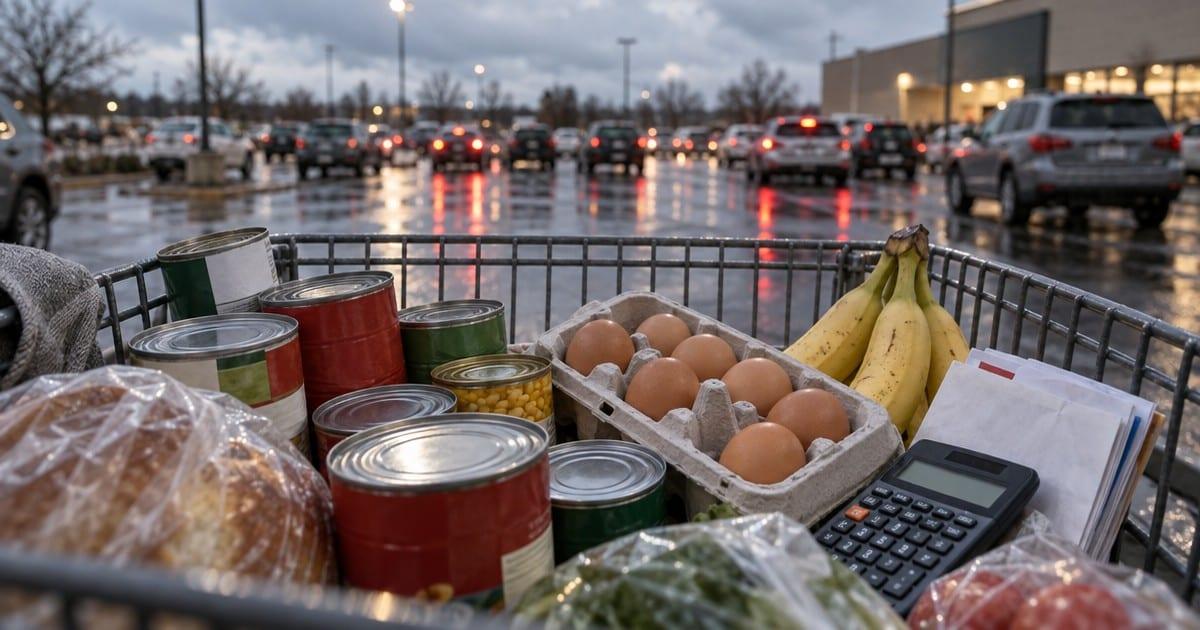
American households are still getting hammered at the checkout counter, and the latest government data proves it. The Bureau of Labor Statistics' most recent consumer price index shows overall food prices up 2.5% over the last year, with the food-at-home index rising 1.8% and the cost of eating out jumping 3.5% — nearly double the grocery increase. That means families trying to save by cooking at home are still paying more for the basics, while the Federal Reserve's 2% inflation target remains out of reach.
According to Fox Business, there are concrete steps shoppers can take to fight back — and they don't require extreme couponing or driving across town to five different stores. Kelli Smith, executive director of financial planning at Edelman Financial Engines, told the outlet that the first line of defense is planning ahead with what she called "an old-fashioned grocery list" built around the week's meal plan.
"Buying staple items in bulk can also make sense, but only if they're products your household will realistically use before they expire," Smith told Fox Business.
That caveat matters. Bulk buying feels like a win until half the warehouse club haul ends up in the trash. Smith also pointed to digital coupons offered through grocery store apps and loyalty programs, saying it's worth a few minutes to review available offers before heading out the door — but she warned against letting the deals drive the shopping list.
"Avoid chasing deals that lead to unnecessary spending. A coupon doesn't create savings if it's for something you wouldn't have purchased in the first place," she said.
Rewards programs can pay off too, according to Smith, when they line up with normal spending habits — fuel rewards, loyalty points, or cashback at a store or gas station the household already uses. Another expert, identified only as Jenkin in the Fox Business report, recommended limiting grocery runs to once a week to stock up, rather than making multiple small trips or grabbing lunch from the hot food bar. Jenkin also advised shoppers to check the unit price rather than assuming a bigger package is always the better deal.
The savings tactics come as other coverage highlights how much waste is baked into typical grocery routines. A Prissmel Acres post making the rounds this week argued that rigid meal-prep schedules often backfire when tired workers abandon cooking and order delivery instead, paying twice for the same night's dinner. The post recommended keeping food visible and easy to reach so it actually gets eaten — an inventory habit that keeps money in the bank instead of the trash bin.
Regional data shows the stakes. According to an analysis drawing on USDA figures and adjusted for Florida's regional variations, a single adult in the Sunshine State can expect to spend roughly $300 to $550 per month on food, while a family of four may spend between $800 and $1,200 — with urban areas like Miami, Orlando, and Tampa running higher than rural communities near agricultural regions.
Meanwhile, the broader cost-of-living picture remains grim. Fox Business host Dagen McDowell warned this week that the new cost-of-living adjustment will accelerate the Social Security fiscal crisis, detailing that retirees face a looming 22% benefit cut by 2032 due to a collapsing worker-to-retiree ratio. In other words, the same inflation forcing families to rethink their grocery lists is also threatening the retirement checks millions of Americans depend on.
The advice is straightforward: plan meals, make a list, use digital coupons selectively, buy bulk only what you'll use, consolidate trips, and compare unit prices. None of it requires a government program or a subsidy. It requires discipline — and a refusal to let coupons and rewards programs turn into an excuse to spend more.
Our Take
Here's the uncomfortable truth the legacy media won't say out loud: Americans shouldn't need a financial planner on speed dial just to afford bread and eggs. The Biden administration's spending spree and the Federal Reserve's slow response lit the inflation fire, and working families are still getting burned at the register. The Trump-Vance administration inherited this mess, and while tariffs and energy dominance are working to bring costs down over time, the damage to household budgets is real right now.
That's why these tips matter. Every dollar a family keeps out of the grocery cart is a dollar the bureaucrats and the big-box cronies don't get. Planning meals and checking unit prices isn't glamorous, but it's the kind of self-reliance that built this country — and it's a hell of a lot more effective than waiting for Washington to ride to the rescue.
So the next time you walk into that store, ask yourself: are you shopping with a plan, or are you letting the coupon aisle and the hot food bar pick your pocket? Patriots, it's time to shop like you mean it.
