
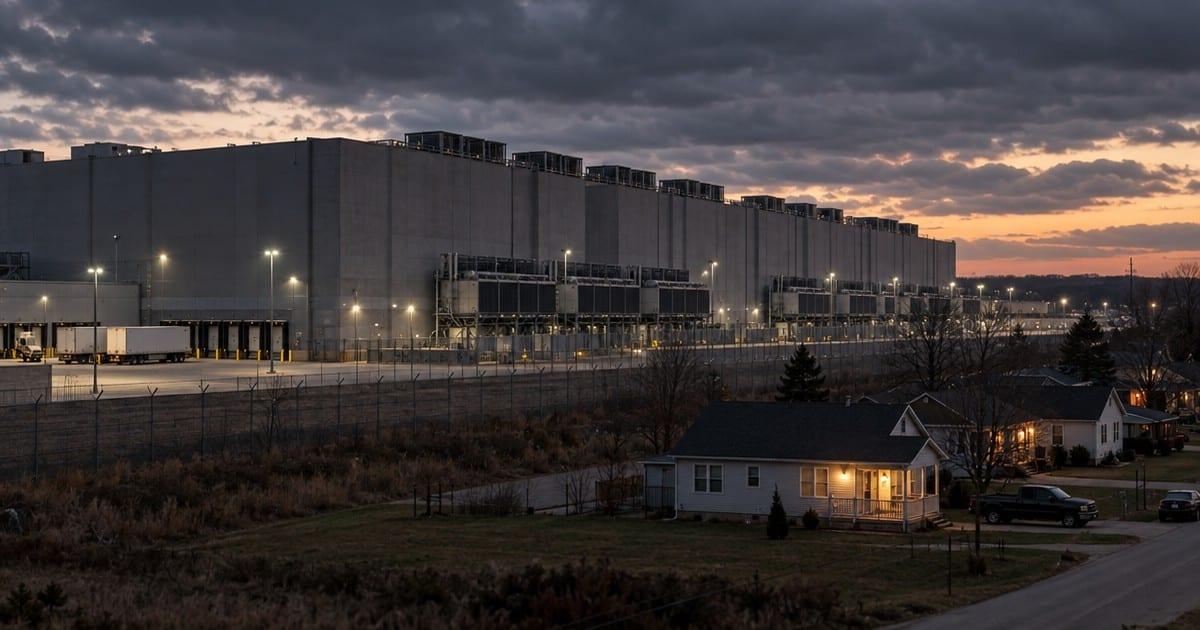
Political advertising about data centers has swung sharply negative on Facebook and Instagram leading up to the midterm elections, according to a new analysis from Pew Research Center. Pew analysts examined 20,751 ads about social issues, elections or politics that mentioned data centers and ran on the platforms in the United States between January 1 and October 24.
The tone flipped over the course of the year. In January, 42 percent of political ads mentioning data centers were supportive and 31 percent were critical, with the rest taking no clear position. By October, only three percent were clearly in favor, while 57 percent expressed opposition—a roughly 19-to-1 negative ratio at the close of the cycle.
Spending tracked the shift. Advertisers spent almost $12 million on political ads mentioning data centers between July 27 and October 24, a 90-day window Pew used for a second, more detailed look covering 13,956 ads.
About 61 percent of that money went toward ads that did not promote a specific candidate—the kind typically funded by advocacy groups. Among those, 56 percent opposed data centers while just 13 percent supported them. The remaining 39 percent backed specific candidates. Among those campaign ads, 72 percent promoted Democratic candidates and 15 percent promoted Republican candidates, with the rest tied to independents or candidates whose party affiliation could not be determined, per Pew.
Pro-data center messaging barely showed up in campaign advertising at all, appearing in less than one percent of candidate ads. Most campaign ads critical of data centers came from both parties, and while Democratic candidates were more likely than Republicans to run ads on the subject in the first place, candidates from either party were about equally critical when they addressed it.
A handful of themes recur. Corporate involvement in data center development came up in 30 percent of all ads analyzed, followed by energy use at 24 percent, environmental effects at 17 percent and water usage at 15 percent. Nearly half of anti-data center ads—47 percent—raised concerns about corporate interests, whether tech companies or utility providers, roughly double the rate in pro-data center ads, according to the Pew findings.
The story is bigger than the ad totals. Coverage from Dissenter noted the $173 million figure circulating around midterm data center advertising and argued the same AI companies driving up local power demand are writing checks to protect their interests. TechCrunch reported that at a Brooklyn midterm party five days before Election Day, every conversation—from a council member's fireside chat to a debate about the Democratic Party—kept circling back to AI and data centers. A separate analysis noted the locations of today's battles could provide clues about 2028 battlegrounds.
What the Pew numbers make plain is that the data center boom has become a kitchen-table issue. Voters are being asked to weigh corporate land deals, strain on local grids and water supplies against promises of jobs and tax revenue, and candidates in both parties have concluded that defending the buildout is a losing position. The spending breakdown shows where the energy is: advocacy groups are funding most of the anti-data center messaging, and Democratic candidates are amplifying it far more than Republicans.
Our Take
Here's the part the political class won't say out loud: the same AI giants draining local power grids and spiking household utility bills are the ones bankrolling ads to protect their turf. The Pew data shows anti-data center ads raising corporate-interest concerns at nearly double the rate of pro-data center ads—and voters have figured out why.
Notice who is running the most ads: Democratic candidates, 72 percent of the candidate-sponsored spots in the 90-day window. That is not a coincidence. The Left has found a populist cudgel against Big Tech's land grabs, and it is working. Meanwhile, Republicans have barely shown up—15 percent of candidate ads—even though their own voters are the ones most likely to be hit by the energy costs and water strains of these projects.
Conservatives should be asking why the party of America First is ceding this ground. Data centers built on cheap land with massive tax abatements and federal subsidies are the definition of corporate cronyism. If Republicans won't fight for ratepayers and rural landowners against the AI buildout, Democrats will gladly do it for them—and take the credit in 2028.
The $12 million in 90 days is a warning shot. The data center fight is no longer a zoning-board story. It is a national campaign issue, and the side that ignores it will lose.
