
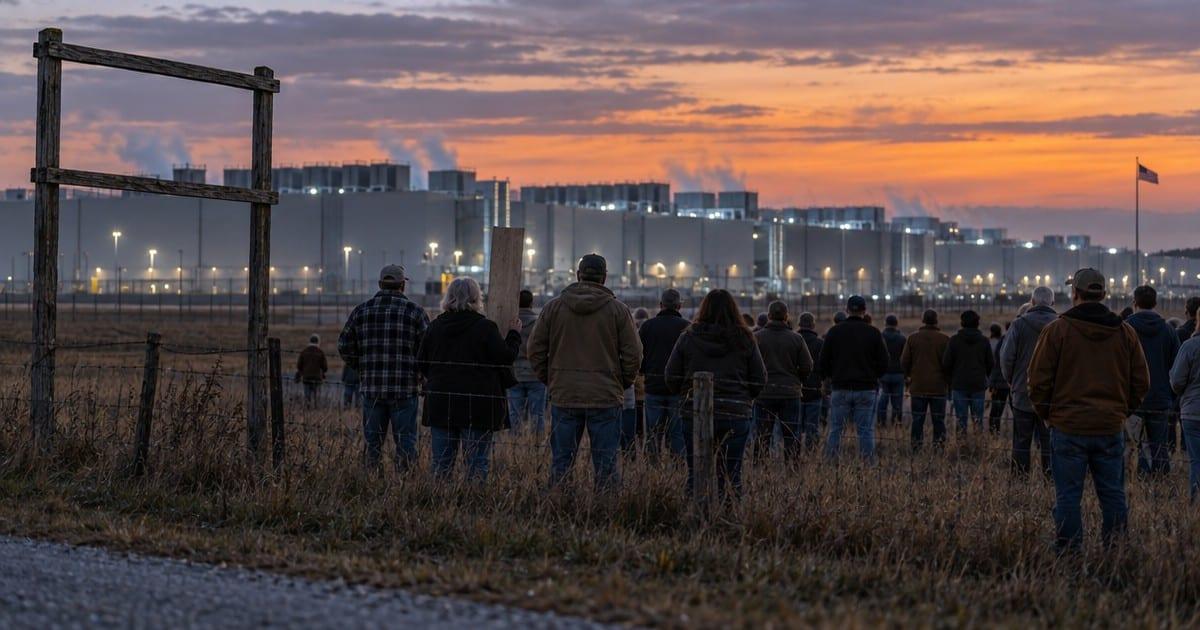
Political advertising about data centers swung sharply negative on Facebook and Instagram in the run-up to the November 3 midterm elections, according to a new Pew Research Center analysis of 20,751 ads that mentioned data centers and ran in the United States between January 1 and October 24.
The tone flipped hard over the course of the year. In January, 42 percent of political ads mentioning data centers were supportive and 31 percent were critical, with the rest taking no clear position, Pew found. By October, only three percent were clearly in favor, while 57 percent expressed opposition — a nearly 19-to-1 tilt against the facilities.
The money followed the shift. Pew's second, more detailed look — a 90-day window from July 27 through October 24 covering 13,956 ads — found advertisers spent almost $12 million on political ads mentioning data centers.
Who's Paying — and Who's Running
About 61 percent of that spending went toward ads that did not promote a specific candidate, the kind typically funded by advocacy groups, per Pew. Of those, 56 percent opposed data centers while just 13 percent supported them.
The remaining 39 percent backed specific candidates. Among those campaign ads, 72 percent promoted Democratic candidates and 15 percent promoted Republican candidates, with the rest tied to independents or candidates whose party affiliation could not be determined. Pro-data center messaging barely registered in candidate advertising at all — appearing in less than one percent of candidate ads — and most campaign ads critical of data centers came from both parties. Democratic candidates were more likely than Republicans to run ads about data centers in the first place, though when candidates from either party addressed the subject, Pew found they were about equally critical.
A separate analysis of the same period, reported by Dissenter, put total data-center-related midterm ad spending at $173 million and found opposition outpacing supporters nearly 19-to-1 by October.
The Kitchen-Table Themes Driving the Backlash
The recurring themes in the ads cut to household concerns. Corporate involvement in data center development came up in 30 percent of all ads analyzed, followed by energy use at 24 percent, environmental effects at 17 percent and water usage at 15 percent.
Nearly half of anti-data center ads — 47 percent — raised concerns about corporate interests, whether tech companies or utility providers, roughly double the rate in pro-data center ads, according to Dissenter's read of the data.
The issue has clearly escaped the tech-policy briefing rooms. At a midterm election event hosted by media company Newsreel in a Brooklyn warehouse this month, TechCrunch reporter Rebecca Bellan moderated a panel on data centers and described a room consumed by the topic. When she asked the crowd, "Who here is pro-AI data center?" she was promptly booed, she wrote.
Bellan reported that attendees are upset that big tech companies appear to be cutting secret deals with local officials to build billion-dollar data centers, and that in some cases zoning rules make it unclear what is being built until it's too late to protest. She noted the backlash could sway some midterm races on November 3.
The scale of the spending — and the lopsided tone — makes data centers one of the few issues this cycle where the advertising is running hard against a major industry rather than a party figure. Pew's numbers show the cost argument made in the ads is landing where politicians rarely want it to: the power bill.
Our Take
Here's what the consultant class won't say out loud: this backlash isn't a plot or a smear campaign. It's what happens when you tell a family in Virginia or Ohio or Arizona that their electric bill is climbing, their water table is dropping and their local zoning board signed off in the dark — all so a trillion-dollar tech giant can power its next AI cluster.
Notice the numbers Pew found. Sixty-one percent of the money isn't even coming from candidates. It's advocacy money, the kind that floods in when an industry wants to buy its way past a planning commission. And the corporate-interests theme shows up in nearly half of the anti-data-center ads. That's not astroturf. That's voters doing the math.
And look at the candidate split: 72 percent of candidate ads promoting data center messaging went to Democrats. If Republicans want to win the argument that they're the party of working Americans, they should be out front on this — not letting the Left own a legitimate pocketbook grievance. The pro-data-center side barely ran ads at all, less than one percent of candidate spots. The industry's strategy appears to have been silence and local backroom deals.
Here's the question worth asking your own representative before November 3: when a data center comes to your county and asks for the grid capacity, the tax abatement and the water rights — do you work for the people paying the bills, or for the company sending the checks? The ads already answered that for a lot of voters. Now the ballots will.
