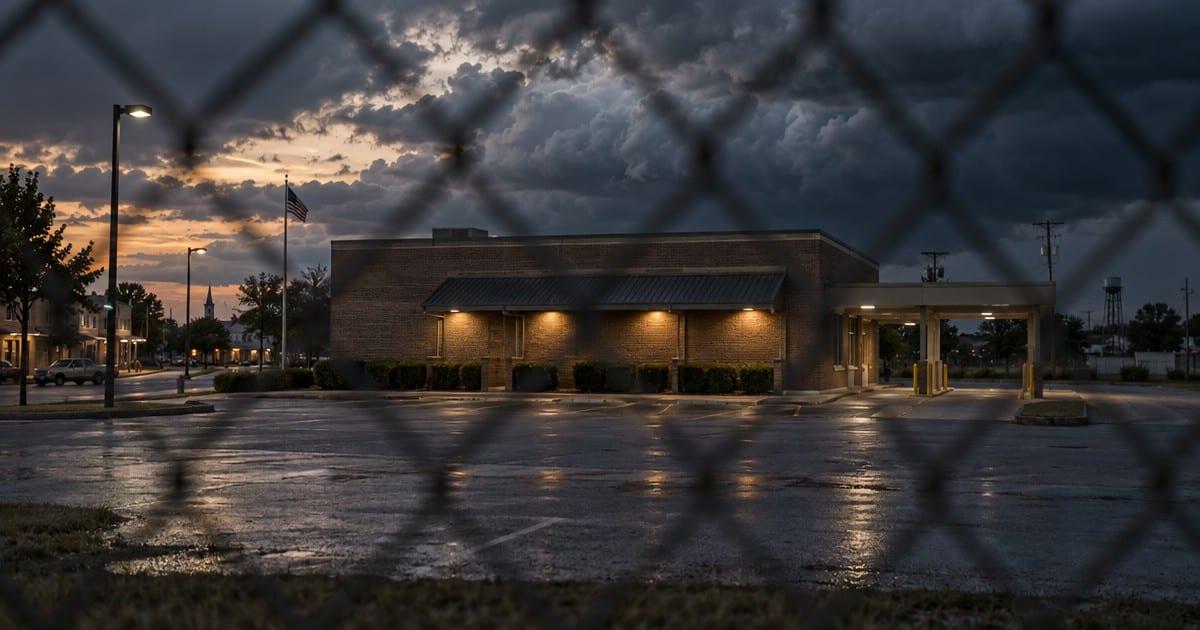
The Federal Reserve Board on Wednesday approved an application by The Bank of Nova Scotia to acquire Maple Financial Holdings, Inc., and through it, MapleMark Bank — a small Oklahoma state member bank that will relocate its main office to Dallas as a Texas state member bank.
The order, FRB Order No. 2026-27, was issued October 29, according to The Ritz Herald, which first reported the approval. The Bank of Nova Scotia, headquartered in Toronto and one of Canada's largest banks, elected to be treated as a financial holding company in the United States. It currently runs only an agency in New York, a branch in Texas, representative offices in Florida and California, and some nonbanking subsidiaries — no U.S. commercial bank. Maple Financial Holdings, based in Dallas, reported about $1.0 billion in consolidated assets as of June 30, 2026. Its sole subsidiary, MapleMark Bank of Tulsa, holds roughly $837.5 million in deposits, less than one percent of total U.S. insured deposits.
The deal will be structured as a merger of a newly formed Texas subsidiary of Scotiabank into Maple Financial. Notice was published in the Federal Register on July 7, 2026. The Fed received two adverse comments, both from the same commenter, and reviewed the application under section 3 of the Bank Holding Company Act.
The Board determined the acquisition would not create a monopoly or substantially lessen competition in any banking market. Scotiabank does not currently compete directly with Maple Financial in any retail banking market. The U.S. Department of Justice advised the proposal would not have a significant adverse effect on competition, and the appropriate banking agencies raised no objections.
On paper, the math is small: the combined U.S. operations would represent less than one percent of the U.S. banking market. This is not a megabank swallowing a rival. It is a foreign institution buying a foothold — a $1 billion holding company in Texas — and the Fed waving it through after a standard review.
But the approval raises a question the Fed did not address in its order: what happens if a foreign parent needs help? Scotiabank's U.S. footprint will now include an insured depository institution. That means U.S. deposits, U.S. customers, and a U.S. regulator with a seat at the table. The Fed's order does not detail any new capital, liquidity, or resolution requirements tied specifically to the acquisition beyond the standard framework for foreign banking organizations.
It is not yet known whether the two adverse comments — both from the same commenter — raised concerns about the foreign parent's access to U.S. deposit insurance or the conversion of MapleMark's charter from Oklahoma to Texas. The Fed's public order does not summarize the commenter's arguments.
What is known is the scoreboard: a Canadian bank with roughly $1.1 trillion in consolidated assets gets a U.S. bank charter through a Dallas holding company. MapleMark's customers in Tulsa and elsewhere will wake up one morning as customers of a subsidiary of a Toronto-based institution. The branches will likely keep the same signage for a while. The deposits will still be insured. The regulator will still be the Fed.
The Bank of Nova Scotia did not issue a public statement on the approval, and Maple Financial Holdings did not respond to a request for comment by publication time. The Fed's order is final unless challenged in court.
For Americans who pay attention to banking, the approval is a reminder that the Federal Reserve — the same institution that supervises the largest banks in the world — makes decisions about who gets to operate in U.S. markets with little public debate. The Federal Register notice drew two comments. Two. From the same person. That is the extent of public participation in a decision that puts a foreign bank inside the U.S. deposit insurance system.
Our Take
Let's be clear about what just happened. The Federal Reserve — an unelected body of governors — approved a foreign bank's application to buy a U.S. bank, and the only public input came from one person who filed two comments. That is not a knock on Scotiabank, which followed the rules. It is a knock on a system that treats bank charters like paperwork instead of public trust.
Conservatives have warned for years about the concentration of power in the administrative state. The Fed is Exhibit A. It decides who can bank, who can expand, and who gets bailed out. And when the next crisis comes — because there is always a next crisis — the American taxpayer will be on the hook for deposits in banks owned by foreign parents. The Fed's order does not say that. But the FDIC's insurance fund does.
Patriots, this is why we fight for transparency and accountability in our financial regulators. The Fed should not be able to greenlight a foreign acquisition with two public comments and a shrug. Congress should demand a full accounting of how foreign bank expansions affect U.S. deposit insurance exposure. And the next time the Fed asks for more power, remember this: they already have enough.
What do you think? Should foreign banks be allowed to acquire U.S. banks without a full public hearing? Let us know.