
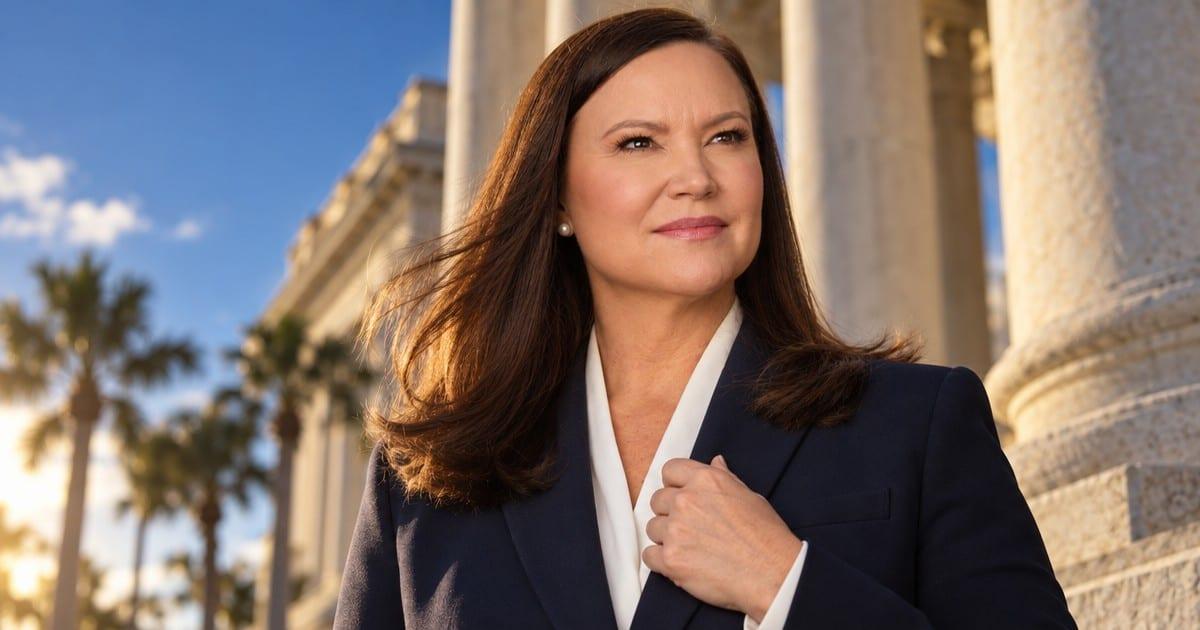
Teamsters President Sean O'Brien endorsed Republican Sen. Ashley Moody in her bid to keep her U.S. Senate seat, Fox News Politics reported Wednesday, leaving Florida Democrats scrambling and Washington prognosticators reeling.
The endorsement marks a significant break from the traditional alliance between organized labor and the Democratic Party, and it lands just six days before voters head to the polls in a midterm election that will determine control of Congress for the final two years of President Donald Trump's second term.
O'Brien's backing of Moody, a former Florida attorney general appointed to the Senate seat, is the latest sign that the GOP's appeal to working-class voters is reshaping the political map—and that union leaders are increasingly willing to buck their old Democratic allies.
Details of the endorsement—including whether it came with a formal rally, a financial commitment, or a get-out-the-vote push—were not immediately released by either campaign. What is clear is the symbolic weight: the Teamsters, one of the nation's largest and most politically active unions, have historically sided with Democrats in federal races, and O'Brien's decision to endorse a Republican in a high-profile Senate contest is anything but business as usual.
The timing is especially awkward for Democrats. The party is already facing a stunning defection in Michigan, where Rep. Haley Stevens endorsed Republican Mike Rogers in the Senate race just days before the election, prompting Senate Minority Leader Chuck Schumer to publicly slam what he called Stevens' "despicable betrayal," according to reporting from other outlets. Now, Democrats must also contend with a union boss praising a Republican incumbent in a state they had hoped to compete in.
Moody, for her part, has touted her law-and-order credentials and her alignment with the Trump administration's agenda. Florida has shifted sharply toward Republicans in recent cycles, and Moody's appointment to the seat gave the GOP a well-funded incumbent with statewide name recognition. O'Brien's endorsement reinforces that advantage and could complicate Democratic efforts to peel away working-class voters who have drifted toward the GOP in recent elections.
O'Brien has previously signaled openness to working with Republicans, meeting with Trump and other GOP figures during the current election cycle. His decision to back Moody is consistent with that posture—and it underscores a broader realignment in American politics, where union members and their leaders are increasingly prioritizing issues like trade, immigration enforcement, and domestic manufacturing over party loyalty.
For Republicans, the endorsement is a talking point tailor-made for the closing days of the campaign: proof, they will argue, that even traditional Democratic constituencies are fed up with the left's cultural obsessions and open-borders policies. For Democrats, it is another unwelcome distraction in a cycle that has already seen high-profile defections and internal strife.
It is not yet known whether other union leaders will follow O'Brien's lead, or whether the endorsement will translate into measurable support at the ballot box. But in a race that could help decide the Senate majority, even a symbolic shift can matter.
Our Take
This is what happens when a party abandons the working class: the working class abandons it right back.
For years, Democrats have taken union support for granted while pushing policies that ship jobs overseas, open the borders, and prioritize radical social experiments over the kitchen-table concerns of the men and women who build, haul, and manufacture this country. Sean O'Brien's endorsement of Ashley Moody is a loud, unmistakable signal that the old bargain is breaking down.
Republicans should seize this opening. The GOP has a generational opportunity to lock in the support of blue-collar voters who are tired of being lectured by coastal elites and abandoned by the party that once claimed to represent them. Moody's race is a test case—and O'Brien just handed her a powerful boost.
Patriots, the question now is simple: will the Republican Party deliver for the workers who are finally giving it a chance? Or will it fall back into the same corporate cronyism that has failed them before? The answer will determine not just this election, but the future of the American labor movement—and the country itself.
