
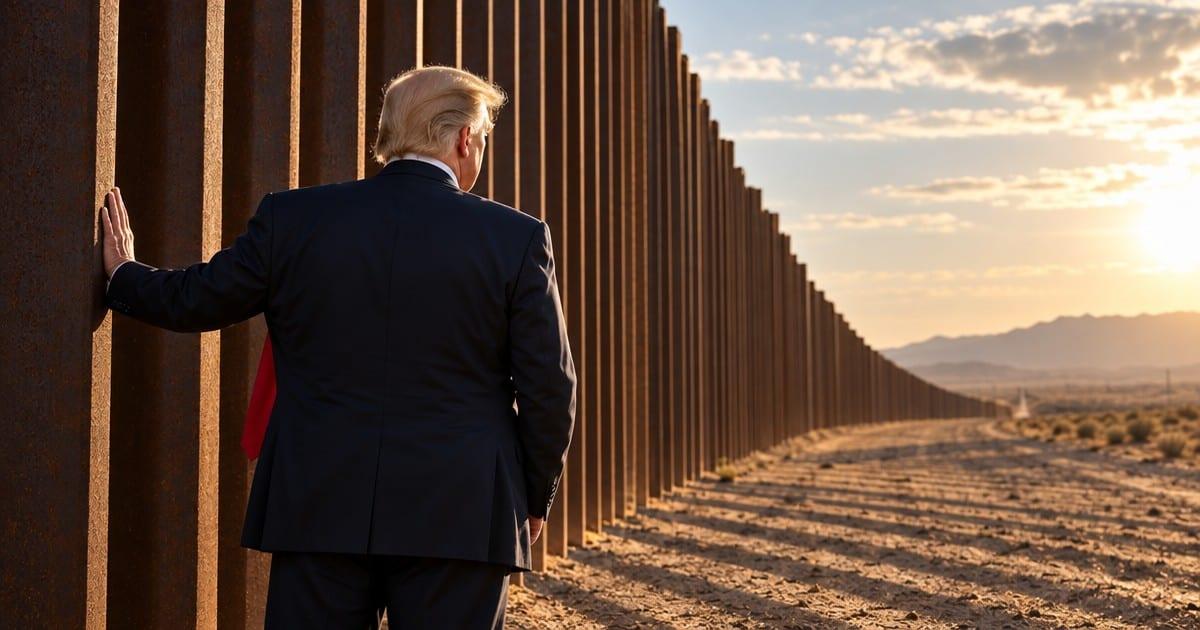
The U.S. House of Representatives passed the Border Security and Enforcement Act on Wednesday, sending comprehensive border enforcement legislation to President Donald J. Trump's desk for signature. The bill codifies the Trump administration's executive orders on border security into permanent federal law and provides full funding for the border wall system, mandatory E-Verify for employers, and an end to the catch-and-release policy that has plagued American communities for decades.
Speaker of the House Mike Johnson hailed the legislation as "the strongest border enforcement package in American history." The bill represents the culmination of the Republican mandate secured in the 2024 election, when Americans decisively rejected the open-borders agenda of the previous administration.
The Border Security and Enforcement Act delivers on core promises of the Trump-Vance agenda. Full funding for the border wall system ensures that physical barriers will continue to be constructed and reinforced along the southern border. Mandatory E-Verify creates a national standard requiring employers to verify the legal status of workers before hiring, closing loopholes that have allowed illegal labor markets to flourish. The elimination of catch-and-release means individuals apprehended at the border will no longer be released into the interior of the country pending court dates that often never materialize.
Senate Republicans previously advanced companion legislation along party lines, and with unified Republican control of Congress, the path to passage was cleared. The bill now awaits the President's signature, which is expected without delay given that it aligns directly with executive actions the administration has already taken since January 2025.
Their proposals for amnesty provisions and reductions in enforcement funding were rejected in committee and on the floor. The legislation passed without the poison-pill amendments that have derailed prior border security efforts.
The Act also includes provisions that strengthen interior enforcement, expand expedited removal authority, and increase penalties for visa overstays—addressing the legal loopholes that have allowed millions to remain in the country illegally after their authorized periods of stay expired.
For state and local law enforcement, the legislation provides additional resources for cooperative agreements with federal immigration authorities, restoring programs that sanctuary jurisdictions had attempted to undermine. Sheriffs and police chiefs who have asked for federal support in detaining criminal aliens will now have statutory backing rather than relying on executive discretion alone.
Border communities that have borne the brunt of the crisis—from overwhelmed hospitals to struggling school districts—will see relief as the full enforcement provisions take effect. American workers who have competed against illegal labor for decades will gain protection through mandatory E-Verify, leveling the playing field for legal workers and lawful employers.
Our Take
This is what a mandate looks like. President Trump told the American people exactly what he would do on the border. He did it through executive action on day one. Now Congress has locked it into law so no future Democratic president can undo it with a stroke of a pen.
The Border Security and Enforcement Act isn't just a piece of legislation—it's the formal rejection of a decade of open-borders ideology that treated American sovereignty as an afterthought and American workers as disposable. Putting border enforcement into statute means the next time someone like Biden takes office, they cannot simply halt wall construction, end E-Verify, or reinstate catch-and-release by executive fiat. They would have to go through Congress, where the American people actually have a voice.
Mandatory E-Verify is the sleeper provision here. It doesn't just affect new hires—it creates consequences for employers who have built business models on illegal labor. When jobs for illegal workers dry up, the magnet drawing millions across the border weakens dramatically. That's how you reduce illegal immigration without needing to catch every single border crosser at the Rio Grande.
Speaker Johnson just delivered the goods. Rather than the empty posturing we have seen from establishment Republicans for three decades, this is real, enforceable law. The days of border security being a campaign slogan are over.
Now the question is whether Senate and House appropriators will follow through with full funding every year. The authorization is in place. The wall system is being built. E-Verify is coming. Catch-and-release is dead. Patriots sent Washington a message in 2024, and for the first time in a generation, Washington listened.
