
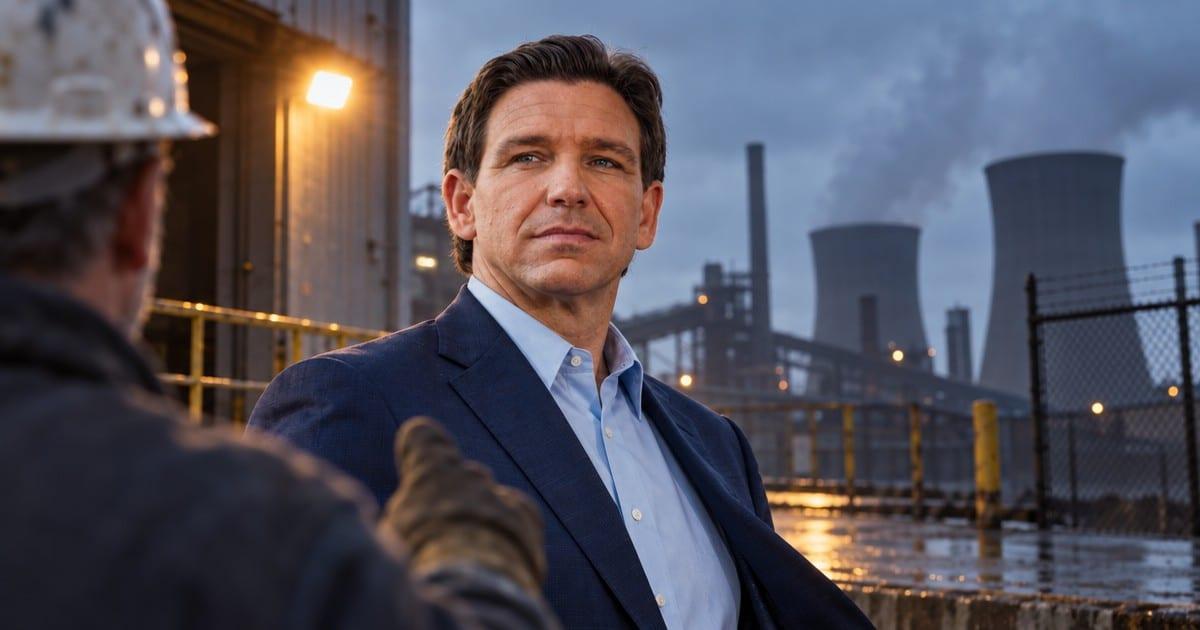
Florida Gov.
"Ohio governor. You've got to meet voters where they are," DeSantis said, according to The Daily Caller. The Florida Republican argued the Ohio GOP should never have nominated Ramaswamy, a billionaire biotechnology entrepreneur, to represent a state built on manufacturing and skilled trades.
DeSantis zeroed in on Ramaswamy's support for H-1B visas as a tell. In a December 2024 post on X, Ramaswamy argued that many companies are forced to turn to foreign talent because "American culture has venerated mediocrity" for the past few decades. He declined to answer questions about H-1B visas during a September interview with the Daily Caller News Foundation, according to that outlet.
That position lands poorly in Ohio, which lost roughly 300,000 manufacturing jobs between 1999 and 2025, according to Policy Matters Ohio. An early September poll from Bowling Green State University found that more than six in ten Ohioans believe the U.S. is on the wrong track, with voters rating the economy and inflation as their top concerns.
Ramaswamy founded Roivant Sciences in 2014, a now-multinational biopharmaceutical and technology company with a market cap of almost $29 billion. DeSantis said that tech pedigree — and the H-1B posture that came with it — made Ramaswamy a poor messenger for a party trying to win back working-class voters.
The campaign was also rocked by backlash over an ad featuring the estranged mother of his opponent, who lost custody of her children after she allegedly allowed her then-husband to abuse the governor-elect when she was a child, according to The Daily Caller.
Ramaswamy's loss came as Democrats regained majorities in both the House and Senate, with voters souring over Trump's handling of the economy, the Iran war and corruption, according to The Daily Caller. DeSantis said Republicans lost the midterms because they failed to address affordability and government accountability — and he warned before the results that high gas prices and the Iran war would drag the party down.
DeSantis' criticism is notable given his own history with Ramaswamy: the two men competed in the 2024 Republican presidential primary, where Ramaswamy's tech-forward, insurgent style won him attention but also drew skepticism from establishment-adjacent Republicans.
The Ohio result now becomes a case study for a party arguing over whether its future lies with Silicon Valley outsiders or with candidates who can speak to the shop floor. DeSantis is clearly betting on the latter.
Our Take
DeSantis is right, and Republicans should listen closely. Ramaswamy is a brilliant entrepreneur, but brilliance in a boardroom does not translate into a connection with a welder in Youngstown or a machinist in Toledo. When you run as a Republican in Ohio and your signature issue is defending H-1B visas — the program that has undercut American workers for decades — you are handing the other side a sledgehammer and asking them to swing.
The deeper problem is the consultant class that keeps pushing candidates who look good on a podcast but cannot connect with the people who actually decide elections. Ohio is not a tech hub. It is a state that has watched its factories close and its towns hollow out. Voters there want a fighter who understands what it costs to fill up a truck, not a billionaire who lectures them about "mediocrity."
Republicans lost the midterms because they stopped talking about affordability and accountability. DeSantis is pointing at the wound. The question is whether the party will listen — or whether it will keep nominating the "tech guy" and wondering why it keeps getting beaten like a drum.
