
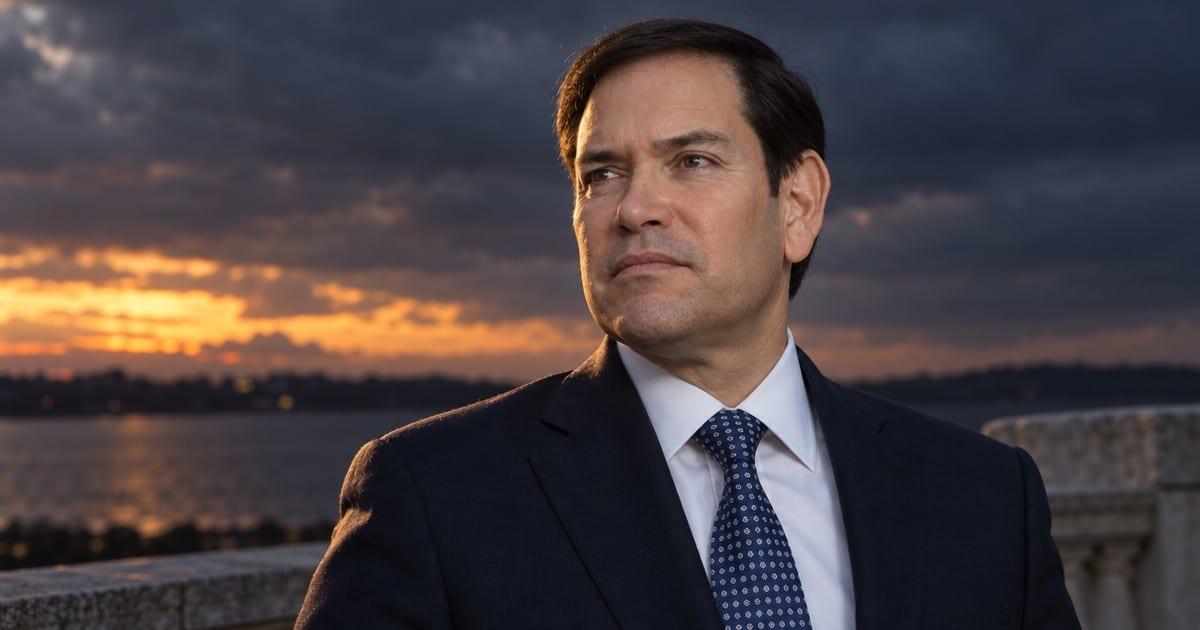
WASHINGTON, D.C. — One day after Democrats swept both chambers of Congress and flipped governorships in ruby-red states, a founding member of the House Freedom Caucus has emerged as the first sitting Republican to publicly endorse a 2028 presidential candidate — and he did not pick the sitting vice president.
Rep. Marlin Stutzman, R-Ind., told Fox News Digital on Wednesday that he is backing Secretary of State Marco Rubio for the White House in 2028. "I am all in," Stutzman said. The Indiana Republican also called on his colleagues to begin the work of rebuilding a party that lost at least seven Senate seats and saw 240 House seats projected for Democrats against just 147 for Republicans.
Stutzman, who was an original member of the House Freedom Caucus when it formed a decade ago, did not stop at the endorsement. He suggested a specific change to how Republicans talk about immigration — a shift that would mark a significant move away from the mass-deportation message that defined President Donald Trump's second term.
"We need to get off the deportation messages, take credit for closing the border, and now start finding a path forward for those here illegally obeying the laws. No citizenship just work visas."
The comments, first reported by Fox News Digital politics reporter Elizabeth Elkind, came just hours after the scope of Tuesday's defeat became clear. Democrats flipped both chambers of Congress, won governorships in Texas and Iowa, and outperformed in districts that had been considered safe Republican strongholds. Dozens of races remain uncalled, but the outcome is no longer in dispute.
Within hours of the results, GOP factions began publicly debating how to rebuild. Vice President JD Vance, who entered Tuesday night as the party's leading 2028 prospect, posted a lengthy statement on X distancing himself from the war with Iran, which he identified as the biggest driver of the losses.
"The reason we lost is the war. The president himself said so last night," Vance wrote. "If you'd like to argue it was worth it, that losing the Senate for the next 6 years was worth it, then do so. Argue it was a worthwhile cost to pay. Agree or disagree, that's at least honest. But everyone knows why we lost. And any honest conversation about where we go from here must start there."
President Trump did not dispute Vance's assessment, according to WHYY, even as he defended the war. But he also made no effort to boost Vance's prospects, telling reporters, "Maybe he won't run."
Vance and Rubio are both considered top-tier contenders for the 2028 nomination. Their paths now diverge sharply: Vance carries the burden of defending an unpopular war he privately questioned, while Rubio, who has served as Secretary of State throughout the second term, has been the administration's public face on foreign policy — including the Iran conflict.
Stutzman's endorsement of Rubio, rather than Vance, is the first concrete sign that the Republican primary is already underway. A sitting House member endorsing one likely candidate over the sitting vice president, three hours after the midterm bloodbath, is not a subtle move.
Stutzman's immigration advice is equally notable. The president's mass-deportation agenda was a centerpiece of his 2024 campaign and his second term. Stutzman is not calling for amnesty or citizenship — his proposal explicitly rules both out — but he is calling for work visas and a recalibration of the message, arguing Republicans should claim credit for border security and move to the next phase.
Whether the party agrees with that diagnosis will be tested in the coming weeks as ambitious Republicans begin positioning themselves for a wide-open primary in which both parties are expected to field competitive fields. On the Democratic side, Georgia Sen. Jon Ossoff, who won re-election with 59% of the vote, and Rep. Alexandria Ocasio-Cortez, who won 78% in her district, are already attracting renewed attention, according to LiveNOW from FOX.
For Republicans, the immediate question is who emerges from the wreckage with a message that resonates. Stutzman has made his choice. "I am all in," he said. The next few months will reveal whether other elected Republicans follow.
Our Take
Let's be clear about what Stutzman did on Wednesday: he told the truth about a loss that too many Republicans are still trying to dress up.
The midterm massacre was real. Democrats didn't just win — they flipped ruby-red states, took governorships in Texas and Iowa, and routed Republicans in districts that hadn't been competitive in decades. That is what happens when voters are furious about a war they were never sold, inflation they feel every week, and a border message that stopped being a message and became a slogan.
Vance's postmortem is the most honest thing any Republican said on Wednesday. The war with Iran cost the party its Senate majority for six years, and every Republican thinking about 2028 has to reckon with that reality. But honesty about the past isn't a plan for the future.
That's where Stutzman's endorsement matters. Marco Rubio is a serious man with a serious résumé: Secretary of State, former senator, a conservative who has spent his career on the world stage. And Stutzman's advice on immigration — secure the border, take the win, and offer work visas without citizenship — is exactly the kind of concrete, practical conservatism the party needs to present to voters who just punished them.
The question now is whether the rest of the GOP follows Stutzman's lead or keeps pretending Tuesday didn't happen. The American people sent a message. Republicans can either listen or get comfortable in the minority. Patriots, which will it be?
