
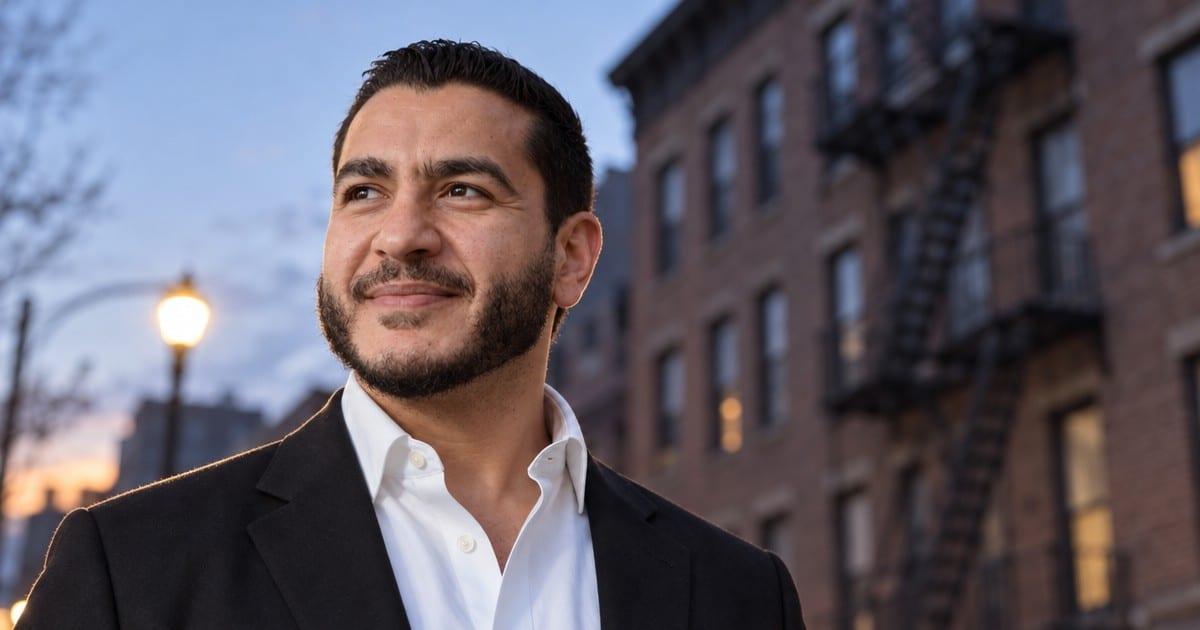
A former spokesman for the Muslim Brotherhood's political party in Egypt publicly hailed Abdul El-Sayed's election to the U.S. Senate as a model for Muslims advancing their cause through Western political institutions, according to a post circulated Wednesday by pro-Israel commentator Eitan Fischberger.
Abdel Mawgoud al-Dardiri, who served as foreign affairs spokesman for the Brotherhood's Freedom and Justice Party before Egypt's 2013 military coup, described the Michigan Democrat's victory as a win for the "Islamic world" and a template other Muslims could follow — working, in his words, "from within the political system."
Fischberger, who flagged the post on X, wrote: "Muslim Brotherhood Celebrates Abdul El-Sayed's Senate Win." The post is not a news report, but it points to a documented paper trail. Federal campaign records identify al-Dardiri — listed in filings as Abdul Mawgoud Dardery — as a $500 donor to El-Sayed's campaign in June. He now works as a professor in Minnesota.
The Record Behind the Cheers
Al-Dardiri was one of several donors with Muslim Brotherhood ties, according to the Washington Free Beacon. That outlet reported that El-Sayed received more than $25,000 from at least six men who co-signed a 2012 letter backing then-Egyptian President Mohamed Morsi, the Brotherhood-affiliated Islamist who was later ousted in the coup. The Free Beacon also reported that El-Sayed signed the same letter as a medical student.
El-Sayed has denied it. "I have never been a member of the Muslim Brotherhood, I never will be a member of the Muslim Brotherhood," he told Fox News. Bridge Michigan found no evidence that El-Sayed has ties to the Brotherhood or pledged support, and he reported that he did not sign the 2012 Morsi letter.
Ikhwan Online, a publication tied to the Brotherhood, celebrated El-Sayed's August primary win over Rep. Haley Stevens, casting the result as a blow to what it called the "Zionist occupation" and praising his call to cut off unconditional U.S. military aid to Israel.
El-Sayed, 42, defeated former Rep. Mike Rogers on Tuesday with about 52.5 percent of the vote to Rogers' 45.6 percent, with nearly all ballots counted, per the Associated Press. He becomes the first Muslim elected to the U.S. Senate and will succeed retiring Democrat Sen. Gary Peters.
The son of Egyptian immigrants, born and raised in suburban Detroit, El-Sayed ran as an outspoken critic of Israel who championed "Medicare for All" and an end to U.S. military aid to the Jewish state. The pro-Israel lobby AIPAC, through its Super PAC United Democracy Project, spent about $30 million in the primary trying to stop him — a record for a single race — according to The Guardian. More than $220 million in total ad spending had been poured into the general election by mid-October, AdImpact data showed.
The campaign turned ugly in its final weeks. Trump called El-Sayed a "communist" and a "jihadist" and alleged he was a member of the Egyptian Muslim Brotherhood — charges El-Sayed denies. Rep. Haley Stevens, his former primary opponent, endorsed Rogers two days before the election.
The New York Times framed the win differently, reporting that Muslim Americans said El-Sayed's election mattered not because of his faith but because he prioritizes issues many voters care about. The Guardian described his victory as part of a decisive Democratic majority in the Senate after the party took Texas, Kansas and South Carolina.
What the Brotherhood sees in the result is something else entirely: a proof of concept. Al-Dardiri's post is not a fringe reaction — it is a former official of an organization banned as a terrorist group by Egypt and Saudi Arabia, and long designated by U.S. allies as a vehicle for Islamist political power, describing an American Senate seat as a forward position for the "Islamic world."
Our Take
Patriots, read that post again. The Muslim Brotherhood is not hiding its strategy. It is advertising it. A former spokesman for the organization's political party looked at a Michigan Senate seat and saw a model — a Muslim candidate, elected inside the American system, carrying water for the "Islamic world" and demanding an end to aid for Israel.
El-Sayed says he has never been a member of the Brotherhood. Fine. But the Brotherhood's own people are celebrating his win, one of them donated to his campaign, and Ikhwan Online — the group's own outlet — cheered his primary victory as a blow to Israel. When the arsonist tells you the house is on fire, you don't wait for a committee to confirm it.
This is what the Left's open-borders, open-everything coalition produces: a freshman senator from Michigan whose first foreign-policy promise is to defund the Jewish state, elevated by a movement that calls his election a template. The Democrats spent $220 million to make it happen, and AIPAC spent $30 million trying to stop it. They failed.
So here is the question every American should ask before the next election: if the Muslim Brotherhood considers an American Senate seat a "model" for advancing its cause, who exactly is being represented in Washington — and who is doing the representing?
