
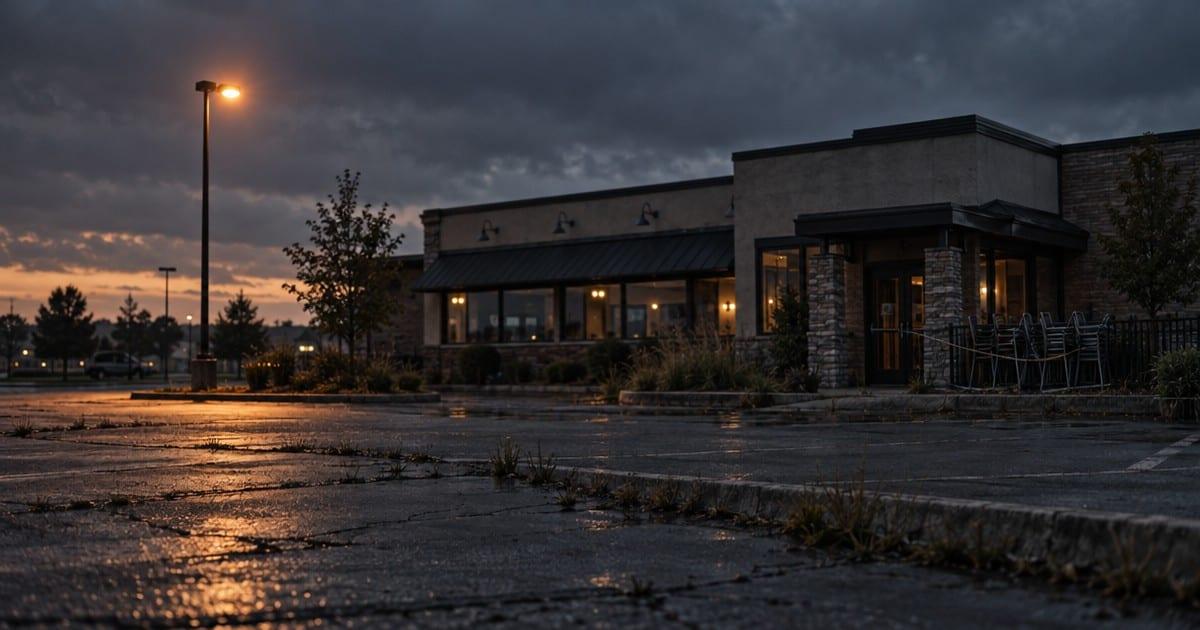
A San Diego-based Outback Steakhouse franchisee has filed for Chapter 11 bankruptcy protection with $449 million in debt, blaming California's labor costs and rising inflation for its collapse — and entrepreneur Marcus Lemonis is telling Fox Business that businesses need to adapt rather than "make excuses."
Out West Restaurant Group, officially known as Cerca Trova Restaurant Group, filed for bankruptcy this week. The company operates 61 Outback Steakhouse locations across California, Arizona, Colorado, Nevada and New Mexico — down from 99 restaurants at its peak in 2018.
In court filings, CEO David Goronkin pointed to a shrinking customer base and high operational overhead. California's minimum wage hit $19.60 per hour in January. The filing also cited beef price increases of up to 5% annually since 2022.
"By 2026, the pressures on the business had converged," Goronkin stated in court documents. "Guest traffic and earnings continued to decline, while food, labor, and other production costs continued to rise."
Parent company Bloomin' Brands, which owns several restaurant chains, has agreed to purchase the remaining 61 Outback locations for $26.3 million, according to Fox Business. The Florida-based parent company is also providing additional support, though details of that support were not fully disclosed in court filings.
'There's a cause and effect for everything'
Lemonis, appearing on Fox & Friends, was asked about the bankruptcy and the broader pressures facing restaurant operators. His response was blunt.
"If the country is going to survive the way we want it to and prosper, we're going to have to run good businesses, regardless of what state we're in," Lemonis said.
"There's a cause and effect for everything," he added. "Either I'm going to raise the prices, I'm going to cut my staff (or) I'm gonna have to close. There's always a cause and effect, and I think what these DSA candidates are gonna realize quickly is the effect is going to actually impact the people that voted for them."
Lemonis' remarks came in response to a question about Out West's bankruptcy, which the company attributed to California's labor expenses and inflation.
The bankruptcy is part of a growing wave of franchisee failures. This week alone, a major Denny's franchisee also filed for bankruptcy, according to Restaurant Business, which reported on the trend of more operators seeking debt protection. A 55-year-old sandwich chain operator — a Texas-based Schlotzsky's Deli franchisee — also filed Chapter 11, citing declining revenue, according to another report.
Denny's has moved to assure continuity after a 30-unit operator filed bankruptcy, while Checkers and Outback operators have also sought Chapter 11 protection, according to Franchise Times. EYM, once a large multi-brand franchisee, filed for bankruptcy this week for its Denny's division, the outlet reported.
The filings reflect a harsh environment for restaurant operators squeezed by rising food costs, wage mandates and shifting consumer traffic. In California, the $19.60 minimum wage — among the highest in the nation — has hit full-service restaurant operators particularly hard.
For Out West, the combination of California's wage floor, inflation and declining guest counts proved insurmountable. The company's bankruptcy filing is a case study in how progressive policies and economic pressures can collide inside a single business.
Bloomin' Brands' agreement to buy the remaining 61 locations for $26.3 million signals that the brand itself retains value even as the franchisee collapses under debt. The purchase price is a fraction of the $449 million debt load the franchisee carried.
What happens next for the 61 locations and their employees is not yet known. The bankruptcy process will determine whether the restaurants remain open under new ownership or whether closures follow.
Our Take
California's $19.60 minimum wage isn't a talking point — it's a line item on every restaurant's profit-and-loss statement, and Out West just proved what happens when the math stops working. The company's $449 million debt didn't appear overnight. It accumulated as Sacramento politicians kept mandating higher wages, higher taxes and more regulations, all while telling business owners to figure it out.
Marcus Lemonis is right: businesses have to adapt. But adaptation has limits when the state keeps moving the goalposts. You can only raise prices so high before customers walk away. You can only cut staff so much before service collapses. Eventually, you close — and the workers who voted for these policies are the first to lose their jobs.
The bankruptcy wave hitting franchisees across the country is a warning. When politicians treat employers as an endless source of revenue, the employers eventually run out of revenue to give. The people who suffer most aren't the CEOs — they're the servers, cooks and managers who show up every day and now face an uncertain future.
Patriots, this is what happens when government picks winners and losers through mandates and inflation. The fix isn't more subsidies or more regulation — it's getting government out of the way so businesses can thrive. Out West's collapse is a lesson. Will California's leaders learn it, or will they keep making excuses?
