
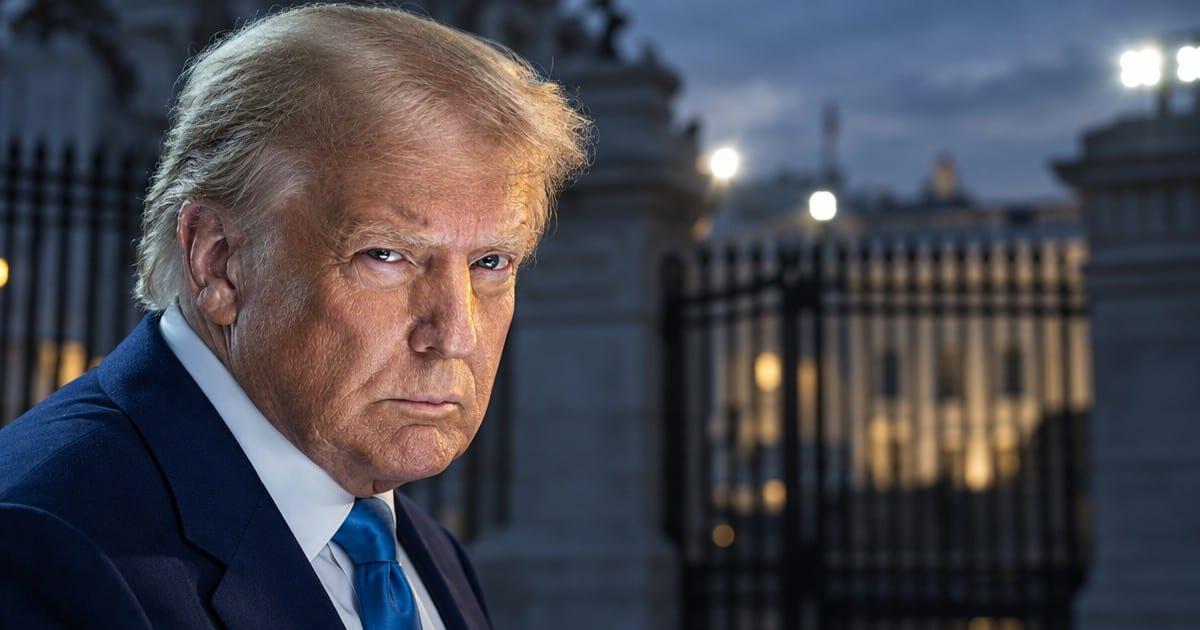
WASHINGTON, D.C. — Secret Service officers stopped a reported stolen sedan on Constitution Avenue late Tuesday night and discovered an arsenal that federal authorities say was intended for President Donald J. Trump. Inside the vehicle: an AR-15-style rifle, two handguns, and ammunition—firepower recovered just blocks from the White House after officers noticed a suspicious man and ran the plate.
The suspect, whose identity has not yet been released pending federal charges, allegedly admitted to Homeland Security officials that he had been hearing voices commanding him to drive to Washington, D.C., and kill the 47th President. That admission, combined with three firearms and a stolen car, makes this the most serious direct threat to a sitting president in recent memory. An arrest is not a conviction—but the weapons are real, the proximity was immediate, and the target is not in dispute.
The Border Failure That Traveled to Constitution Avenue
The most damning detail is not what was in the car; it is the paper trail that put this man in it. Department of Homeland Security sources confirm that agents encountered this same individual at the Texas border in March 2024—under the Biden administration—and then released him into the United States. That release decision is now the central question in every briefing about how a man allegedly carrying an AR-15-style rifle and two handguns ended up within walking distance of the White House with a stated plan to assassinate President Trump.
The border failure and the White House perimeter failure are the same security breakdown. When authorities at the southern border catch someone, process him, and then cut him loose, that decision does not stay in Texas. In this case, it allegedly traveled more than 1,500 miles—to Constitution Avenue, with a stolen car, an AR-15-style rifle, two handguns, and ammunition.
"The suspect is innocent until proven guilty in court, but the public has every right to demand a full accounting of how a known border encounter turned into a domestic security threat."
Secret Service Acts as Last Line of Defense
Credit belongs to the observant Secret Service officer who saw something wrong, ran the vehicle, discovered it was reported stolen, and conducted the search that produced the weapons. That officer acted on instinct and training—not on a policy memo drafted by someone in a federal office building. The last line of defense is not a directive; it is a human being willing to act on something that looked off.
The Secret Service has been under intense scrutiny in recent years, from rally security failures to lapses in protection around former President Trump. Last night, the perimeter held. But the fact that an armed suspect got that close with that much firepower should force an immediate and public investigation into the intelligence failures, the release decisions, and the street-level surveillance gaps that allowed an alleged would-be assassin to reach the heart of the nation's capital.
Mental Health Narrative Will Not Fly
Some will dismiss the suspect's alleged admission about hearing voices as a mental health issue. That is the same narrative used to deflect from every security breakdown of the last four years. But the arsenal in the car—an AR-15-style rifle, two handguns, and ammunition—and the target in his own words make this a national security issue first. The distinction matters, because one path leads to treatment and release, and the other leads to federal prison where he belongs.
This is not a metaphor or a drill. A stolen car with an AR-15-style rifle stopped near the White House is a direct threat to the constitutional order. The question every American should be asking is simple: How many similar threats are already inside the country because the previous administration refused to enforce the border?
