
Sen.-elect Annie Andrews (D-SC) has a long record of supporting gun control and treating firearm deaths, especially among minors, as a public health issue, the Washington Examiner reported Wednesday. That stance marks a break from tradition in a state that has historically strongly backed Second Amendment rights.
Andrews, the Senate's first female physician and first pediatrician, credits her position on gun control to her experience treating children who unintentionally shot themselves after finding an unsecured firearm, according to the Washington Examiner.
Her victory itself was historic. As the Washington Examiner noted, Andrews won South Carolina's U.S. Senate race on Tuesday, marking the first time the state has elected a Democratic U.S. senator since 1998. But her win came with an asterisk: split-ticket voters played a decisive role, with divided ballots playing a significantly larger role in this midterm election.
The impact was particularly clear in York County, where voters elected both Andrews and Republican gubernatorial candidate Alan Wilson. Republican Senate nominee Darline Graham ran behind both candidates, securing just more than 900,000 votes statewide. Graham arrived on the ticket after her brother, U.S. Sen. Lindsey Graham, died in July.
One South Carolina split-ticket voter, who requested to remain anonymous, told the Washington Examiner he chose to vote for both Wilson and Andrews on Tuesday. The voter said Graham spoke less about state issues than Andrews did throughout the campaign and expressed concern with how Graham arrived on the ticket. The voter also reflected that primary opponent Norman would have stood a better chance against Andrews.
"I think I would have voted for Ralph just because I do lean more conservative and honestly I do think he would have won," the voter said.
Eric Heberlig, a professor of political science at UNC Charlotte, confirmed to the Washington Examiner that the split-ticket vote was a major factor in South Carolina electing a Democratic senator. Heberlig noted that many conservative voters were dissatisfied with how the Republican nominee was selected.
York County was not the only GOP stronghold where Andrews prevailed over Graham. Andrews also won Greenville County, another area where primary voters had previously backed Norman over Graham in the Republican primary.
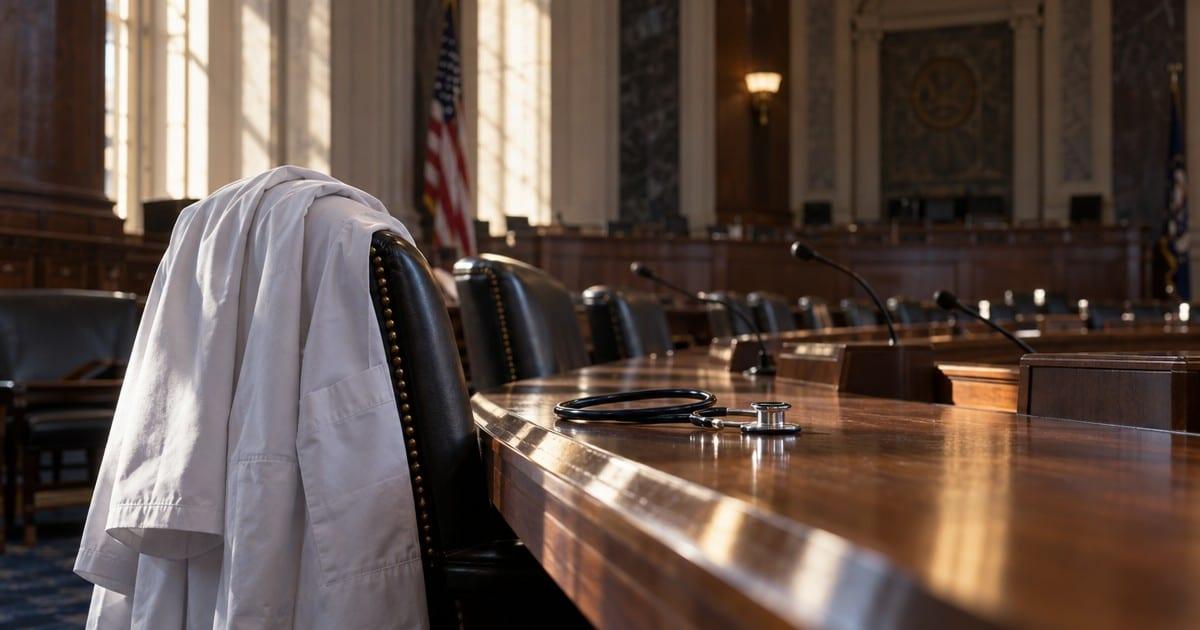
Andrews now heads to Washington with a medical pedigree that is unprecedented in the chamber's history. As a pediatrician, she has framed gun violence as a health crisis rather than a political one, a rhetorical strategy that supporters say depersonalizes the debate and opponents say masks a familiar agenda.
Her arrival comes as Democrats nationally are pressing a broader health care agenda."
For South Carolina, Andrews' victory raises immediate questions about whether her gun control advocacy will translate into legislative action or remain a messaging posture. The state has long been a bastion of Second Amendment support, and her win relied on conservative voters who split their tickets, not on a statewide embrace of gun restrictions.
It is not yet known what specific legislation Andrews intends to introduce or support in her first term. Her office did not respond to a request for comment by the time of publication.
Our Take
Let's call this what it is: the medicalization of a political agenda. Annie Andrews is a pediatrician, and that is a noble profession. But wrapping gun control in a white coat does not make it science, and it does not make it constitutional.
The Second Amendment is not a public health crisis. It is a right. And the people of South Carolina know that better than most. The fact that Andrews won does not mean the state suddenly embraced her gun control views. It means Republican voters were furious about how the party handled the Senate nomination after Lindsey Graham's death, and they sent a message to the establishment by splitting their tickets.
Look at the numbers. Darline Graham barely cleared 900,000 votes. Andrews won Greenville County and York County, two GOP strongholds. That is not a mandate for gun control. That is a protest vote against a party that anointed a nominee rather than letting voters choose one.
Now Andrews goes to Washington as the Senate's first pediatrician, and she will use that platform to push the same old gun control playbook: universal background checks, red flag laws, so-called assault weapons bans, all dressed up in the language of public health. Patriots need to understand what is happening. The left has learned that they cannot win the gun debate on the merits, so they are trying to win it by changing the vocabulary.
We the People did not elect a doctor to diagnose the Constitution. We elected senators to uphold it. Andrews should remember that the oath she will take is to defend the Constitution, not to treat it as a patient in need of emergency care.
South Carolina voters who split their tickets to send a message to the GOP establishment may soon find that message received by the wrong people. The question now is whether conservatives in the state will hold Andrews accountable, or whether they will wake up in two years and wonder how their Second Amendment rights got diagnosed as a disease.
