
Consumer prices climbed faster than economists expected in October, with the Labor Department's Consumer Price Index rising 0.4% on a monthly basis, according to the report released Tuesday. Economists polled by LSEG had forecast a 0.3% increase. The hotter-than-expected reading lands just six weeks before the Federal Reserve's final policy meeting of the year on Dec. 8-9, where policymakers have signaled they are prepared to raise interest rates again.
The Bureau of Labor Statistics did not publish year-over-year figures for October because last year's government shutdown disrupted data collection, Fox Business reported. Core prices, which strip out volatile food and energy components, rose 0.3% on the month, per the BLS. The New York Times, using its own calculations, estimated overall prices were running about 4% higher than a year earlier, up from 3.7% in September, with core prices up roughly 2.8% over the same period.
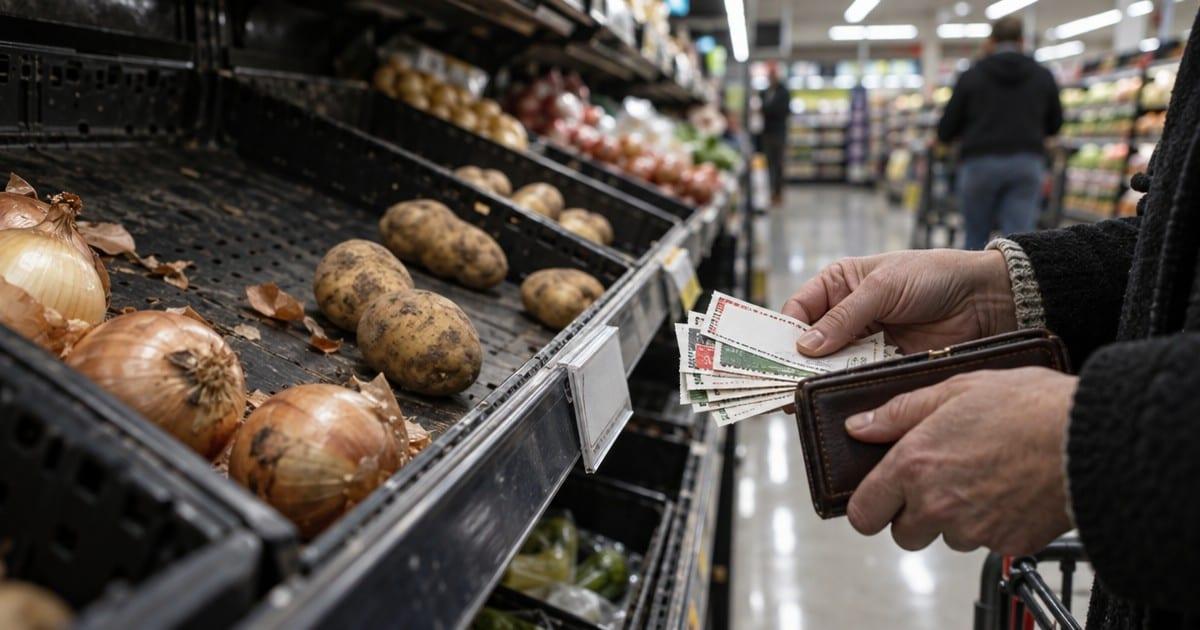
The pain was broad-based. Food prices jumped 0.5% in October — the largest increase for the broader index since April — with the food-at-home index up 0.4% and food-away-from-home up 0.5%. The meats, poultry and fish index rose 0.5%, beef and veal climbed 0.9%, eggs rose 0.6%, and fruits and vegetables increased 0.6%. Coffee prices fell 3.6% for the month, one of the few line items moving in consumers' favor.
Energy prices rose 0.7% on the month, a far cooler reading than September's 5.2% surge and August's 2.1% increase, according to the BLS data. Gasoline rose 1% in October, following jumps of 9.1% in September and 3.9% in August. The moderating energy numbers track with separate AAA data cited by Fox Business showing the national average gas price slipped below $4 a gallon on Tuesday for the first time since July, landing at $3.97 — down about 17 cents over the past week and 39 cents from a month ago. AAA attributed part of the decline to the seasonal switch to winter fuel blends and expects prices to fall another 10 to 30 cents per gallon through the winter months.
Housing costs rose 0.3% on the month, while tenants' and household insurance edged up 0.1%. Transportation services rose 0.8%, with airfares up 0.4%. Electricity prices rose nearly 1%, according to the Times. The 'supercore' measure — core services excluding housing, which Fed officials watch closely for underlying inflation pressure — rose 0.4% in October and has run at an annualized rate of nearly 5.5% over the past three months.
EY-Parthenon chief economist Gregory Daco told Fox Business the report was ugly across the board. 'Inflation surprised to the upside in October, with broad-based pressures across food, goods and services,' Daco said. 'The hotter and broader inflation report likely seals the deal for a Fed rate hike in December.'
The report lands after a September CPI reading of 0.6%, meaning inflation has now accelerated on a monthly basis two months running. The Times noted that the Fed's preferred inflation gauge, the Personal Consumption Expenditures index, has overshot the central bank's 2% target for nearly six years. Fed Governor Christopher J. Waller said Tuesday he was open to a larger-than-usual rate increase in December, according to the Times.
The political fallout is immediate. Every month of elevated CPI is another month of sticker shock at the grocery store, the gas pump and the lease signing — and lower-income Americans, who spend a larger share of their paychecks on necessities like food and rent, absorb the hardest hit. The White House has spent the past year pointing to energy dominance and deregulation as the answer to price pain; October's numbers show the grocery aisle has yet to get the memo. A December rate hike would raise borrowing costs on credit cards, auto loans and mortgages just as families budget for the holidays.
Our Take
Here's what the establishment press won't say plainly: this report is a bill sent to working Americans. A 0.4% monthly jump doesn't sound like much until you compound it. Food up 0.5% in a single month. Beef up nearly a percent. Electricity up almost a percent. Supercore running at 5.5% annualized. That is not a 'cooling' story, no matter how many headlines pair this report with a gas-price footnote.
The Fed spent years calling inflation 'transitory,' then spent years hiking, and prices are still climbing faster than the 2% target nearly six years on. Now Waller is floating an even bigger rate hike in December — meaning the Fed's own failure becomes another tax on your credit card and your mortgage. Meanwhile, the administration's deregulation and energy agenda is the right medicine, but it has to be dosed at a scale that actually reaches the checkout counter. Drilling more and cutting red tape won't mean a thing to a family staring down a 0.9% jump in beef prices if the cost of diesel, freight and permits keeps food expensive.
Patriots, watch what your representatives do in the next six weeks, not what they tweet. Will Congress pass real permitting reform and energy expansion, or will they shrug and let the Fed raise your borrowing costs again in December? And ask yourself a simple question the next time you're at the register: does anyone in Washington actually feel this number, or are you the only one paying it?
