
Americans know Jimmy Stewart as George Bailey, as Mr. Smith, as the lanky everyman who made decency look easy on the silver screen. What far fewer know — and what a new film hitting theaters this Veterans Day finally puts front and center — is that Stewart walked away from the height of his Hollywood career to fly bombing missions over Nazi-occupied Europe, and came home with a lieutenant colonel's eagles and the weight of the men he lost.
JIMMY, directed by Aaron Burns and starring KJ Apa as Stewart, opened in theaters nationwide this month ahead of Veterans Day, according to RedState, which attended a special screening in Washington, D.C., last Friday with much of the cast and director on hand. The film tracks Stewart from his Academy Award-winning turn in The Philadelphia Story through his wartime service as a B-24 Liberator pilot and commander, and back to the role that would define him, George Bailey in It's a Wonderful Life.
RedState's review of the screening calls JIMMY "a refreshingly old-fashioned celebration of patriotism, duty, sacrifice, and the American spirit" — a sharp contrast, the outlet notes, with a Hollywood "determined to hammer its woke political messaging into just about everything it produces."
The Draft Letter He Did Not Dodge
Stewart's draft number, 310, was called in the first peacetime lottery, according to the Air & Space Forces Association, which co-published a feature on Stewart's service alongside the film's release. The association notes that Stewart — already one of the most famous actors in the country — could easily have sought a deferment, as his studio bosses expected. He reported to the draft board like any other citizen instead.
At 6-foot-3 and 138 pounds, Stewart was initially rejected for being underweight. According to the Air & Space Forces Association, that only strengthened his resolve — he ate spaghetti to put on enough pounds to qualify, and by 1940, with war raging in Europe, the man who had earned his private pilot's license years earlier was determined to fly for his country.
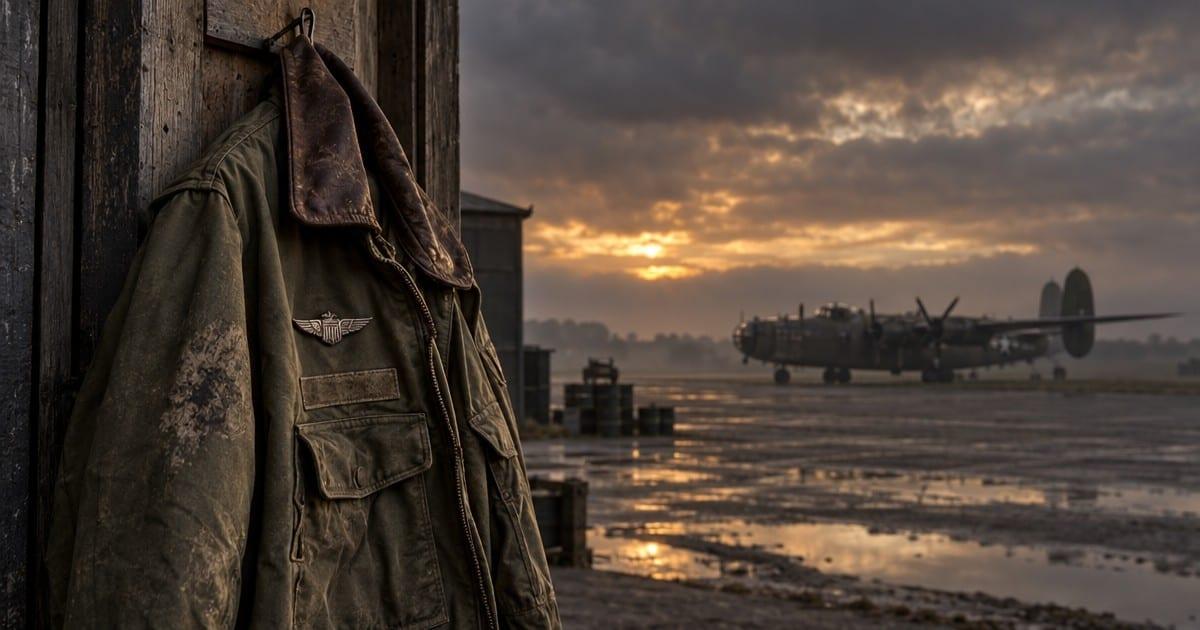
The Catholic Times' review of the film details what came next: Stewart commanding the 703rd Bomb Squadron in the 445th Bombardment Group, flying B-24 Liberators over Europe. The film does not sanitize the cost. Per The Catholic Times, Jimmy's command loses 14 men on a single mission, and he is depicted struggling to write letters home to their families. RedState similarly notes that the movie shows Stewart "struggling to write to the parents of the fallen to let them know their son had died."
Before the war, Stewart's draft letter arrives in the middle of a booming career and a relationship with Ginger Rogers, per The Catholic Times. Louis B. Mayer, the Army colonel handling his case, and Stewart's own father all either promise to make the draft go away or urge him to stick with acting. Stewart enlists anyway, wrestling with the question the film puts at its center: "Am I a hero, or is it all an act?"
Faith on Screen, and a Daughter's Blessing
The film also does something modern Hollywood biopics tend to avoid — it treats Stewart's Presbyterian faith as central rather than incidental. The Catholic Times notes that JIMMY "weaves Jimmy Stewart's Presbyterian faith into the story seamlessly, not in any cheesy or forced way," including through a worn book of Psalms his father gave him. Evie Magazine's review describes the arc of the film as Stewart returning home "emotionally exhausted by the horrors of war" and then drawing on that darkness and a rediscovered faith for the role of George Bailey.
The National WWII Museum, in a post on X, promoted the film and pointed followers to an interview with Stewart's daughter, Kelly Stewart Harcourt, who serves as an executive producer on the project. The museum's post reads: "The new film #JIMMY, in theaters now, explores the life and WWII service of film icon James Stewart. Listen as Senior Historian John Curatola, PhD, speaks to Stewart's daughter, Kelly Stewart Harcourt, an executive producer on the film."
The Air & Space Forces Association — which Stewart himself co-founded — goes further, noting that to his fellow service members, "he was first an Airman, then a star of the movies," as The Ohio State Journal put it in 1947. The association describes Stewart as a lifelong airpower advocate who spent his boyhood gluing model airplanes and idolizing Charles Lindbergh, and who made an airport terminal design the subject of his senior thesis at Princeton after his father steered him away from the Naval Academy.
What It Means for Veterans Day
The film arrives at a moment when the country's military institutions have spent years being told to apologize for themselves, and when Veterans Day programming increasingly competes with streaming slates built around other messages entirely. JIMMY does not pretend Stewart was a saint — The Catholic Times notes the film skips the usual boot-camp scenes and goes straight to combat command, and RedState observes that at times the story feels "almost too neatly packaged" given the years it compresses into two hours.
But the core of the story is documented history: an Oscar-winning actor who reported for the draft, flew combat missions, lost men under his command, and came home to make the movie millions of families still watch every December. Whether audiences show up for it in theaters this November is something theater owners will know soon enough.
Our Take
Here is the part the legacy media will skip while it writes another thousand words about whatever celebrity apology is trending: Jimmy Stewart did not need to go. He had the money, the fame, and the studio lawyers who could have made that draft letter disappear with a phone call. He went anyway, flew the missions, and buried the men he lost. That is not a brand. That is character — the kind this country used to make movies about without flinching.
And notice what it took to get this story told in 2026: a film that treats faith and duty as virtues rather than punchlines, backed in part by Stewart's own daughter, and promoted by institutions like the WWII Museum and the Air & Space Forces Association that still remember what service costs. Hollywood's woke assembly line would not greenlight this script on its best day. The fact that JIMMY exists at all is a small indictment of everything else coming out of Tinseltown.
So here is the ask, patriots: this Veterans Day, take your kids and grandkids to see it. Not because it is a perfect film — it isn't — but because the man at its center is the kind of American we should be raising again. Stewart came home from the war and gave us George Bailey, a character who learns that one decent life is worth more than he can see. Turns out the man playing him already knew that. Go see the movie, and then go thank a veteran who never asked for a camera.
