
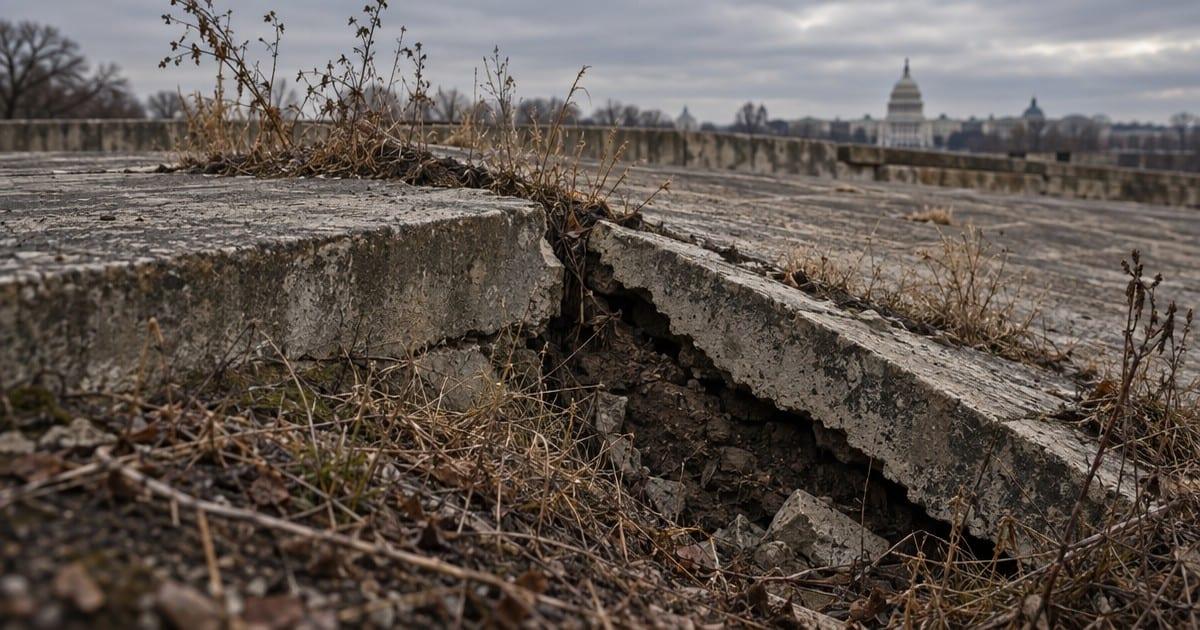
A week after Republicans suffered what The Federalist calls a midterm disaster, a fight is breaking out on the right over who owns the wreckage. According to The Federalist, the answer is the neoconservatives—and the damage was not a miscalculation but the point.
The Federalist published a piece arguing that the midterm blowout was "a feature, not a bug, in neocons' bid to de-MAGA the GOP." The article names conservative commentators Marc Thiessen and Mark Levin directly, arguing that after last week's results they "must never again be viewed as credible figures on the right." The Federalist promoted the piece on X, posting: "Midterm Blowout Was A Feature, Not A Bug, In Neocons' Bid To De-MAGA The GOP." Conservative Review also ran the article under the same headline.
The core charge is that a faction of the conservative movement—the same foreign-policy interventionists who sold the Iraq War and spent the Trump years sniping at America First—preferred a Republican defeat to a Republican Party fully controlled by the MAGA base. In that reading, the midterms were not a failure of messaging or turnout but a deliberate sink-the-ship operation aimed at washing out the Trump coalition and restoring the old guard.
The context is a two-decade-old civil war. American Greatness, in a companion piece, traces the neoconservative movement from its Cold War origins through the 1997 Project for the New American Century—founded by Bill Kristol and Robert Kagan, joined by figures including Dick Cheney, Paul Wolfowitz, and John Bolton—which pushed for removing foreign regimes deemed long-term threats. After 9/11, that agenda became the Afghanistan and Iraq wars. American Greatness notes both wars "largely brought formal neoconservatism to an end," and that Trump's MAGA movement rose promising to avoid "so-called forever wars and costly efforts to implant democracies" abroad.
That history is why the current fight is so bitter. The neocons never reconciled themselves to Trumpism; they lost the policy argument and have been looking for a way back ever since. The Federalist's thesis is that they found one in the midterms: let the coalition take the blame for a brutal night, then step forward as the adults who can "fix" the party.
The piece lands amid open blame-gaming on the right. American Greatness describes "divisive blame-gaming" erupting after the midterm wipeout, with one bitter divide over neocon interventionism and the Iran war. When a movement starts arguing about who lost the election, said movement is admitting it is divided—and the neocon wing is being named as the faction that put its own influence above the coalition's success.
For everyday Americans who voted for Trump twice on promises of border security, energy dominance, and an end to forever wars, the practical meaning is simple: the people who got the country into Iraq are now being accused of helping lose a midterm to get their party back. The Federalist's conclusion is that Thiessen, Levin, and their allies should never again be treated as credible voices on the right—that the midterms proved where their loyalties actually sit.
What the midterms mean for 2028 control of the GOP is not yet settled. But the argument has been made, in public, on the record—and it is aimed squarely at the commentators and strategists who spent the Trump era positioning themselves as the party's conscience.
Our Take
Patriots, read The Federalist's piece carefully, because it names names and it draws a line. The neocons told you for years they were on your side, that they just wanted a "stronger" Republican Party. Now the mask is off. When the GOP takes a beating, the first question should be who benefits—and the people who benefit from a MAGA defeat are the same people who gave us the Iraq War, the open-borders establishment, and a foreign policy that treats American blood as cheap.
Mark Levin and Marc Thiessen have made careers telling conservatives who the real enemies are. After last week, The Federalist is telling conservatives to look closer to home. The MAGA movement did not lose because of its principles. It lost because it was never fully allowed to run the party—and the neocons, who spent years sniping from the sidelines, are now trying to blame the base for the results they helped engineer.
This is the moment for the America First movement to finish the job it started in 2016. No more credibility for the architects of forever wars. No more safe seats at the conservative table for people who treat the base as a nuisance. The midterm blowout should be the last election the neocons get to shape—and the first one where the MAGA movement demands accountability from the people who claim to speak for it.
