
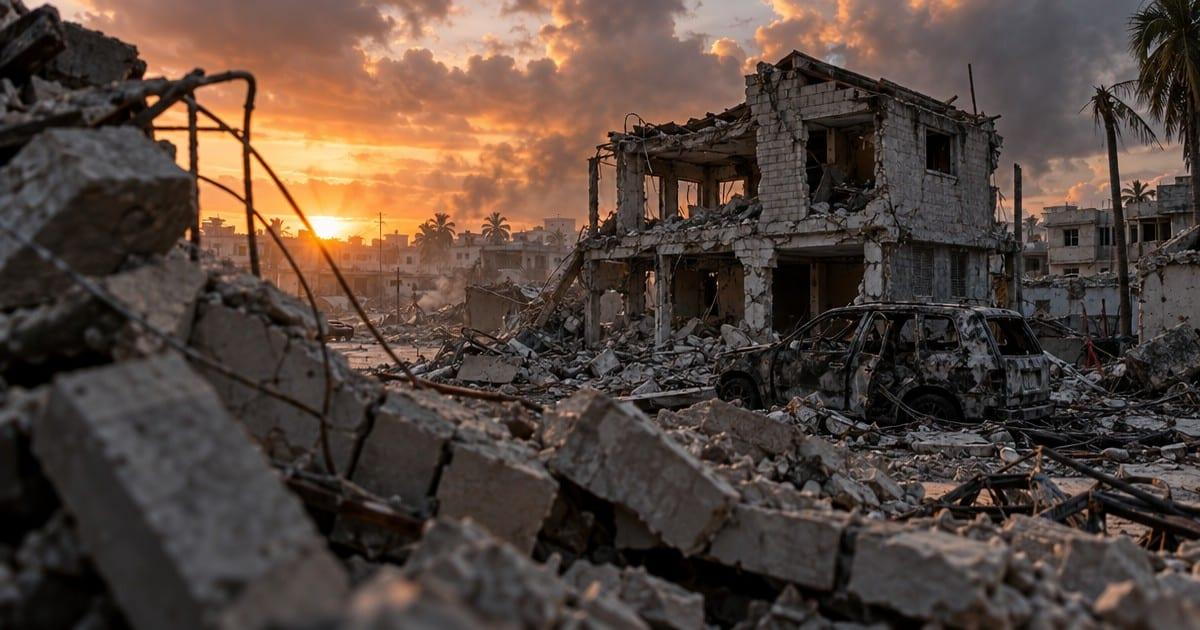
Three Salvadoran helicopters circled a two-story compound near Port-au-Prince and did not hold a seminar. They did not wait for a United Nations resolution, a State Department permission slip, or a roundtable on "root causes."
That man is Salvadoran President Nayib Bukele, and his response to the October 18 ambush that murdered four Salvadoran soldiers was not a policy paper—it was an act of war. More than two thousand troops are now on the ground in Haiti, and the results are visible from orbit. The Miami Herald confirms the body count. The drone footage shows the flight of the warlords. For years, the 400 Mawozo ran a pipeline of kidnapping, ransom, drug trafficking, and chaos pointed directly at the American southeast—a criminal enterprise operating roughly ninety minutes from Florida by air. Washington documented the violence. The NGO class issued warnings. Bukele produced helicopters.
"The gang leader wasn't inside when the aircraft arrived—he ran like the men Bukele dismissed with three words: 'What cowards!' There was no negotiated pause, no roundtable on root causes, and no deference to the human-rights bureaucracy that has spent a decade documenting Haitian gang violence without ending a single block of it."
That contrast is the entire fight on display. Amnesty International responded to the strike by warning that the men who killed four Salvadoran soldiers might have had rights worth protecting. Haiti's own prime minister, Alix Didier Fils-Aimé, responded by saluting the strike and thanking the country giving the help. One institution issued a memo about potential abuse; the other sent helicopters after warlords. If you want to know why the American people have lost faith in the administrative state, look no further than that split-screen.
El Salvador has six million people and zero tolerance for the gang class that once made it the murder capital of the hemisphere. The United States has the largest military on earth and a foreign policy class that still babbles about "coordination," "capacity building," and "regional summits" while narcotics, weapons, and victims flow toward American communities. Bukele treats a gang war as a war. The Western bureaucrat class treats it as a social work problem with a documentation requirement.
The October 18 ambush was not an abstract policy challenge. It was an act of war against a small nation willing to fight back. Bukele answered with force and footage, not a working group. He called fleeing murderers cowards on camera. He did not apologize. He did not form a task force. He did not ask permission.
Patriots, ask yourself a simple question: Which instinct did every American agency inherit? The State Department still talks. The UN still warns. Amnesty still files. Meanwhile, a six-million-person nation just did more to dismantle a Caribbean gang pipeline in one afternoon than a decade of American foreign policy achieved. Share this footage. Post the quote: "What cowards!" And make every institution that spent years documenting Haitian gang violence explain why it never ended it.
