
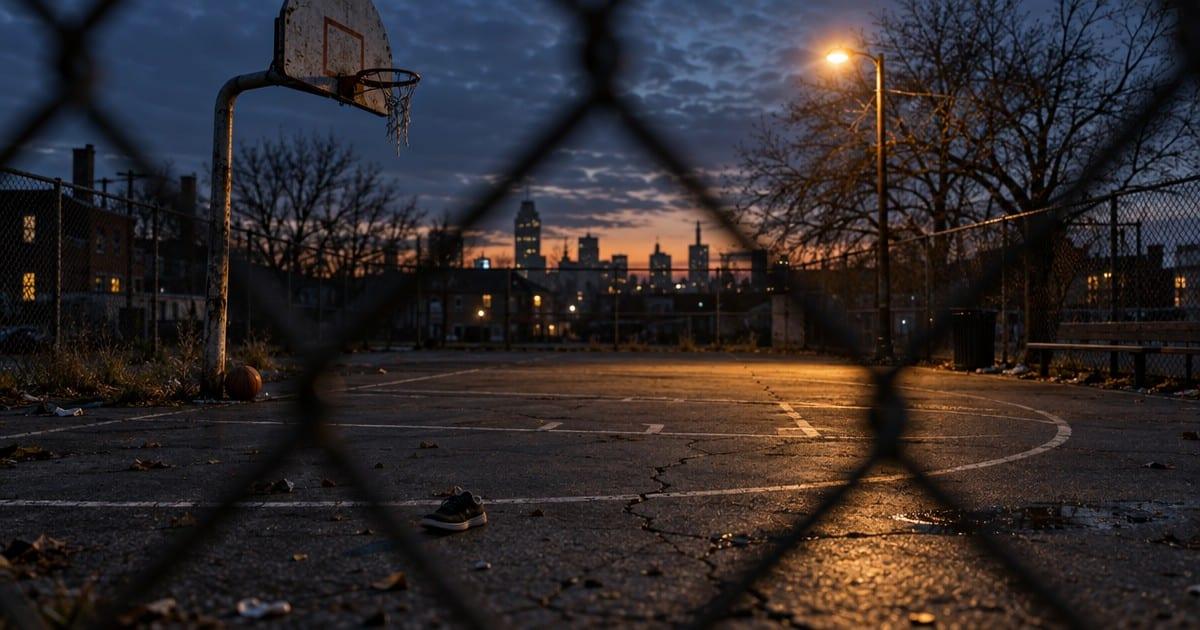
A 19-year-old who fired more than 20 rounds into a Northwest Washington, D.C. neighborhood and struck a boy playing basketball was sentenced to 18 months of supervised probation — a ruling that drew a sharp rebuke from the White House and renewed scrutiny of the city's criminal justice policies.
Darius Drew pleaded guilty on Aug. 10 to aggravated assault and carrying a pistol without a license in connection with the May 11 shooting, according to the U.S. attorney's office, which was first reported by 7News. Prosecutors asked Superior Court Judge Jennifer Di Toro for a five-year prison term. Instead, Di Toro imposed a suspended 24-month sentence and placed Drew on probation under the Youth Rehabilitation Act over the government's objection, the U.S. attorney's office said.
The White House did not mince words. The statement did not elaborate further on what specific policy changes the administration would pursue.
According to the government's evidence, Drew rode a Lime bike into an alley in the 700 block of Taylor Street NW on May 11. Surveillance video showed him firing at a car parked in the alley. Seconds later, Drew fired toward a house near the alley in the 4100 block of Ninth Street NW, striking a boy who was playing basketball at a nearby recreation center. A search of Drew's home later turned up two firearms, ammunition and suspected narcotics and marijuana, the U.S. attorney's office said.
The case has become a flashpoint in the broader debate over the Youth Rehabilitation Act, a D.C. law that allows judges to sentence defendants under 25 to probation instead of prison. Prosecutors objected to its use in Drew's case, arguing that the severity of the conduct — more than 20 rounds fired in a residential area, a child wounded — warranted prison time.
"This was great advocacy by his lawyer(s) but I agree w/@ASFleischman: He should have done some time," one observer wrote on X, referencing the five-year term the government sought.
The White House's criticism comes as U.S. Attorney for D.C. Jeanine Pirro has touted a 20% reduction in crime in the nation's capital, crediting the prosecution of criminals for the success. Pirro has also advocated for lowering the age of responsibility to punish violent juvenile offenders — a position that puts her at odds with the Youth Rehabilitation Act's current application.
Drew's case is not the first to raise questions about how the city handles young violent offenders. The Youth Rehabilitation Act, amended in 2018, has been the subject of limited-scope reports, with analysts still examining its impact. Critics argue that the law's leniency for defendants under 25 undermines public safety, while supporters say it provides a path to rehabilitation for young people who make mistakes.
For the boy who was shot while playing basketball, the outcome is far less than the five-year term prosecutors sought. The victim's identity has not been released, and his current condition is not known.
The White House's statement did not specify whether the administration would push for changes to D.C.'s sentencing laws or take other action. The city's criminal justice policies have been a frequent target for Republicans, who argue that lenient sentencing and progressive prosecutors have fueled crime in the nation's capital.
Our Take
Let's be clear about what happened here: a 19-year-old rode a bike into an alley, emptied more than 20 rounds into a residential neighborhood, hit a kid playing basketball, and then went home to a stash of guns, ammo, and suspected drugs. Prosecutors wanted five years. A judge gave him probation and a pat on the head from the Youth Rehabilitation Act.
This is what happens when progressive policies meet a justice system more interested in rehabilitation theory than in keeping violent offenders off the streets. The White House is right to call it insanity. The Youth Rehabilitation Act was meant to give young people a second chance, not to let a shooter walk free after wounding a child. If a 19-year-old can fire 20 shots in a neighborhood and get probation, what message does that send to the next would-be shooter? What message does it send to the family of the boy who was hit?
Washington, D.C. is not a laboratory for social experiments. It's a city where real people live, work, and play basketball. They deserve better than a justice system that treats violent crime as a teachable moment. The White House should keep the pressure on, and Congress should take a hard look at the Youth Rehabilitation Act. Patriots, it's time to demand accountability. If we don't, who will?
