
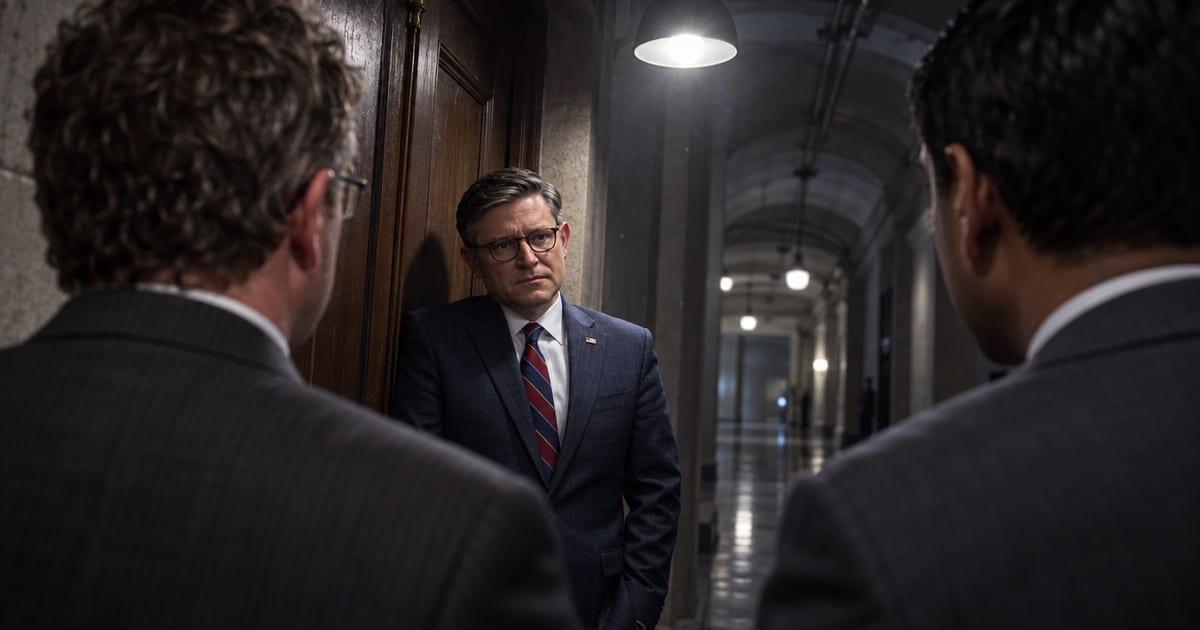
Two hundred eighteen. And two hundred eighteen. That is the math now staring down Speaker Mike Johnson, and no amount of podium spin can make those numbers disappear. Thomas Massie, Representative from KY-4 (Republican), banked the signatures on the first discharge petition. Representative Ro Khanna from CA-17 (Democrat) confirmed a second hammer carrying its own 218 names. House rules now guarantee a floor vote before November 30, which means a Speaker who spent nine months letting dust settle on the Jeffrey Epstein evidence must stand before the American people and explain why half of these files have never seen daylight.
The fight over the Epstein documents is no longer procedural theater—it is a forced roll call. Survivors' records sat hidden until sloppy redactions exposed their names, and the man running cover is Mike Johnson, who claims he always wanted transparency while the documents stayed locked behind process language. That contradiction is now impossible to spin because the House calendar runs out at the end of November and the signatures are public. The American people have watched this play before: a release date, a partial file, redactions so careless they exposed victims' names, and then silence. This time the House is not allowed to wait. Thomas Massie forced the issue the old-fashioned way—with signatures, not speeches.
The Real Stakes: It Was Never Just About Paper
The stakes go far beyond redaction failures. Leon Black sits in criminal contempt—millions of dollars to Jeffrey Epstein and no prosecution—while New Mexico's attorney general claws for Zorro Ranch evidence because Todd Blanche's Justice Department will not move. That is the core of the second petition Ro Khanna just named: a path for state attorneys general to prosecute what the federal government refuses to touch. The files are not just about Epstein; they are about the network, the money, the property, and the witnesses who have waited for accountability while Washington hides behind redactions and process language.
It is also why Johnson's answer was not to open the files but to smear Thomas Massie as an attention-seeker. When two loaded petitions sit at 218 and 218, calling it a stunt is not process. It is a man choosing the billionaire class over survivors.
"Mike Johnson had nine months of dust on those files, and today his answer was to smear Thomas Massie for forcing a vote by November 30. Two petitions, 218 and 218, and the Speaker stood at a podium and called it an attention stunt. That's not process—that's a man choosing the billionaire class over survivors."
Every Member Must Now Stand and Be Counted
House rules guarantee the vote lands before November 30, and every member will stand up, in public, on camera, and decide whether the Epstein files belong to survivors and the American people or stay locked behind redactions and process language. There is no clean no. A vote against the Epstein files is a vote to protect the class that hid them. If a representative votes against releasing these files, that roll call becomes a permanent record. Patriots will remember.
The second petition matters more than the first because it would let state attorneys general prosecute what the feds won't—including evidence tied to Zorro Ranch and the names that keep surfacing in redaction failures. Mike Johnson can complain about attention-seekers, but he cannot stop the floor vote. The fight now moves from the Speaker's podium to the floor, and the second petition is the one to watch.
So call it out by name. Contact your representative and ask directly: will you vote to open the files, or protect the class that hid them? The signatures are public. The deadline is fixed. And the American people are watching.
