
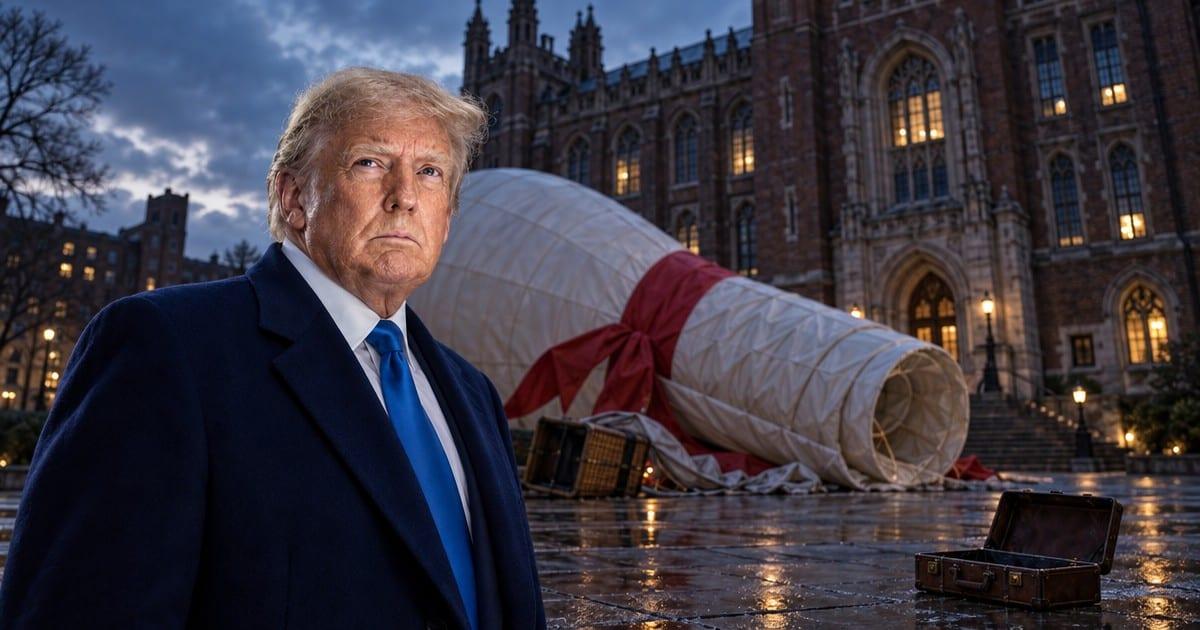
American colleges and universities are bleeding international students and the tuition dollars that come with them, and administrators are pointing the finger at President Donald Trump's immigration enforcement. New international student enrollment plunged 15 percent this fall, according to a survey released Monday and reported by The New York Times, following an 18 percent drop the year before. Including students already enrolled, total international enrollment fell 9 percent, on top of a 3 percent decline last year.
The cause, according to reporting from Breitbart and Politico, is a deliberate tightening of the F-1 student visa program. Visa restrictions are being enforced, applicants are facing stricter vetting, and schools that spent years building revenue models around full-tuition-paying foreign nationals are watching the pipeline narrow.
I'm not going back,'" Mitchell said.
THE PIPELINE BEHIND THE NUMBERS
The enrollment collapse is not simply a story about foreign students choosing other countries. According to Breitbart's reporting, many American schools have for years boosted revenues by helping foreigners use university-managed work permit programs attached to F-1 visas to land American white-collar jobs, with the student visa functioning as an entry point into the U.S. workforce through programs like F-1 Optional Practical Training and the H-1B visa.
Advocates for tighter restrictions argue that pipeline has kept Americans out of well-paying jobs and that the decline in foreign enrollment is opening those positions to young American graduates. Breitbart also noted that some of the anti-American protesters who have caused unrest on campuses in recent years were foreign nationals on student visas, citing Leqaa Kordia, a Columbia University student whose visa had lapsed while she remained in the United States and took part in the 2024 campus protests, and former Cornell student Momodou Taal.
The administration's broader immigration crackdown has occasionally swept up foreign students, and the Times reported that confusing visa policies and the ongoing trade war with China, one of the largest sources of international students, have stoked fears abroad that the United States is no longer a welcoming place to study.
Nationwide enrollment statistics for the 2025-26 academic year have not yet been released. Politico reported that preliminary numbers already published by many colleges show major losses of international students.
The financial pressure is real. International students typically pay full tuition, indirectly subsidizing costs for domestic students, and schools that budgeted for years of growth are now staring at shortfalls. What is not yet known is how individual institutions will absorb the losses, whether through tuition increases on American students, program cuts, or both.
Our Take
Let's be clear about what is actually happening here. Colleges are not grieving for the cause of international education. They are grieving for a revenue stream that depended on a visa program loose enough to be gamed. For years, the F-1 visa was treated by some institutions as a backdoor work permit, a way to import full-tuition customers who then flowed into the American job market through OPT and H-1B, competing directly with young Americans who graduated from those same schools.
Where was the outrage from these same administrators when foreign nationals were violating the terms of their student visas, overstaying, and in some cases joining anti-American protests on the campuses that admitted them? The performative outrage is incredible. If the people running these universities actually cared about legitimate international students, they would be thanking President Trump for cracking down on the fraud so that only those genuinely intending to study here receive the privilege of a student visa.
The enrollment drop is not a crisis. It is a correction. It means more seats and more opportunities for American students, and it means schools will have to compete on the quality of their education rather than on the ease of their visa pipeline. The only question worth asking is this: if a university's business model collapses when the fraud is removed, what exactly was it selling in the first place?
