
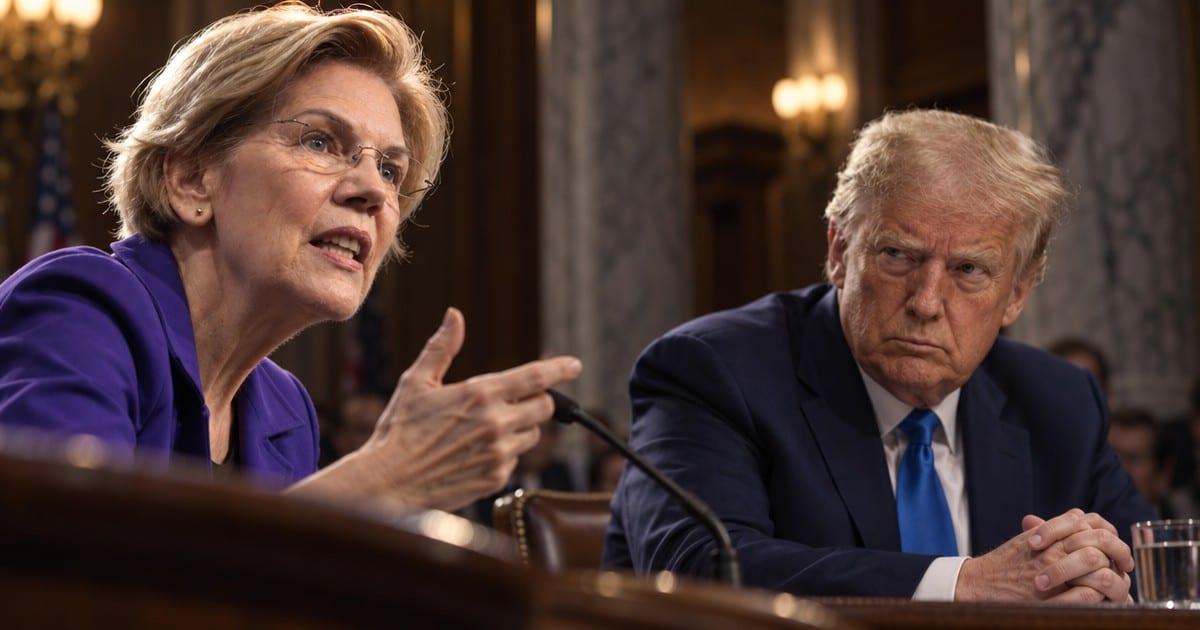
Sen. Elizabeth Warren pressed acting Navy Secretary Hung Cao on the price of the Iran war blockade during his Senate confirmation hearing Tuesday, and the exchange got testy fast.
Cao, a combat veteran seeking the permanent top civilian job at the Navy, was asked by Warren to account for the daily cost of the blockade operations tied to the eight-month-old conflict. According to a Next News Network post on X, the figure on the table was $32.5 million a day.
Cao dodged the precise number, arguing the strategic stakes mattered more than the accounting. "Losing the Strait is even worse," he said, before offering an off-the-cuff estimate for the running total. "Let me do some quick Asian math in my head. About $30B so far."
Warren's response, per the exchange, was blunt: "You don't have any idea?"
A Hearing Under A Cloud
The numbers matter because the hearing unfolded against a brutal stretch for the Navy and the administration. Cao acknowledged as much himself. "This war, again, I know it's a strain on our Navy," he told the Senate Armed Services Committee, while insisting that "it's really set China back on their heels" to see the services operating together, the Los Angeles Times reported.
Lawmakers from both parties pressed Cao on the war's cost to readiness: long deployments wearing down sailors, drawdowns of advanced weapon stockpiles, and resources pulled away from the Pacific. Republican Sen. Roger Wicker of Mississippi, who chairs the committee, said that "the challenges faced by the Navy are significant but so are the opportunities" — and threw his support behind Cao.
Cao also needs a congressional waiver to take the job permanently, because he left active-duty service less than seven years ago. He has served as acting secretary since April, after John Phelan's departure, which came with little public explanation. President Trump nominated him for the permanent post in September.
The hearing follows reports of crew stress and supply shortages aboard the USS Abraham Lincoln, whose record-breaking deployment supporting the Iran war ended with a return to San Diego in October. Democratic lawmakers have also complained the Navy failed to inform Congress that it fired the entire leadership team of a nuclear-powered attack submarine following an underwater collision, and that the commander of a destroyer deployed to the Middle East was relieved.
What The War Has Cost
The human toll is not abstract. CBS News' "60 Minutes" reported Sunday that Iran has struck at least 31 U.S. military and diplomatic sites across the Middle East since the war began in February, citing video and satellite imagery analysis. The Pentagon has acknowledged only a fraction of those attacks, according to the network.
Twenty-three U.S. service members have been killed and more than 800 wounded over the course of the conflict, according to the Pentagon's official database cited by CBS. The deadliest single incident was the March 1 Iranian missile strike on a U.S. base in Port Shuaiba, Kuwait, which killed six Americans.
Maj. Stephen Ramsbottom, who survived that strike, has filed a complaint with the House and Senate Armed Services Committees alleging military leadership bears responsibility for the deaths of his six fellow troops. They killed my wife," he said.
The politics surrounding the hearing are difficult for the administration. Republicans lost both chambers in the midterms in what the Los Angeles Times described as a repudiation of the war, and Democrats take control of Congress in January. A House impeachment effort against Hegseth, launched in part over his handling of the conflict, failed — but the fight over the war's transparency is only escalating.
A third U.S. aircraft carrier has arrived in the Middle East, and Trump has kept his options open even as the conflict grinds into its ninth month.
Our Take
Here's what Warren's gotcha moment won't tell you: a Navy secretary nominee who can do the math in his head — roughly $30 billion over eight months at $32.5 million a day — isn't the scandal. The scandal is why Congress is just now asking the question. The Strait of Hormuz carries a fifth of the world's oil. Let Iran close it and Americans pay at the pump in ways that make a $32.5 million daily tab look like pocket change. Cao understood the stakes; Warren wanted a spreadsheet. But facts are facts: 23 dead Americans, 800 wounded, a 5th Fleet headquarters in Bahrain badly damaged, and a war that Republican voters reportedly repudiated at the ballot box. The Pentagon's selective accounting of those 31 strikes is a genuine problem, and Hegseth owes the families of Port Shuaiba a straight answer — not a "squirter" soundbite. Congress should give Cao his waiver and let him run the Navy, and it should give the war the oversight it has plainly lacked for eight months. Our sailors deserve both.
