
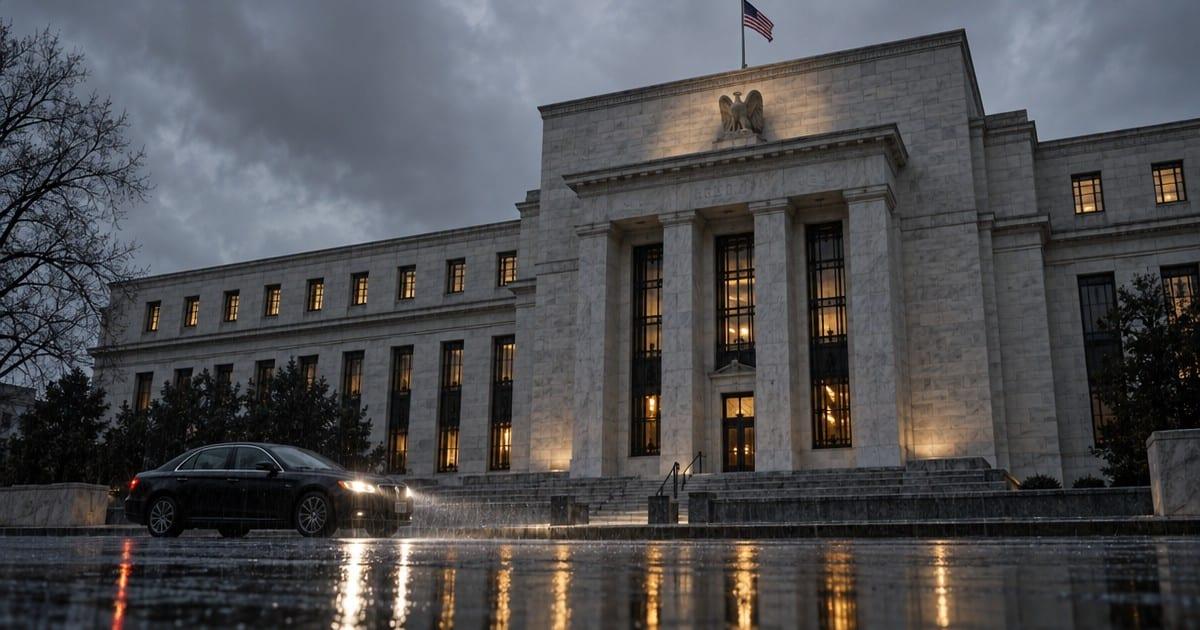
The Federal Reserve Board on Tuesday issued an enforcement action against a former employee of United Community Bank, according to a notice from the central bank. The announcement did not name the individual, specify the bank's location, or detail the nature of the misconduct. The Fed's enforcement actions against bank employees typically involve allegations of fraud, embezzlement, or violations of banking regulations.
The action is part of the Fed's routine but often overlooked process of barring individuals from working in the banking industry. Such orders are usually issued when the Fed determines a former employee engaged in misconduct that harms a bank or its customers. The Fed has not released additional details about the case, including whether the former employee agreed to the action or is contesting it.
United Community Bank is a registered financial institution, though the Fed's notice did not specify which of the several banks operating under that name is involved. The enforcement action comes as federal prosecutors across the country are pursuing a separate, high-profile crackdown on fraud targeting veterans benefits programs, announced Tuesday by the Justice Department's National Fraud Enforcement Division.
That nationwide surge, which began September 1, has resulted in charges against 15 defendants accused of attempting to defraud the government of more than $3.4 million, according to a Justice Department press release. Among those charged is Heidi Brady, a Department of Veterans Affairs National Call Center employee in Killeen, Texas, who allegedly abused her access to veterans' information to divert disability payments to a bank account she controlled.
Also charged was Yolanda Johnson Sayed, 61, of Houston, a prosthetics representative at the Houston VA Medical Center. According to charging documents, Sayed conspired with the owner of a VA-approved medical supplier to steer purchase orders to the company and approve inflated delivery charges for wheelchairs and walkers. Between November 2020 and August 2025, she allegedly conducted roughly 1,437 transactions with the vendor, defrauding the VA of about $182,000, Fox 26 Houston reported.
"When you defraud the VA, you defraud veterans who are owed those benefits, and you defraud the taxpayer who has provided his or her hard-earned dollars to pay for those benefits," U.S. Attorney Aaron Reitz for the Southern District of Texas said during a Tuesday news conference, according to Fox 26 Houston.
The Fed's action against the former United Community Bank employee is separate from the VA fraud crackdown, but both cases reflect a broader push by federal authorities to hold individuals accountable for financial misconduct. The Fed's enforcement orders are typically published on its website and remain in effect until vacated, though the central bank often releases only minimal information about the underlying conduct.
The Fed can bar bank employees from the industry for misconduct, though the lack of transparency around the specific allegations may leave customers with unanswered questions. The central bank has not indicated whether the former employee faces criminal charges or whether the bank itself was harmed.
Next News Network will continue to monitor this story for additional details as they become available.
Our Take
Good on the Fed for taking action against a former bank employee—but the lack of transparency here is classic bureaucratic behavior. The central bank announces an enforcement action without naming the individual, the bank's location, or what they actually did. Is this a case of fraud? Embezzlement? Something worse? The public deserves to know.
This comes as the Justice Department is finally getting serious about fraud against veterans—a scandal that should have been addressed years ago. While the Fed's action is a separate matter, the pattern is clear: financial misconduct is everywhere, from small banks to the VA. The difference is that federal prosecutors are starting to name names and hold people accountable. The Fed should follow suit and release the details of this case.
Patriots, keep your eyes on your own bank accounts. If a former employee of a major bank is being barred from the industry, you have a right to know why. The Fed owes the public an explanation—and we'll be watching.
