
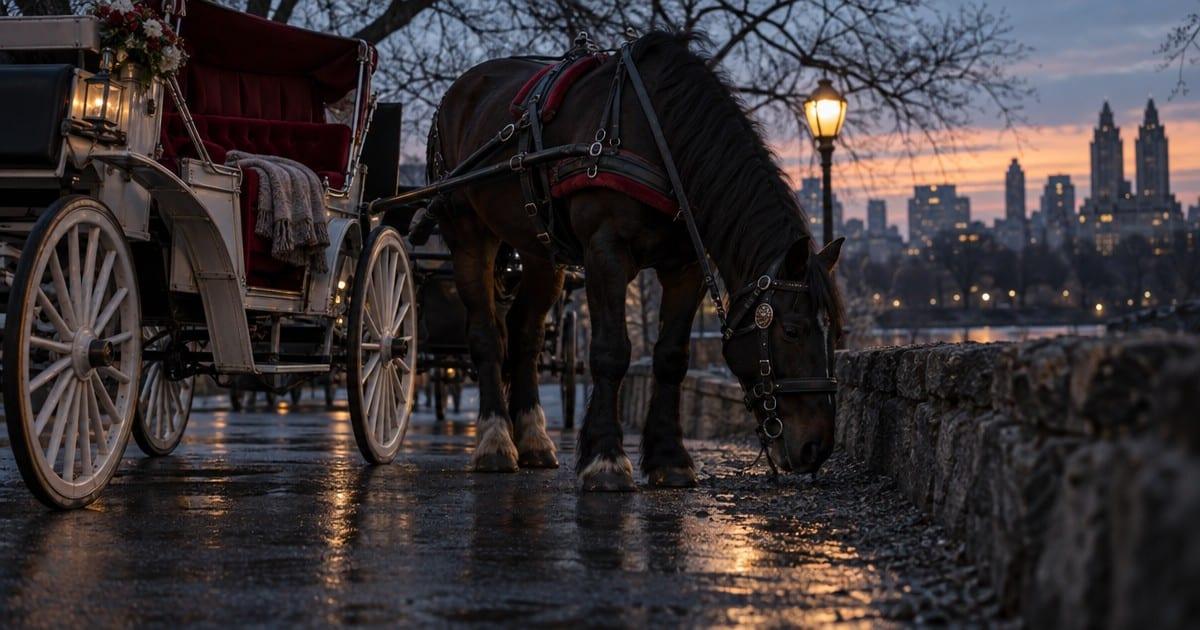
New York City Mayor Zohran Mamdani signed legislation Thursday that puts a June 1, 2028 expiration date on the city's horse-drawn carriage industry, closing out a Central Park tradition that has run for 150 years — and the drivers' union responded by filing a federal lawsuit in Manhattan minutes after the ink dried.
The bill, known as Romanch's Law, cleared the City Council 40–7 on October 22 and was signed at City Hall alongside Council Speaker Julie Menin and former Mayor Bill de Blasio, who had pushed for a ban during his own tenure. It halts the issuance of new carriage licenses and orders existing operators to stop offering rides by the 2028 deadline.
President Donald Trump had weighed in hours before the council vote, arguing in two Truth Social posts that the city was preparing to end a tradition more than a century old largely because of one fatal accident. Trump pointed to car crashes around Central Park and asked why those crashes had not led the city to bar cars from the park. He called the carriage rides a quintessential New York experience the city should keep.
The law is named for Romanch Mahajan, an 18-year-old tourist from India who died on June 17 after a horse bolted in Central Park. Mahajan's family had arrived in New York three days earlier. Relatives said he fell while trying to catch his mother, who was also thrown from the carriage and survived. The driver had stepped out to take the family's photo when the horse ran, according to an account of the incident reported in coverage of the signing.
Mamdani framed the signing as a necessary break with the past. "Our city has changed and now it is time for our laws to change, too," the mayor said at the ceremony, according to NBC New York. In a statement ahead of the bill signing carried by ABC7, he added: "For 150 years, horse-drawn carriages have been a fixture of Central Park. Today, we are bringing that chapter to a close. This industry will come to an end, and we have a responsibility to the workers whose livelihoods depend on it."
City Hall estimates about 200 people make their living in the industry — drivers, stable hands and medallion owners. The administration says it will buy back medallions from carriage owners and offer stipends to drivers and stable hands who attend job training, with a full transition plan promised by April 2027 after consultation with workers and their union. Officials have not said how much the buybacks or stipends will pay. Mamdani also said he is commissioning a feasibility study on electric carriages and electric pedal-assist bicycles as potential replacements in and around the park.
The Transport Workers Union, which represents the carriage workers, did not wait for the details. Union President John Samuelsen said some owners paid hundreds of thousands of dollars for city-issued medallions and argued the law takes them away without guaranteeing compensation.
"The City's approach can be summarized in twelve words: immediately cripple the owners, ignore property interests and contracts, and maybe compensate," the lawsuit reads, according to NBC New York.
The union is also challenging a provision that bars owners from selling their horses to carriage operators elsewhere, including in states where the rides are legal. The law separately bars sending the horses to slaughter. City officials say sanctuaries and rescue groups are prepared to take in horses as they retire, and Allie Taylor, director of the Mayor's Office of Animal Welfare, said those groups are ready.
Samuelsen told NBC New York that the protections the mayor outlined recently should have been written into the legislation itself. "Despite the good intentions of the mayor, the protections he outlined recently should have been written into the legislation," he said.
Council Member Chris Marte, the bill's sponsor, said the law protects both horses and passengers. "We cannot bring Romanch Mahajan back, but we can honor his family's call to prevent another tragedy," Marte said, according to coverage of the signing. Speaker Menin thanked Romanch's family for what she described as their compassion and courage in working with the council on the bill, and said that without action, fatalities in Central Park would continue.
The political oddity here is hard to miss: de Blasio spent years pushing a carriage ban and got nowhere, and it took a new mayor — and a single June afternoon — to finish the job. Mamdani now owns the outcome, and so does every lawmaker who voted yes. The horses leave in June 2028. The traffic on Central Park South is not going anywhere.
Next News noted the same trade-off in a post on X: "New York City Mayor Zohran Mamdani has officially banned horse carriages, ending a century-old Central Park tradition, the New York Post reports. The horses are out of a job. The Midtown traffic, naturally, keeps its spot."
Our Take
Here is what Mamdani's signature actually buys New York: 200 working people handed a promise — a buyback and a stipend, amounts to be named later — and a lawsuit filed before the ceremony was even over. If the city wanted to do right by drivers, it would have written the compensation into the bill instead of leaving it to an April 2027 press release. Samuelsen is right about that, and the union's complaint reads less like politics than like math.
Trump asked the question Mamdani never answered: if one fatal accident justifies shutting down an entire industry, why are cars still allowed anywhere near Central Park? The mayor's answer is an electric-carriage study. That is not a plan; that is a press release with a battery.
And spare a thought for the horses. They did not ask to be the centerpiece of a culture war, and the sanctuaries taking them in deserve better than to be used as a closing line in a victory lap. If the city is serious about animal welfare, it will track every one of those animals to a real home — not just ban the slaughterhouse and call it a day.
Patriots, this is what progressive governance looks like when it finally gets the votes: a 150-year tradition killed to satisfy an activist base, with the bill for the workers shoved down the road. Watch the April 2027 plan. If the buyback numbers come in low, remember who signed the bill — and remember who warned you it was a bad deal for New York.
