
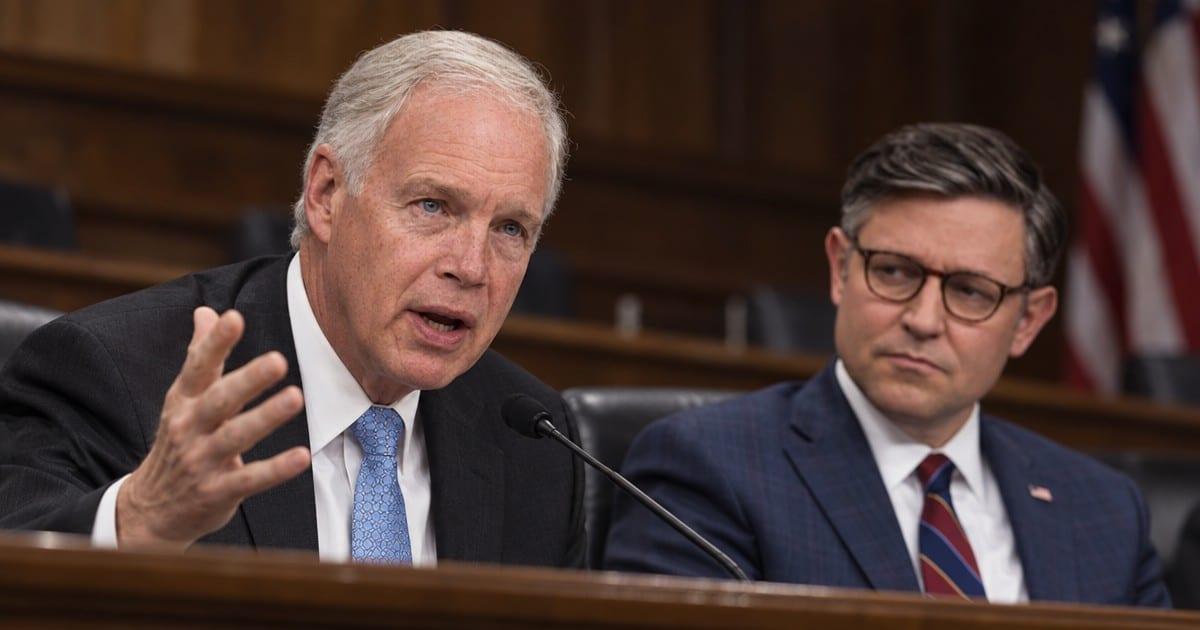
Sen. Ron Johnson's description of Social Security as a "legal Ponzi scheme" dominated headlines this week, but the Wisconsin Republican's remarks also buried the more important story: a Senate Budget Committee hearing that put hard numbers on the program's approaching insolvency.
The remark drew the kind of coverage that pushes substance off the page. MarketWatch reported that Johnson's comments overshadowed what might have been a useful hearing about fixing Social Security — a program whose retirement trust fund is projected to run dry in 2032.
The numbers behind the hearing are not ambiguous. A report from Johnson's office projects the Old-Age and Survivors Insurance trust fund will face a $511 billion shortfall by 2032, according to Patriot Journal. The Social Security trustees project the retirement and survivors fund can pay full scheduled benefits through most of 2032; after reserves run out, ongoing revenue would cover about 78% of those benefits — a 22% cut for retirees unless Congress acts.
The dispute is about a pay-as-you-go system backed by trust-fund reserves, not individual retirement accounts. In 1960, there were 5.1 workers paying into Social Security for every beneficiary; by 2024, that ratio had fallen to 2.7, according to Patriot Journal.
"What they said in 1977 was if you index benefit growth to wages, you're effectively building a solvency crisis into the program," Andrew Biggs, a senior fellow at the American Enterprise Institute and former deputy commissioner of Social Security, said in coverage from Conservative Underground News.
Romina Boccia, director of budget and entitlement policy at the Cato Institute, told the same outlet: "There's this misconception that a lot of Americans think that Social Security is a retirement savings program."
Johnson has also introduced the "Stop Scaring Seniors Act," which would have the Treasury Secretary transfer money from the general fund to the retirement trust fund to keep full benefits flowing. The Committee for a Responsible Federal Budget's Maya MacGuineas warned in AS USA that the plan would add roughly $190 trillion to the U.S. debt and could spook the bond market.
At the hearing, Sen. Jeff Merkley and Sen. Ron Wyden pressed the case for higher taxes on billionaires instead of confronting the math, according to Conservative Underground News. That is the same stall Congress has run for five decades.
The Instagram account of Sen. Ron Johnson posted a reel captioned "Social Security is in trouble because ..." — a post that gestures at the problem without laying out the fix. The gap between that caption and the 2032 deadline is the story the gaffe obscured.
For Americans already collecting checks, the trustees' projection translates into a 22% cut to scheduled retirement and survivors benefits when reserves deplete — unless Congress changes the formula, raises taxes, or borrows. For workers paying in now, the promise is being repriced in real time.
Johnson's "Ponzi scheme" line was politically costly. But it was also a signal that the chairman of the Senate Budget Committee does not believe the program can be repaired within its current structure. That position, whatever its packaging, is now on the record ahead of a 2032 deadline that does not move.
Our Take
Ron Johnson said the quiet part loud, and the establishment — including some Republicans — clutched its pearls. But the pearl-clutching is the point: the same people who accuse him of being "imprecise" have no plan to avoid the 22% cut. They have a plan to add $190 trillion in debt and call it saving Social Security.
Patriots, ask yourselves why the media spent a week on one word and almost no time on the $511 billion hole. Why did Merkley and Wyden use their hearing time to demand billionaires pay more instead of explaining how a pay-as-you-go program survives a 2.2-worker-per-retiree future? Because the math is inconvenient for the people who have run this program into the ground.
Johnson's language was blunt. The crisis is blunter. Congress has known about the 1977 wage-indexing decision for nearly fifty years and done nothing. The 2032 deadline is not a talking point — it is a date. The only question is whether Washington will fix the formula, means-test the benefits, or let retirees eat the cut. Call your senators and ask which one they support. Because a shrug is not a retirement plan.
