
A new report is pushing back against the loudest voices in Washington who want to cut ties with Israel, arguing that the U.S.-Israel alliance delivers concrete military and economic returns even as public support for aid erodes across the political spectrum.
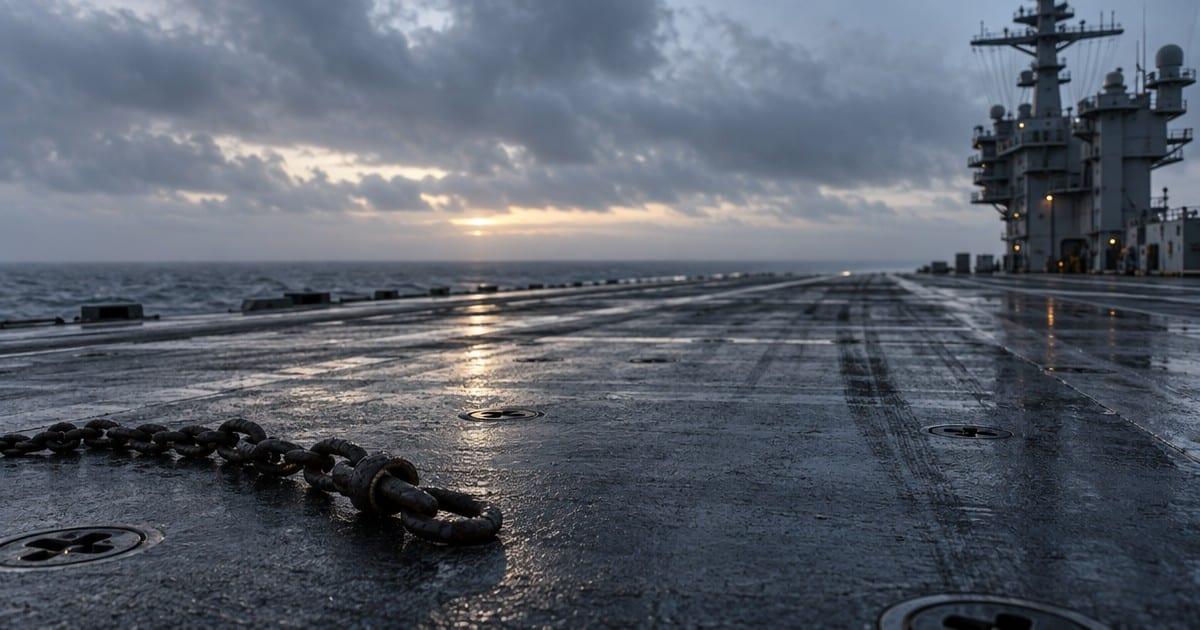
The report, dated Oct. 26, 2026, and covered by Fox News Politics, calls Israel "the largest U.S. aircraft carrier" in the Middle East. It points to intelligence sharing, joint weapons development and military cooperation as tangible returns on American support. The timing matters: it lands as support for Israel falls among Republicans and MAGA supporters, not just Democrats.
One of the clearest examples is missile defense. The U.S. and Israel develop systems including David's Sling and Arrow, while American companies manufacture components for several programs. According to the Congressional Research Service, more than 100 companies across 34 states take part in missile-defense co-production.
"In August, a Raytheon-Rafael facility in Arkansas delivered the first Iron Dome Tamir interceptor built entirely in the U.S."
That Arkansas facility means American workers build the interceptors that defend Israeli cities—and those same production lines feed the Pentagon's own development of missile-defense systems.
The report also lands amid a widening political fight. In Michigan, Democratic Sen.-elect Abdul El-Sayed was confronted on NBC's "Meet the Press" Sunday over his opposition to Israel's existence as a Jewish state, according to Fox News Politics. El-Sayed has opposed Israel as a Jewish "ethno-state"—a position that puts him at odds with the mainstream of his own party on the alliance.
President Donald Trump and Israeli Prime Minister Benjamin Netanyahu have discussed ending direct U.S. military aid, though Trump has also called Israel "a great ally, much more reliable than most" and said Washington would help if Israel needed it. On Nov. 3, Trump said he had agreed with Netanyahu to cut off U.S. military aid by the end of the year, according to JNS. But U.S. Ambassador to Israel Mike Huckabee said in an interview released Tuesday that he was "not certain" that will happen this year.
"There are appropriations in place that will extend into that period of time," Huckabee told Israel's Institute for National Security Studies, per JNS. He noted the memorandum of understanding governing the assistance "is supposed to continue for two more years" and that Congress would have to act for it to end sooner. Under the 10-year MOU signed during the Obama administration, Israel has received $3.8 billion a year in military aid since fiscal year 2019, through fiscal year 2028.
Secretary of State Marco Rubio told reporters on Nov. 9 that Trump believes Israel is now "prosperous and rich enough" to buy U.S. weapons without American financing, and that a new memorandum could cover co-production of some weaponry. The Israeli Prime Minister's Office posted on X that "Israel and the United States are making the important move from aid to partnership"—a social-media statement, not a formal policy document.
The costs are real, too. During the Iran conflict, U.S. forces expended large numbers of interceptors—costly weapons that can take years to replace. In September, the Congressional Budget Office estimated the U.S. had probably used between half and two-thirds of its combined inventory of Patriot, THAAD and SM-series interceptors, according to Fox News Politics. That drawdown sharpened the question of what the alliance delivers and what it demands in return.
The report's authors say the return is substantial: American manufacturers gain work, the Pentagon gets a role in developing missile-defense systems, and the U.S. gets a reliable partner in a dangerous region. Critics say the alliance costs the U.S. a lot and delivers very little in return.
For everyday Americans, the fight is not abstract. It is whether factories in Arkansas and 33 other states keep building interceptors, whether the U.S. military has enough missile-defense stock for its own needs, and whether Washington keeps writing checks to a country Trump himself says is rich enough to pay its own way.
Our Take
Here is the question the establishment does not want asked: if Israel is "the largest U.S. aircraft carrier" in the Middle East, why is the U.S. still paying for the flight deck?
Trump is right to push toward a partnership where Israel buys American weapons instead of receiving them as aid—especially with more than 100 American companies in 34 states already building the interceptors that keep both countries safe. That is a win-win: American jobs, American security, and an ally that pulls its weight.
The erosion of support on the left is no surprise—El-Sayed's opposition to Israel as a Jewish state is the radical fringe trying to dress itself up as mainstream. But the erosion on the right should be a wake-up call. Patriots are asking a fair question: why are we borrowing money to defend a prosperous nation while our own border is wide open and our own military is short on interceptors?
The answer is not to abandon Israel. It is to make the alliance a real partnership—not a welfare program. Trump's instinct is correct. Congress should follow it, and the American people should demand it.
