
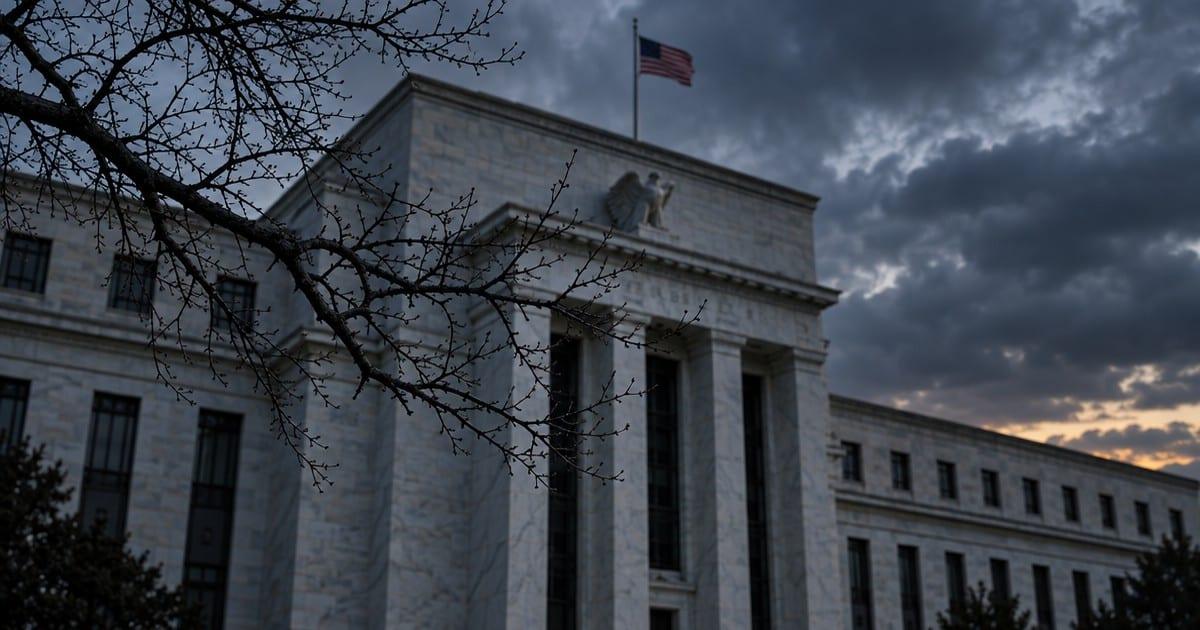
The Federal Reserve on Tuesday released its revised tentative schedule of Federal Open Market Committee meetings for 2027, giving markets and policymakers a first look at the central bank's calendar for a year that is already shaping up to be a referendum on the Fed's 2% inflation target.
The FOMC, which sets the benchmark federal funds rate, typically meets eight times per year. The revised calendar comes as the central bank is under intense scrutiny over its rate path. Inflation has remained above the Fed's 2% target for more than five years, according to reporting from Benzinga, and the most recent Bureau of Labor Statistics data put annual inflation at 3.7%.
The schedule release lands just days before the Fed's next policy meeting in the second week of December, a gathering that hedge fund titan Bill Ackman has flagged as a potential turning point for markets. In a post on X cited by Fortune, Ackman warned that financial conditions have already tightened significantly through the bond market, making borrowing more expensive for private businesses seeking to invest.
"The Fed's 2% inflation ambition is misguided," Ackman wrote on X, according to Fortune. "Geopolitical risk and the required investment in global military spending, deglobalization and tariffs, and the massive AI infrastructure and related energy investment are features of the world that did not exist when the 2% target was set."
Ackman added that "three percent inflation is a more realistic ambition in the new world," per Fortune. He also warned that the U.S. economy could enter a recession if the Fed commits to its 2% goal.
The internal pressure inside the Fed has been building for months. Minutes released Tuesday from the October 28 FOMC meeting showed that directors at eight of the 12 regional reserve banks backed raising the discount rate by a quarter percentage point to 4.25% from 4% ahead of that gathering, according to Benzinga and Bloomberg. The boards in Boston, Cleveland, Chicago, St. Louis and Minneapolis voted on October 15 to recommend the increase; Richmond, Kansas City and Dallas followed on October 22, while Atlanta voted to keep the rate at 4%. New York, Philadelphia and San Francisco had voted earlier in the month to maintain the 4% rate.
Policymakers ultimately left the benchmark federal funds target range unchanged at 3.75% to 4% following a September rate increase—the central bank's first hike since 2023—Benzinga reported. Cleveland Fed President Beth Hammack dissented in favor of a quarter-point increase, aligning with her board's recommendation.
The discount rate is set by the Board of Governors, and the regional boards' votes serve as policy recommendations that do not always match how a district's president votes on the FOMC, per Benzinga.
The regional boards pointed to steady economic activity alongside elevated inflation and cost pressures, according to the minutes. The split inside the system—eight boards pushing for tighter policy versus four holding steady—illustrates how unsettled the debate has become as the Fed tries to balance price stability against the risk of choking off growth.
Meanwhile, the broader economic picture is clouded by trade policy. Bitcoin has struggled near $60,000 as President Donald Trump prepares new tariffs on 16 economies, according to reporting that also raised concerns over inflation and the Fed's December rate decision.
Fed Chairman Kevin Warsh has made clear he wants to give consumers and businesses a break from prices rising comfortably above the 2% benchmark, Fortune reported. But that impulse runs into the credibility problem the central bank has already confronted: this summer, when markets perceived weakness in the Fed's commitment to the 2% target, bond prices rose—the very dynamic Ackman now cites as his concern.
What the 2027 calendar actually changes for everyday Americans is the rhythm of their borrowing costs. Each of those eight scheduled meetings is a date on which mortgage rates, auto loan rates, credit card APRs and small-business credit lines can move. A schedule released in November 2026 is a warning to families and business owners to plan around those dates, not around hope.
It is not yet known whether the Fed will adjust the number of meetings or the timing of any specific gathering beyond what the tentative schedule shows. The Fed publishes a tentative schedule each year and revises it as needed.
Our Take
Here is the tell: eight of twelve regional Fed boards wanted to raise rates in October, and the central bank still sat on its hands. That is not a data problem—that is a leadership problem. The Fed has missed its own 2% target for over five years running, and now the smartest money on Wall Street is telling them the target itself is obsolete. Bill Ackman is not a MAGA cheerleader. He is a man who reads bond markets for a living, and he is saying out loud what every small-business owner paying 9% on a credit line already knows: the world changed, and the Fed's playbook did not.
Working families do not care about the FOMC's meeting calendar. They care that groceries cost more, that the dollar buys less, and that the Fed keeps promising "transitory" while prices stay permanently higher. President Trump and this administration have been clear that energy dominance, deregulation and tariffs are the tools to rebuild American industry—but none of that works if the central bank is fighting the last war with a 2% target written for a world that no longer exists.
Patriots, watch December. Watch whether the Fed listens to the eight boards that wanted a hike or the four that did not. And watch whether Kevin Warsh has the spine to admit the obvious: 3% is the new 2%, and pretending otherwise is how you get the recession Ackman is warning about. The Fed answers to the people, not the other way around—and the people are done paying for its mistakes.
