
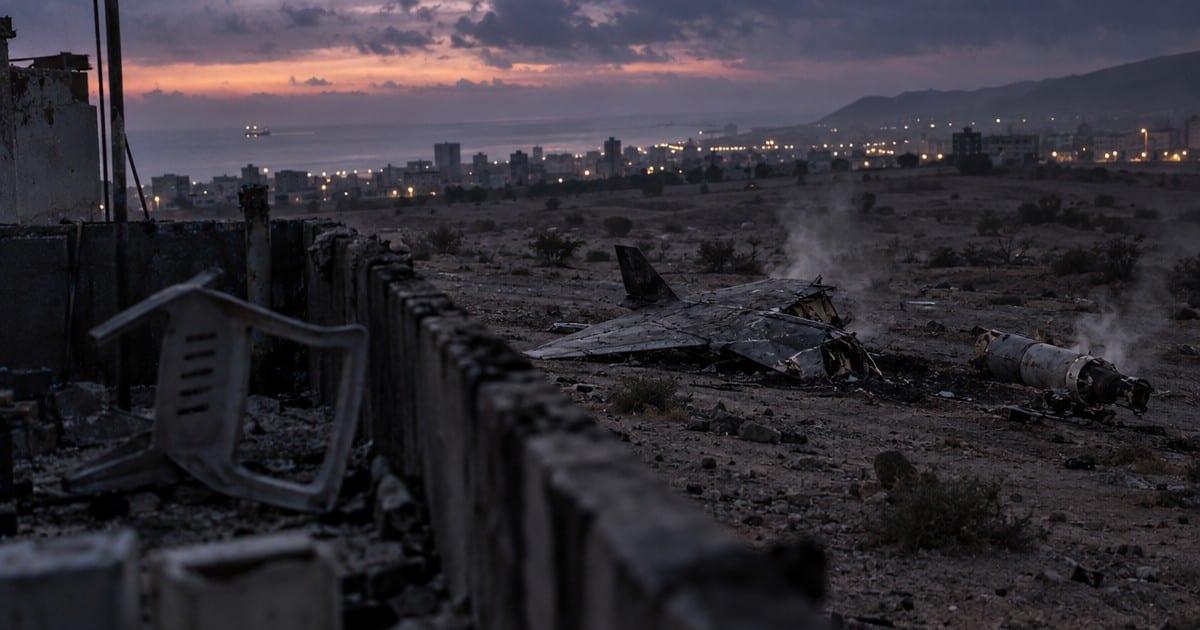
Kuwait successfully intercepted an Iranian drone attack this week, but the aftermath reveals a chaotic failure that left two foreign nationals dead. Initial reports circulating from regional sources indicate the victims were Italian technicians killed by falling debris from the Skyguard air defense system—the same Kuwaiti interceptor deployed to shoot the drone down. If confirmed, this was not a defensive victory; it was a lethal malfunction that turned a security shield into shrapnel.
Tehran is not launching these attacks from a position of strength. The Islamic Republic is bleeding out economically. Treasury records confirm that Iran has failed to load a single barrel of crude oil onto a ship since August 25. With inflation raging at 90 percent and the Rial collapsing to 2,687,000 against the dollar, the regime is facing the full weight of Operation Economic Outcast. The mullahs are staring at a balance sheet that dictates defeat, yet they still possess centrifuges and a desperation that makes them dangerous.
"Pete, I think you were the first to speak. You said: 'Let's do it.'"
That was President Trump's message to his war cabinet before previous strikes began, and it reframes the current red lines—proxies, missiles, and nukes. Esfahan, Natanz, and Fordo are no longer theoretical talking points; they are routine target sets under discussion by the national security team. NBC reports that President Trump is weighing decisive action before Democrats have a chance to retake Congress. The clock is moving, and the administration knows that a bankrupt theocracy backed into a corner is the most likely to lash out with the only tools it has left: drones and terror.
One need only look at the Turkish border to see the real story. Trucks are stacked twenty days deep because goods aren't moving and revenue isn't arriving. The mullahs have no hard currency and no functioning supply lines, but they maintain a network of proxy militias stretching from Lebanon to Yemen. This is the death rattle of a regime that has lost the economic war but refuses to surrender the kinetic one.
Kuwait now carries the burden of proof. The Kuwaiti government must name the dead, explain how the Skyguard system failed so catastrophically, and show whether the debris that killed two people came from the system designed to protect them. The European Union must stop issuing statements and start enforcing a complete squeeze on Tehran. Congress must stop pretending that a uniparty war consensus is a viable strategy while the 47th President is actively draining the swamp and the enemy's coffers simultaneously.
