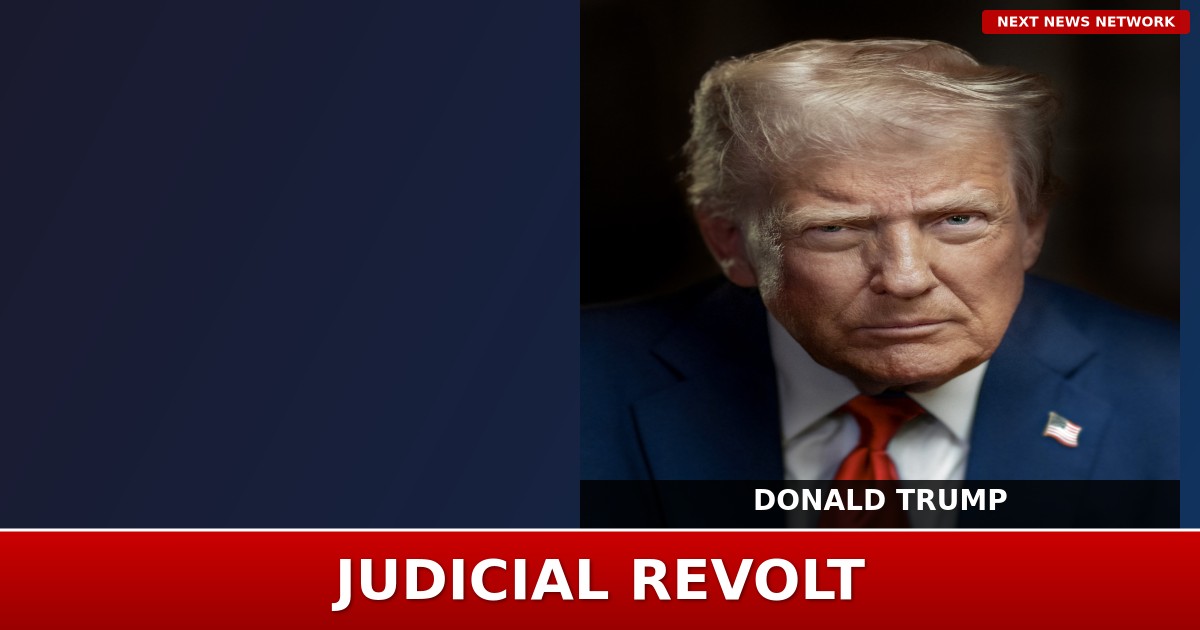
Federal courts are increasingly usurping executive authority from President Trump's administration, blocking legitimate policy decisions and personnel changes while the White House appears hesitant to mount a robust constitutional challenge to judicial overreach.
The pattern has become clear across multiple agencies and policy areas. Most recently, courts have repeatedly blocked the Trump administration from making necessary personnel changes at the Consumer Financial Protection Bureau (CFPB), despite the President's clear constitutional authority over executive branch employees.
As radio station WMBD reported on social media, "The Trump administration has denied the CFPB additional cash to meet expenses since taking control of the agency in February but it has been repeatedly blocked in the courts from firing workers en masse." This represents a direct challenge to the President's Article II powers to ensure faithful execution of the laws.
Constitutional Crisis in the Making
The judiciary's expansion into executive territory represents more than policy disagreements—it's a fundamental assault on the separation of powers. Federal judges, unelected and serving life terms, are effectively making policy decisions that belong squarely within presidential authority.
Conservative commentator @toddsworld2023 captured the frustration many Americans feel, posting: "Only Trump can deal with the out of control, corrupt courts. Does he have the courage to do it? Congress absolutely never will."
The administration's apparent reluctance to forcefully challenge these judicial interventions has drawn criticism from supporters who expected a more aggressive approach to defending executive prerogatives.
Beyond Executive Orders
Some observers argue the solution lies in legislative action rather than executive confrontation. Social media user @micyoung75 noted that "executive orders are easy, laws are hard," suggesting the Trump administration should "write narrow bills that can pass both chambers, survive courts, and outlast the next President."
However, this approach essentially concedes judicial supremacy over areas where the Constitution grants clear executive authority. The President was elected to faithfully execute existing laws—not to seek permission from unelected judges for every major decision.
The question facing the Trump administration is whether it will continue accommodating judicial overreach or finally assert the constitutional authority voters entrusted to the executive branch in 2024.