
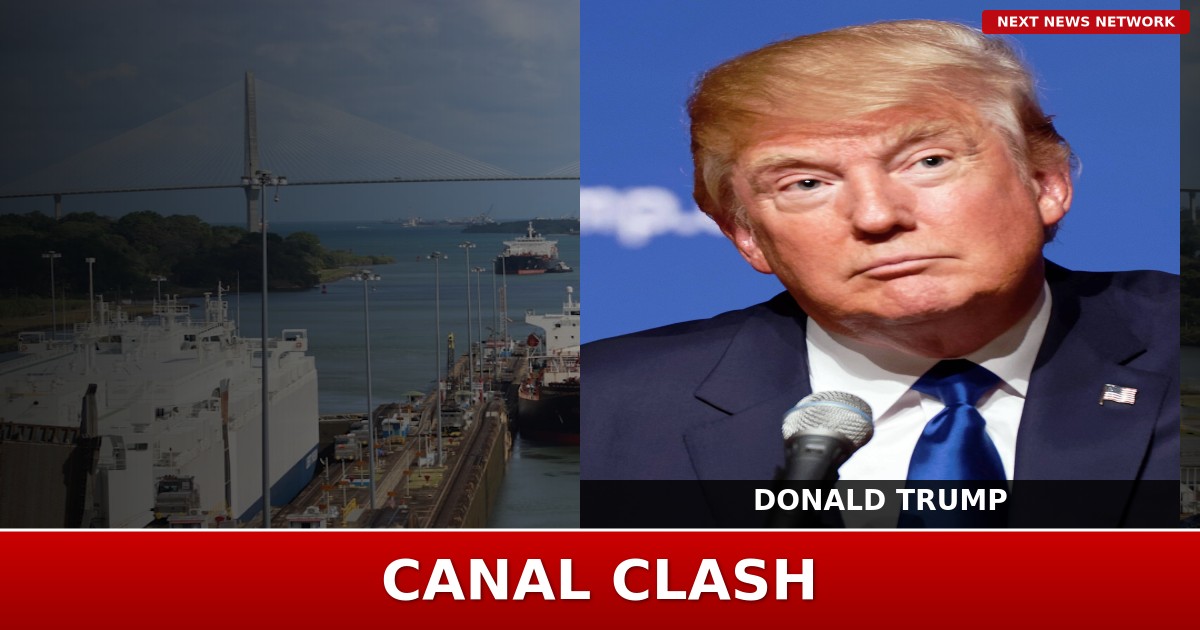
The Panama Canal, America's greatest engineering triumph and a strategic chokepoint for global commerce, stands as a monument to what happens when the United States abandons its rightful claims to critical infrastructure. President Trump's recent assertions of U.S. control over the waterway have reignited debate over one of America's most consequential foreign policy mistakes.
The Washington Post recently reported on what they dubbed the "Donroe Doctrine," noting how "Trump had laid claim to Canada as the '51st state,' recast Greenland as 'our land,' rebranded the Gulf of Mexico as the 'Gulf of America' & reasserted U.S. control over Panama Canal," according to social media commentary tracking the administration's expanded territorial vision.
The canal's story reads like a cautionary tale of American retreat. Built with American blood, sweat, and treasure, the 50-mile waterway was handed over to Panama in 1999 under the Carter-era treaties—a decision that has proven increasingly problematic as foreign powers, particularly China, have expanded their influence in the region.
"A shopkeeper who has to rebuild from the results of a riot expects to be protected the next time trouble brews, not expecting the deed to his storefront to be handed to the same crowd that destroyed his windows," as PJ Media aptly described America's position.
The Chinese influence is undeniable. Social media reports indicate that "China Protests Tearing Down Of Panama Canal Memorial Dedicated To Them," highlighting just how deeply Beijing has embedded itself in Panama's infrastructure since America's withdrawal.
Conservative voices on social media have embraced Trump's expansive vision, with some reimagining North American geography entirely: "Think of it this way: Banff: The greatest natural wonder in America. Chichen Itza: The most iconic American temple... Panama Canal: Generating America billions of dollars a year."
The canal generates approximately $4 billion annually in revenue—money that could be flowing to American coffers instead of funding a regime increasingly aligned with Beijing's interests. Trump's reassertion of American claims represents a long-overdue correction to a strategic blunder that has weakened American influence while strengthening our adversaries.
