
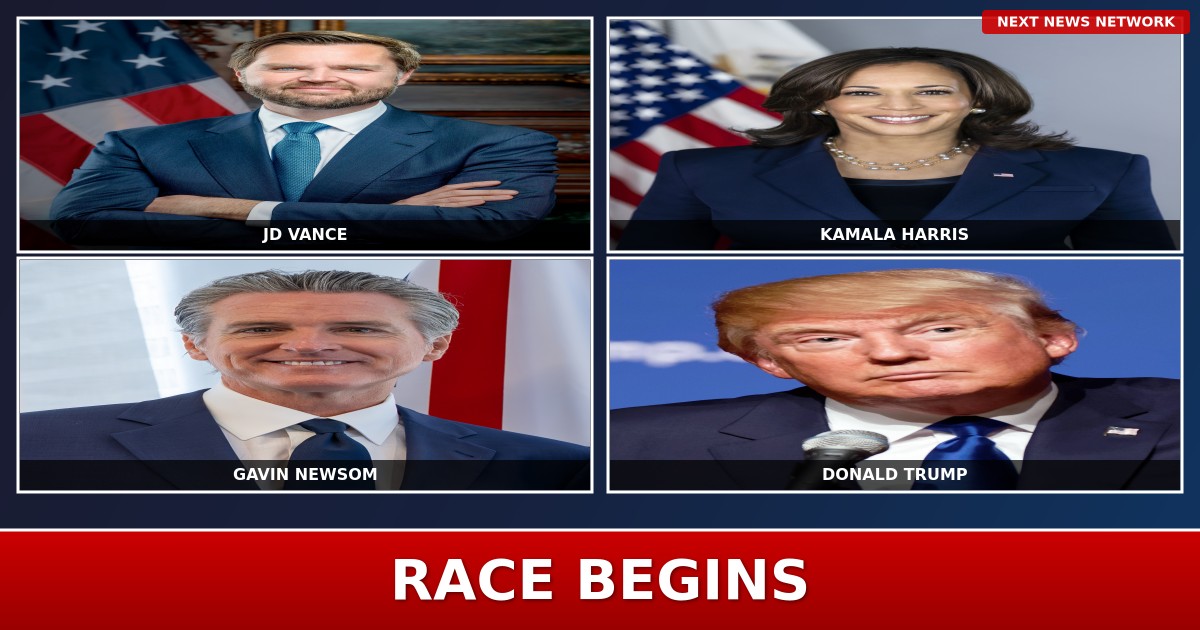
The battle for the White House in 2028 has officially begun, with Vice President JD Vance receiving a major endorsement while Democrats Kamala Harris and California Governor Gavin Newsom positioned themselves strategically at a recent Democratic summit.
Vance's early endorsement signals strong conservative momentum building behind the Vice President's anticipated presidential campaign, reflecting the America First movement's determination to maintain control of the executive branch beyond President Trump's current term.
Democrats Begin Positioning Phase
On the Democratic side, both Harris and Newsom used the party summit to test messaging and build crucial donor relationships. The maneuvering comes as Democrats face an uphill battle to reclaim relevance after their 2024 electoral defeats.
The early political positioning has sparked broader conversations about corruption and authenticity in American politics. Social media users are already expressing skepticism about traditional campaign promises. One Twitter user noted the challenge facing all candidates: "Corruption in politics, how did we got here? People voted for those with promises and then followed their vote base. As the base changed, their positions changed. Vote for the person who will act honorably behind closed doors, not what say while campaigning."
Another social media post highlighted the importance of anti-corruption messaging, stating: "It is impossible to take anti-corruption messaging seriously from any administration who enables it. Donors get a free pass, regardless of Party. America First must transcend identity politics. Campaigning to DESTROY ALL GRAFT is a winning and unifying message."
Early Primary Dynamics
With the 2026 midterm elections on the horizon, both parties are using the electoral cycle as a testing ground for 2028 messaging and coalition-building. Republican strategists view Vance's early endorsement as a sign that the conservative movement remains unified and forward-thinking.
The early start to presidential politics reflects the high stakes both parties see in maintaining or regaining control of America's direction, with fundamental questions about governance, corruption, and authenticity already shaping the narrative for the next White House race.
