
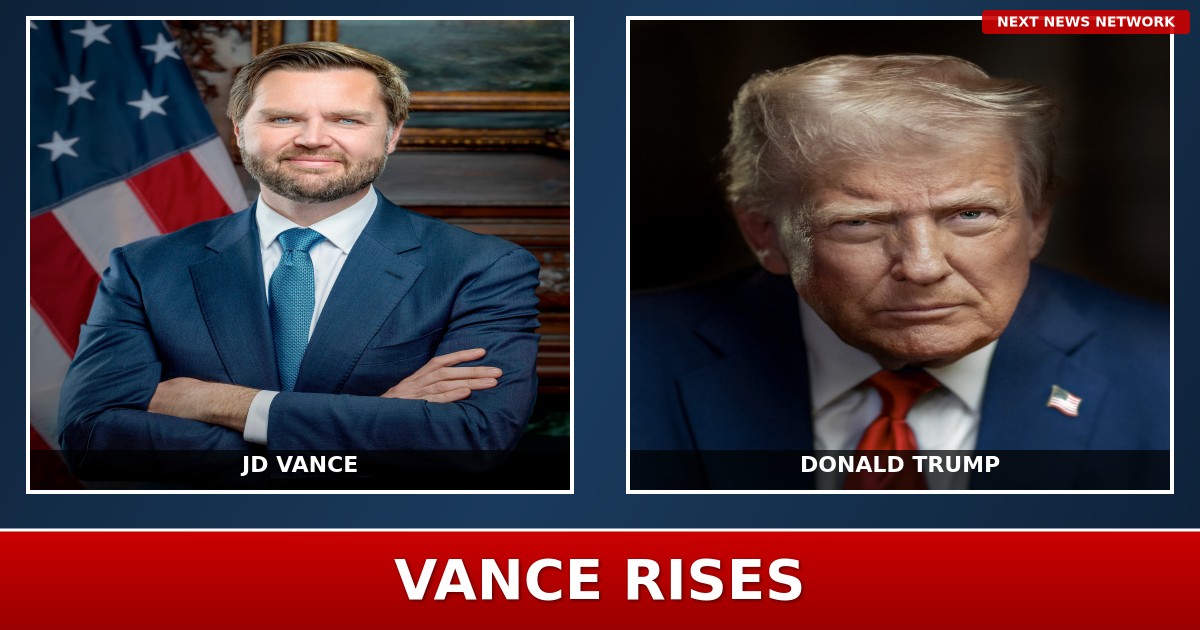
The 2028 presidential race is officially heating up as Vice President JD Vance secures a major endorsement for a potential White House bid, while Democrats who led the party to crushing defeats are already positioning themselves for another attempt at power.
Vance's early endorsement signals strong conservative momentum heading into the crucial 2026 midterm elections, which will serve as a referendum on President Trump's agenda and set the stage for the next presidential cycle.
Meanwhile, on the Democratic side, the same failed leadership that delivered historic losses to American voters is attempting a political resurrection. Kamala Harris, who suffered a devastating defeat in 2024, and California Governor Gavin Newsom made strategic appearances at a recent Democratic summit, desperately trying to rebuild their credibility with a party base that has largely moved on.
Social media users are already calling out the Democratic strategy, with one observer noting: "The 2028 White House race is underway: Newsom and Harris to represent the losers… again! With 2026 booming, both parties run through different strategies and scenarios on how-to convince Americans their inabilities will better our country and improve."
The early maneuvering highlights a stark contrast between the two parties. Republicans are building on their successful 2024 platform with strong conservative leadership, while Democrats are recycling the same faces that Americans decisively rejected.
Strategic Positioning for 2026
Political analysts note the importance of positioning heading into 2026, as one strategist observed on social media that successful parties must focus on "building the policy depth, organizational capacity" that separates genuine alternatives from mere opposition parties that simply "react to government failures, capitalize on scandals, and mobilize dissatisfaction."
With Trump's proven track record and Vance's rising profile, Republicans appear well-positioned to maintain their winning coalition, while Democrats face the challenging task of explaining why voters should trust leaders who have already been rejected at the ballot box.
The 2026 midterms will serve as the first major test of these early positioning efforts, setting the stage for what promises to be a consequential 2028 presidential election.
