
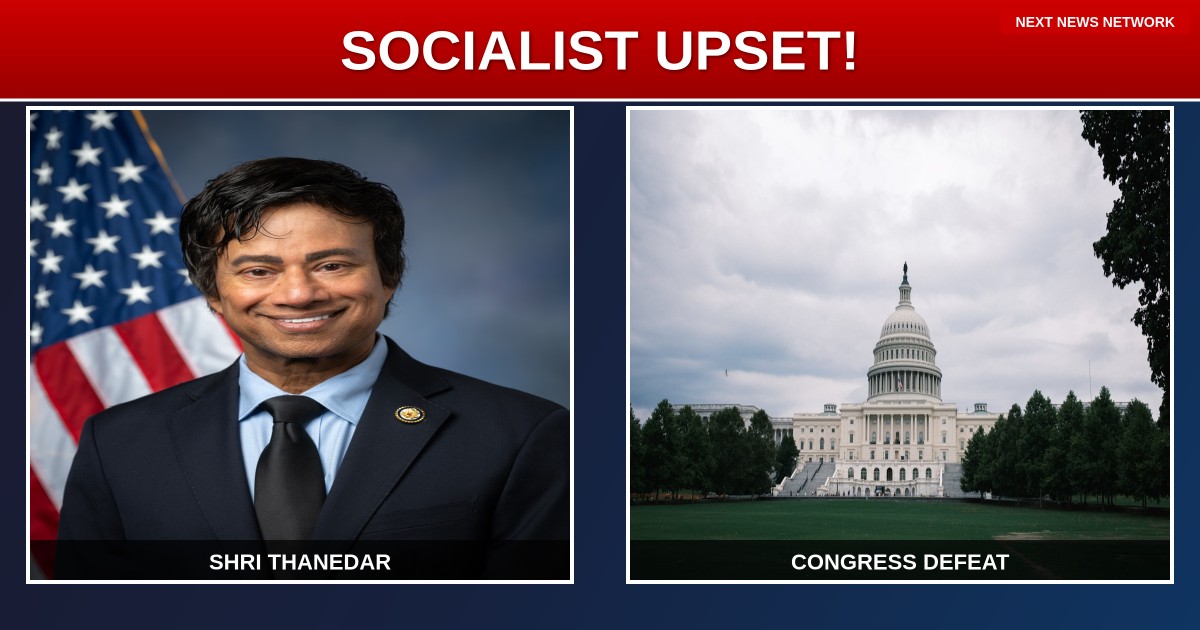
The political landscape experienced a seismic shift Tuesday as Indian-American Rep. Shri Thanedar (D-MI) suffered a stunning primary defeat to Democratic Socialist challenger Donovan McKinney. Thanedar’s loss not only marks a personal setback but also reduces the ethnic Indian bloc in Congress to just four members, a sharp contraction in a single election cycle.
This unexpected defeat has sent ripples through the political world, particularly among conservative circles who view the Democratic shift towards socialism with concern. Social media reactions were swift and unabashed, with users expressing both concern and derision. One Twitter user, @TRUMPGIRL_STL, highlighted the defeat, stating, "JUST IN: Congressmen Shri Thanedar has just LOST his primary election to Socialist challenger Donovan McKinney." The sentiment resonates with many who worry about the increasing influence of socialist ideology within the Democratic Party.
Thanedar's tenure in Congress has been marked by his attempts to balance moderate policies with the increasingly progressive demands of his party, a struggle he ultimately lost. Another social media commentator, @Booker10038, didn't hold back, quipping about Thanedar's future in politics: "Shri (freak) Thanedar lost his seat in Congress. It's comical that he's considering another run in 2028." This sarcastic take underscores the skepticism many conservatives have towards entrenched political figures attempting comebacks.
Additionally, @BarronTrumhc4u chimed in, expressing relief over Thanedar's exit: "The next Congress will be without this freaky little man. Shri Thanedar just LOST his primary election. See ya, Shri." Such reactionary sentiments reflect a broader disapproval of Thanedar's political stance among conservative voters who advocate for traditional American values and policies.
This primary outcome is emblematic of the internal struggle within the Democratic Party, as members lean more towards socialism, thus alienating moderates. The victory of McKinney, a candidate who embraces Democratic Socialism, signals a prevailing shift away from market-friendly policies towards more state-driven economic models. This could have significant implications for American governance and its fiscal direction, raising numerous questions about the future political balance of Congress and its impact on everyday Americans.
As the dust settles, Thanedar’s loss serves as a strategic warning for moderates within the Democratic fold who face similar challenges in upcoming elections. It remains to be seen what this shift manifests for the nation's legislative priorities and how this will affect the average American. Patriots, this development begs the question: is this the future of the Democratic party, and what does it mean for America's economic and social values?
