
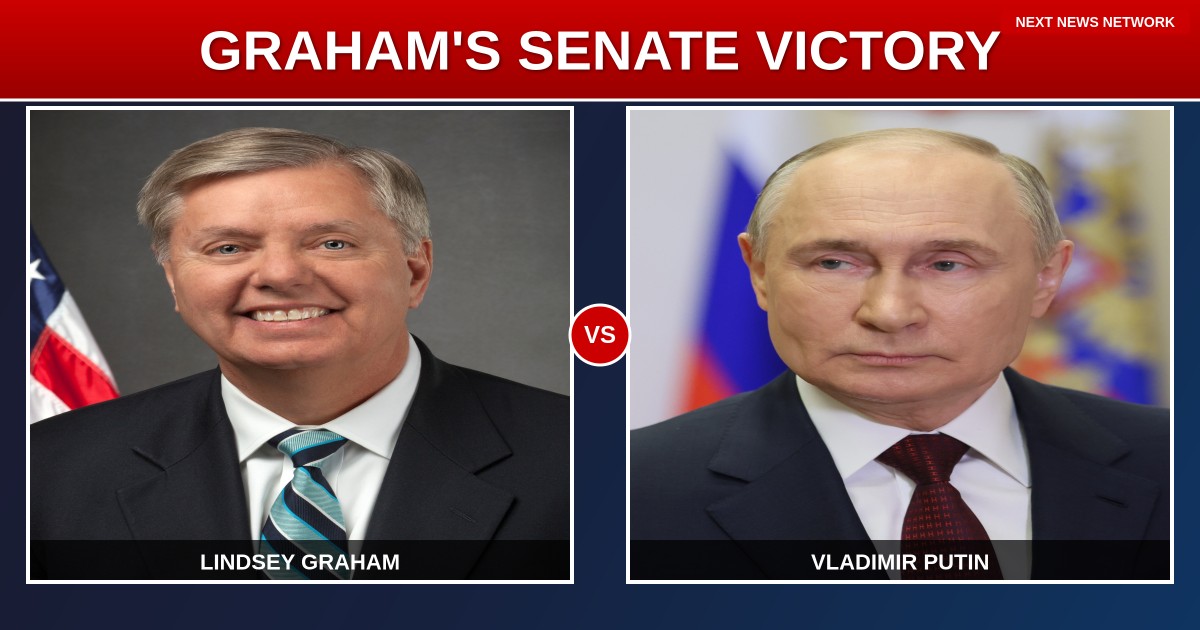
In a significant victory for those advocating a stronger stance against Russian aggression, the Senate has cleared a formidable sanctions bill targeting Russia’s oil and gas sector. Passed after a year-long battle led by Senator Lindsey Graham, this legislation empowers President Trump’s administration to slap up to 500% tariffs on Russian imports while penalizing nations that purchase Russian energy.
Senator Graham, a steadfast ally in challenging Russia's influence, has been unwavering in his pursuit to financially cripple Putin's regime. His dedication culminated in bipartisan support, though not without controversy. The bill, once thought unattainable, will now provide the Trump administration with critical leverage on the geopolitical chessboard. As @NOTUSreports tweeted, “The Senate passed a sweeping Russia sanctions bill giving Trump new power to punish countries that buy Russian oil and gas.”
While hailed by some as a strategic move, others question whether the new sanctions could backfire. Critics, including commentators like @petervlahos64, argue, “The Graham Tariff Bill: A Weapon Against Russia—or a Weapon Against America's Allies?” as they ponder the potential fallout for nations reliant on Russian energy.
Despite these concerns, the passing of this bill marks a decisive stance against Putin, reinforcing Trump's commitment to an 'America First' foreign policy. The administration's fierce approach highlights a commitment to American energy independence and a direct challenge to Russian authoritarianism.
Yet, discontent lingers over domestic priorities. Some, like @NGunnesch1954, voiced their frustration: “Yet they can't pass the Save America Act.” This sentiment underscores the ongoing tension between addressing international threats and focusing on pressing domestic needs.
As Graham's mission reaches its conclusion, questions arise about the next steps in Trump's robust policy agenda. How will these sanctions reshape the global energy landscape and America's role within it? What's certain is that with the Senate's approval, the U.S. is ready to confront the Kremlin and stand tall on the world stage.
