
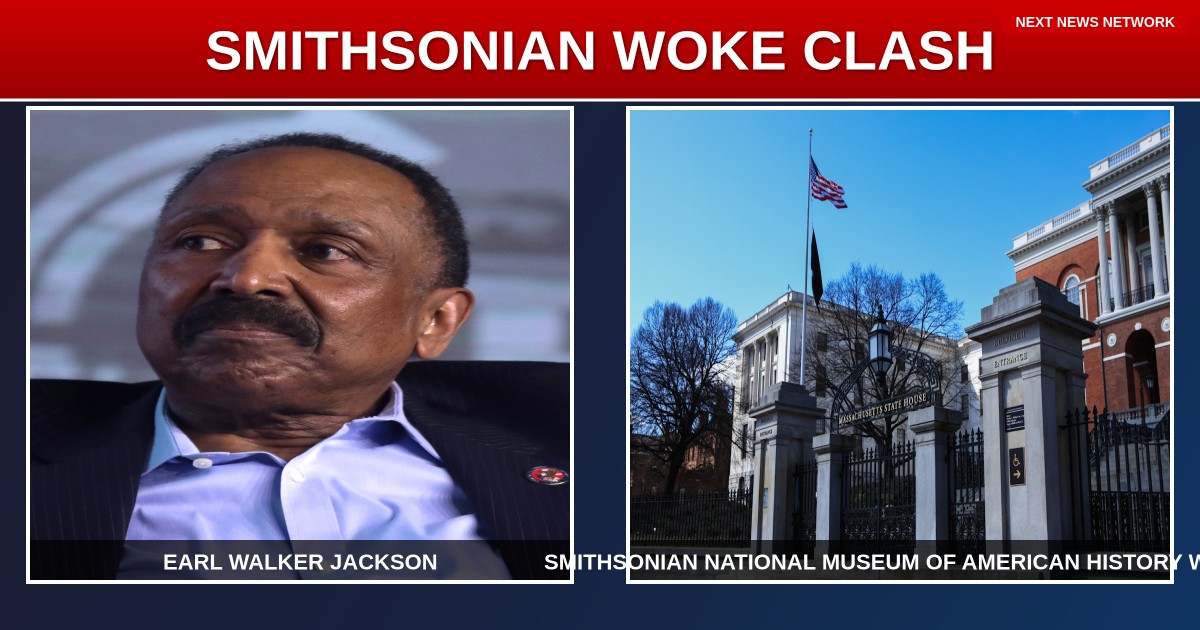
In a powerful denunciation of the Smithsonian National Museum of American History, Bishop Earl Walker Jackson has unleashed a scathing critique of what he calls an ideologically driven distortion of Black American history. The museum, according to Jackson, is pushing narratives that not only undermine the nation’s history but also risk dividing more than uniting its citizens.
Jackson, a notable Black church bishop, author, and political commentator, emphasized the courage and resilience of Black Americans throughout history. He condemned the museum’s current portrayal as nothing short of ‘anti-American indoctrination.’ As a descendant of slaves whose great-grandparents endured unimaginable trials, Jackson stated, “This is a wonderful country; it's the greatest nation on earth.”
The criticisms from Jackson didn't go unnoticed. Many have rallied behind his statements, including prominent voices on social media. Bill Tubbs, known for his conservative viewpoints, underscored Jackson’s comments, tweeting, “Kudos to Bishop Earl Walker Jackson for calling out the wokeness at the National Museum of American History.” Tubbs applauded Jackson's unwavering patriotism, directly quoting him in acknowledging America's greatness despite its historical challenges. [Source]
Similarly, social media user @D_Pheenyx highlighted Jackson’s stance, emphasizing his critique on what Jackson describes as ‘indoctrination’ at the Smithsonian. @D_Pheenyx tweeted, “Bishop Earl Walker Jackson, a descendant of slaves, is blasting what he calls anti-American ‘indoctrination’ at the Smithsonian...” His admiration for America's triumph over adversity reflects a truth that’s being overshadowed by divisive rhetoric. [Source]
Supporters argue that Jackson’s commentary is a necessary pushback against the overly critical theories propagated by mainstream institutions. Many conservative Blacks like Jackson are taking a stand against what they perceive as a rewriting of history that vilifies America rather than celebrating its progress and opportunities.
As Americans face cultural clashes over history and values, Jackson's call for an honest, balanced representation of Black history may inspire a reevaluation of how these stories are told. The question remains: Will institutions like the Smithsonian heed these calls for change, or will they continue down this divisive path?
Americans who cherish historical integrity and seek unity should ask themselves—is the narrative being spun truly reflective of all our accomplishments, or merely a tool for division?
