
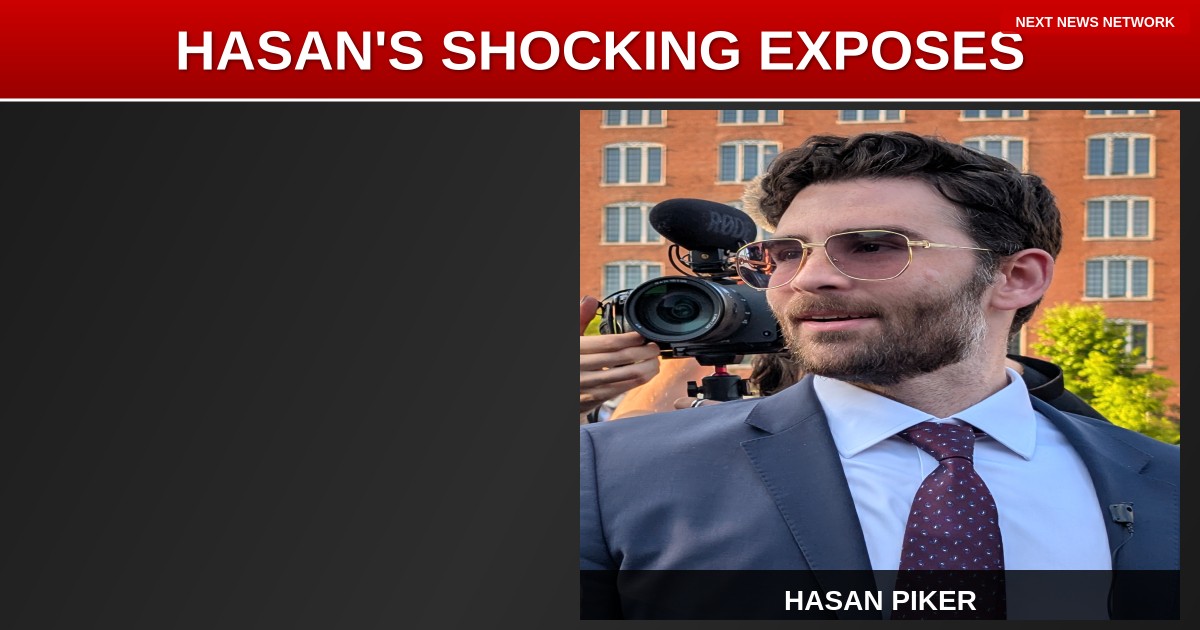
In a shocking revelation for many, Hasan Piker, a prominent figure within progressive circles and current spokesman for Michigan Democrat Senate nominee Abdulrahman Mohamed El-Sayed, has once again found himself embroiled in controversy. This time, it's not just about his inflammatory past remarks but his recent antics on the campaign trail.
A Troubling Record
Over the years, Piker has consistently stirred up the public with statements most Americans find abhorrent. From openly suggesting that the United States deserved 9/11 to advocating for violence against capitalists, Piker's words have often been perceived as incendiary and unpatriotic. Such rhetoric raises concerns about who El-Sayed chooses to associate with, especially now when leadership demands integrity and respect for the nation.
Pushback from Within
This isn't just speculation coming from outside the Democrat fold. Even voices within his own party, like Senator John Fetterman (D-PA), have called on El-Sayed to rethink his affiliations. "Campaigning entails more than just speaking within an echo chamber," Fetterman emphasized in his recent tweet, challenging El-Sayed to distance himself from divisive figures like Piker. (source)
Social Media Outcry
Public reactions on social media platforms have been overwhelmingly critical. One user didn't hold back in expressing frustration, "He had another opportunity to disavow this bigoted POS and side-stepped it," stated @CatB99261688 in a heated tweet, underscoring the simmering discontent within both Democrat and broader political circles. (source)
More troubling still, according to Fox News, Piker has taken to calling for repercussions against Democrats who dare critique El-Sayed, a move many see as an attempt to silence dissent within the party. (source)
Implications for Everyday Americans
Patriots, we must ask ourselves—what does it say about a candidate when they choose someone like Piker to represent them? In a time when America needs leaders who unite rather than divide, aligning with figures known for such derogatory remarks raises serious questions about El-Sayed's judgment and vision for our country. His silence and tacit approval serve as a stark reminder of the radical elements taking over his campaign and, potentially, our future governance.
In the end, the onus falls on us, the voters, to demand accountability and stand up for values that truly represent American greatness. Where do you stand?
