
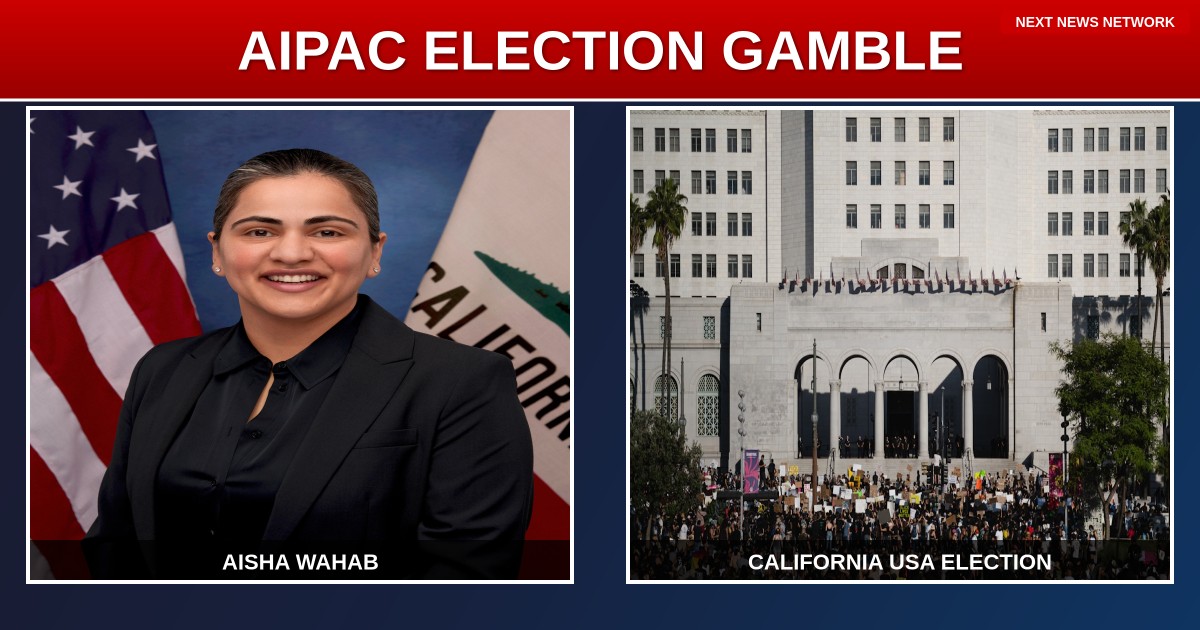
The American Israel Public Affairs Committee (AIPAC) is making waves by pouring an astonishing $4.4 million into a California special election. The controversial move targets progressive state Sen. Aisha Wahab, transforming what might have been an obscure race into a high-stakes battle.
What’s truly shocking is the scale and speed of this operation. As @ravi_mangla noted, AIPAC is spending a jaw-dropping $1 million per week. This outsized spending aims to defeat Wahab in favor of Melissa Hernandez, for a congressional seat that will only be occupied for a few months.
This aggressive strategy comes despite Wahab’s commanding 26-point primary victory, highlighting AIPAC’s determination to shield its interests. The spending by super PACs linked to AIPAC has now exceeded $5 million, supporting Hernandez through a barrage of ads, as @thePumamama tweeted.
Why such urgency for a temporary seat? The race is for California’s 14th Congressional District, a seat vacated by Eric Swalwell. Critics argue this election represents the broader struggle between entrenched interests and insurgent progressives—a microcosm of the nationwide battle that extends far beyond California.
The vast resources being deployed have not gone unnoticed. As @teddyschleifer reported, AIPAC’s intense focus follows a recent loss in Michigan, underscoring the stakes involved in this contest. This relentless push suggests that AIPAC sees preventing Wahab's win as crucial to maintaining its national strategy.
For everyday Americans, this raises important questions: Should external influences wield such power in local elections? Will excessive spending resonate positively or backfire among voters seeking genuine representation?
Conservatives have long advocated for reducing external interference in elections, championing a fair, transparent process that reflects the will of local voters. With this fight, once again, can America break free from deep-pocketed interests? The decision rests now in the hands of voters come August 18. Will they uphold the status quo or embrace change?