
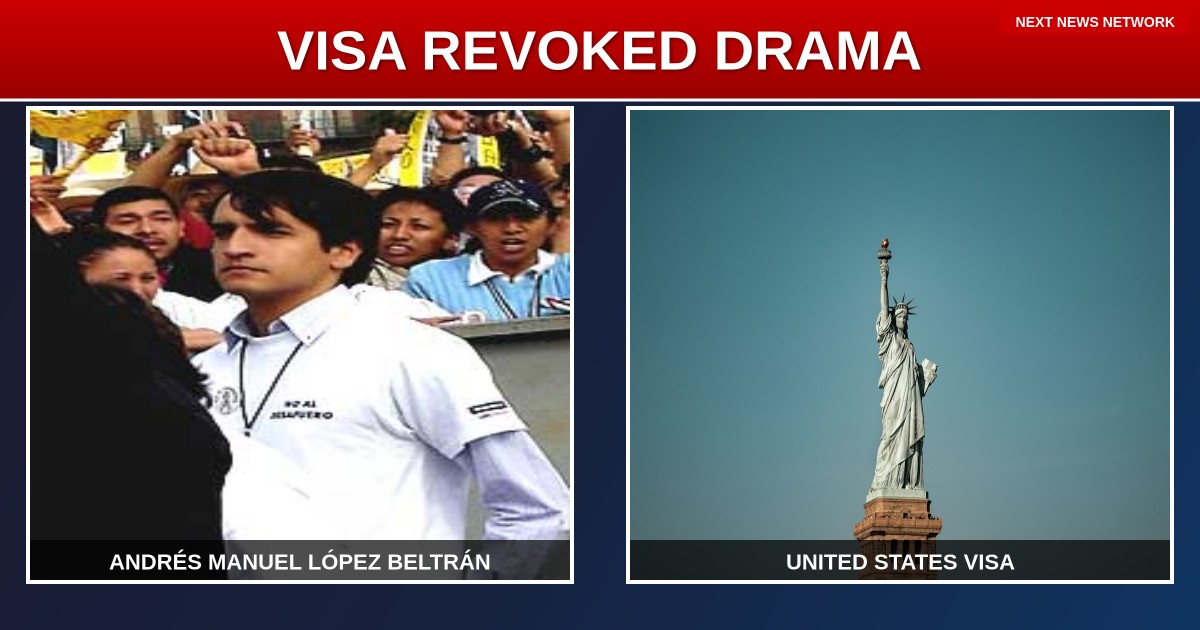
In a move that is sending shockwaves through diplomatic circles, Andrés Manuel López Beltrán, the son of Mexico's former President Andrés Manuel López Obrador, claims that his U.S. visa was revoked by the Trump administration as a form of political retribution. The younger López, a figure in Mexico’s left-wing Morena party, alleged that this action represents a 'sick conservative phobia against Morena and its leaders.' His letter to President Trump and the subsequent comments have ignited a firestorm of responses on social media.
In a tweet, López Beltrán described the move as 'Hitlerian' and urged Trump to dismiss Secretary of State Marco Rubio. His comments have drawn widespread reactions, with some seeing this as a strategic pressuring tactic by the Trump administration towards Latin America's political entities. Twitter user @gabriel67891734 commented, 'Trump is increasing pressure on Morena, Mexico's ruling party.' Meanwhile, @ioangrillo acknowledged the move as interference, suggesting that it could tip the scales precariously for Mexico's political landscape.
This development highlights President Trump's ongoing commitment to an 'America First' policy, where national security and political leverage are intertwined with immigration controls. The administration’s stance is clear: allies of administrations considered adversarial to U.S. interests will face scrutiny, exemplified by due diligence in visa evaluations.
“Not visiting the United States causes me no problem whatsoever in these turbulent times,” López Beltrán stated, underscoring a defiant posture even as tensions rise.Yet, this comes at a time when the Trump administration's policies on immigration, particularly concerning Mexico, are under close watch. The revocation of López Beltrán’s visa, described by user @resisres as 'a sick conservative phobia,' could be a signal of the administration’s hardline approach toward foreign political figures they view unfavorably.
This incident raises crucial questions for Americans: Is this part of a broader strategy to reshape diplomatic relations in favor of conservative governance in the Americas? As the story unfolds, the implications for U.S.-Mexico relations remain significant. Patriots, what do you think? Is this a justified action in protecting American interests, or a diplomatic overreach? Let us know your thoughts as we continue to monitor this developing situation.
