
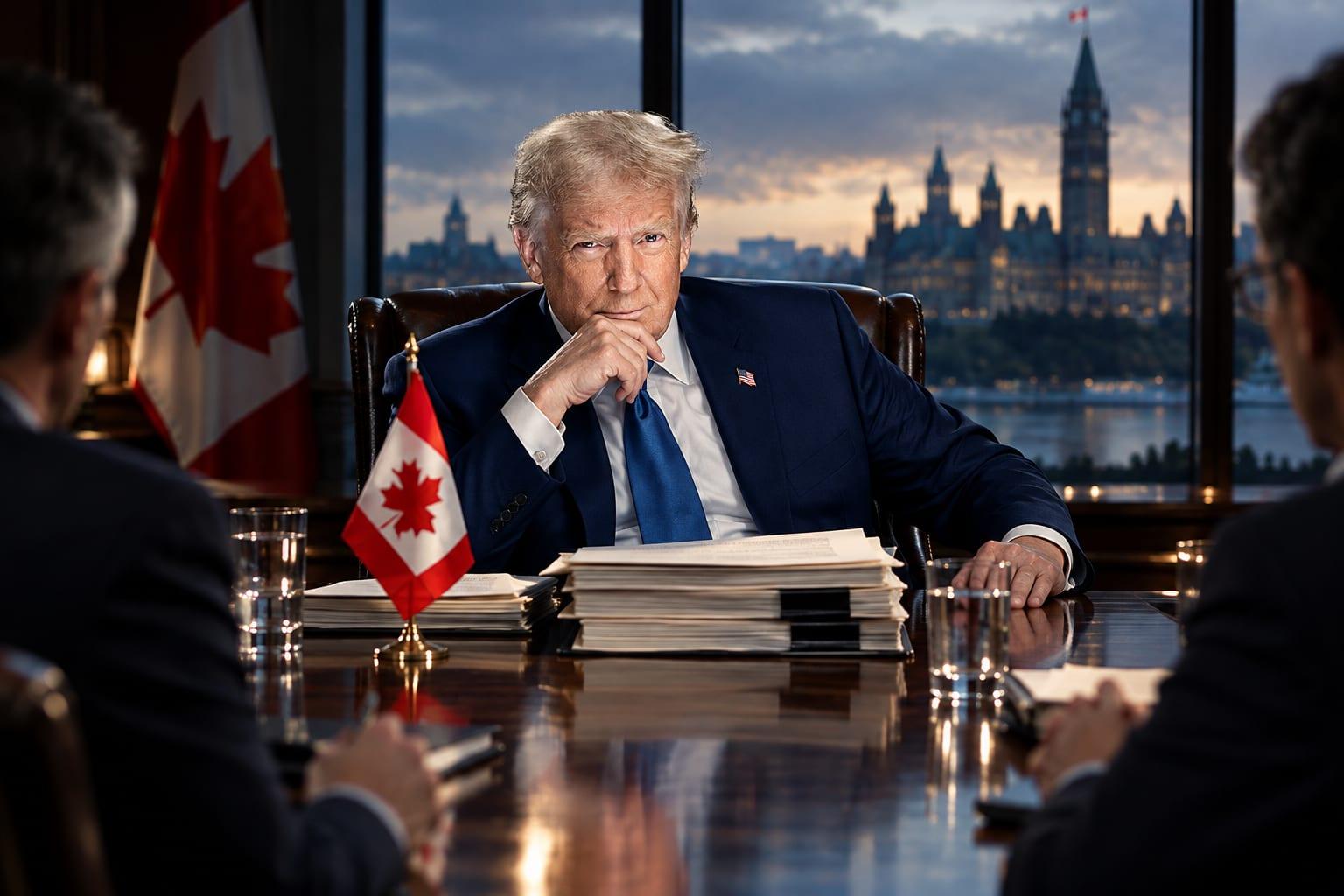
President Donald Trump has once again demonstrated his prowess in international negotiations by temporarily delaying the implementation of 50% tariffs on $20 billion worth of Canadian goods. This bold move gives an opportunity to finalize a trade deal that puts America first, a win-win only if Canada meets the deadline.
Canadian Prime Minister Mark Carney, caught in the whirlwind of Trump's decisive leadership, issued a statement affirming that both nations have made significant progress towards a trade agreement. Carney projected hopes of building a "stronger, more competitive economy" for Canada, but didn't shy away from acknowledging the "important work" that's still needed. While he attempts to bolster his nation’s economy, Carney's statement falls short of providing assurances to Canadians rattled by the prospect of increased tariffs.
Key social media reactions have painted a mixed picture of the situation. Twitter user @dennisfurlan questioned the permanence of Trump’s resolve, asking, "Is Trump's vow to increase tariffs on $20 billion of Canadian exports by 50% if there is no deal by the deadline a bluff?" Meanwhile, @FrankWAuthor reported Trump's pause as a strategic move towards a "pending deal," showcasing the careful maneuvering in Trump's tariff politics.
As documented by @sage_n_sound, Canada was granted a brief reprieve from President Trump’s potentially economy-damaging tariffs, with Trump asserting proximity to a finalized deal. However, it’s clear that Prime Minister Carney's optimistic outlook must translate into action, especially given Trump’s America-first strategy that has consistently underpinned his administration's diplomatic efforts.
A High-Stakes Game
The August 19 deadline looms large. Trump's ultimatum is crystal clear: Canada must come to the table with a competitive deal or face the music of steep tariffs that will prioritize American labor and industry. This shows President Trump's commitment to the American worker and his consistent repudiation of ineffective, deep-state globalism.
In the face of this momentous decision, the true impact will resound not only in trade balance sheets but in the daily lives of Americans and Canadians alike. Can Carney and Canada rise to the occasion? The future will reveal the outcome. Meanwhile, American patriots can rest assured knowing their president is fighting tooth and nail to uphold economic sovereignty.
What do you think, folks? Will Carney manage to protect Canadian interests, or will Trump's America First agenda redefine trade as we know it? Stay vigilant.
