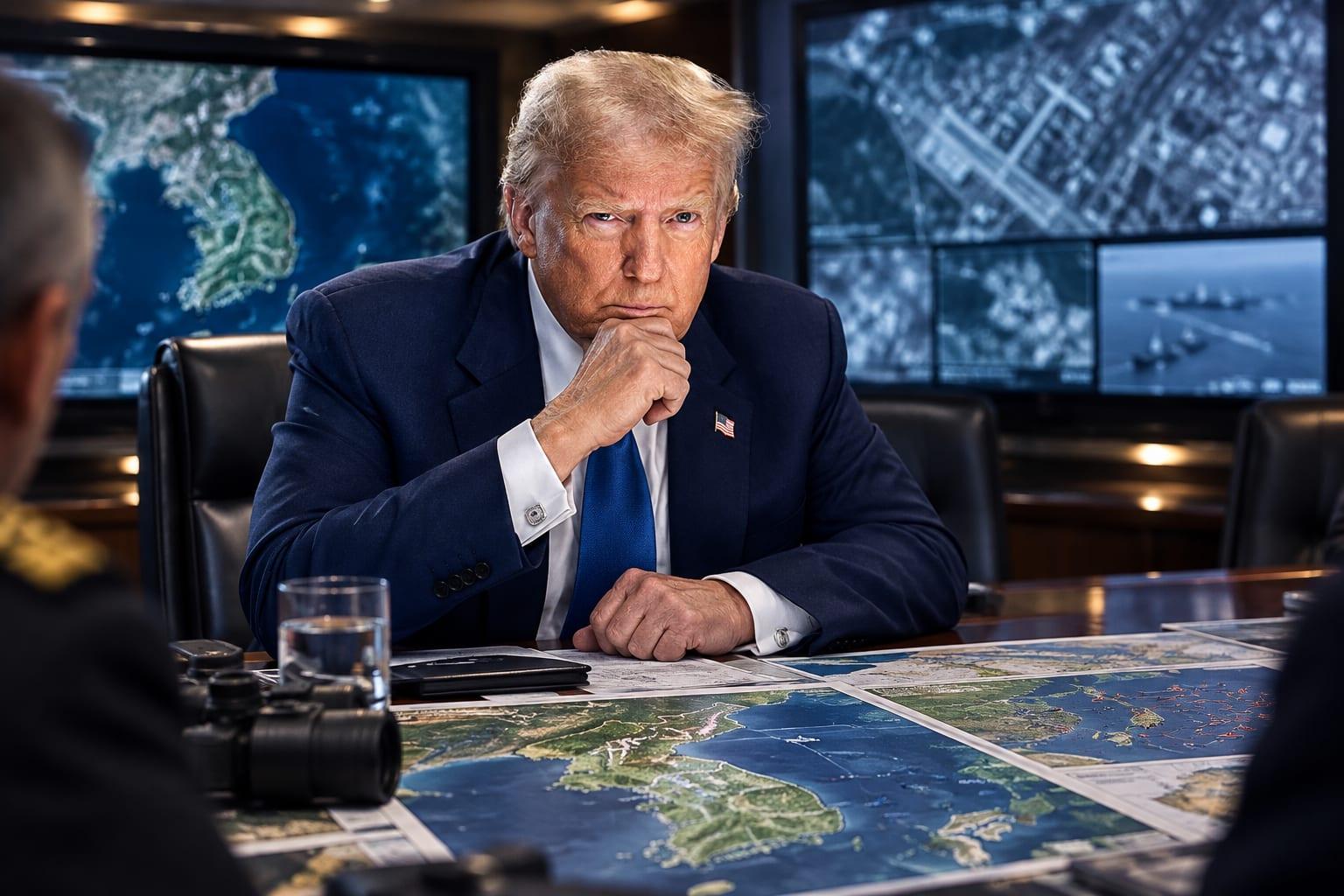
Tensions are brewing on the Korean Peninsula as President Donald J. Trump takes decisive action to scale back the Ulchi Freedom Shield military drills previously hailed as marking a 'historic new era' in U.S.-South Korea relations. This strategic maneuver is aimed at pressuring South Korea over its investment delays while simultaneously seeking to reopen diplomatic channels with North Korean leader Kim Jong Un.
In a bold decision, Trump has announced the withdrawal of 39,000 U.S. soldiers from South Korea, a move reflecting his confidence in personal diplomacy. According to a tweet cited by @Trump_donald07, Trump has emphasized his 'good relationship with Kim Jong Un' as grounds for this military pullback. This decision comes at a crucial time as North Korea's openness to diplomacy is reportedly being encouraged with new incentives.
The exercises, originally set to last several weeks, are now ending nearly a week early following direct orders from the President, as noted by @turkiyetodaycom. This adjustment underscores Trump's continued commitment to adjusting U.S. foreign policy in alignment with his 'America First' agenda, prioritizing strategic negotiation over prolonged military presence.
Strategic Implications
While critics such as Hillary Clinton lambast the move, claiming it aligns U.S. policy 'friendlier to North Korea and Russia than to Canada and Oman,' supporters argue that this recalibration could lead to substantial payoffs in diplomacy and regional stability. Instead of being drawn into prolonged military engagements, this approach opens a direct line for potential peace talks.
A tweet by @jimbotrump encapsulates the day's developments, highlighting this shift in military strategy as an attempt to rebalance relations in the region: 'Inside the tension that drove Trump’s South Korea alliance from ‘historic new era’ to military pullback.'
This strategic pivot should not be underestimated, as it reflects a nuanced balance between diplomacy and military oversight. For the everyday American observer, the question arises: Is this a step towards lasting peace, or are there risks of heightened regional tension?
In closing, this move from the Trump administration should serve as a call to action for informed and engaged patriotism. The implications for U.S. foreign policy are far-reaching, and conservative Americans are encouraged to remain vigilant and critical of mainstream media narratives that may downplay the potential benefits of this diplomatic strategy shift.