
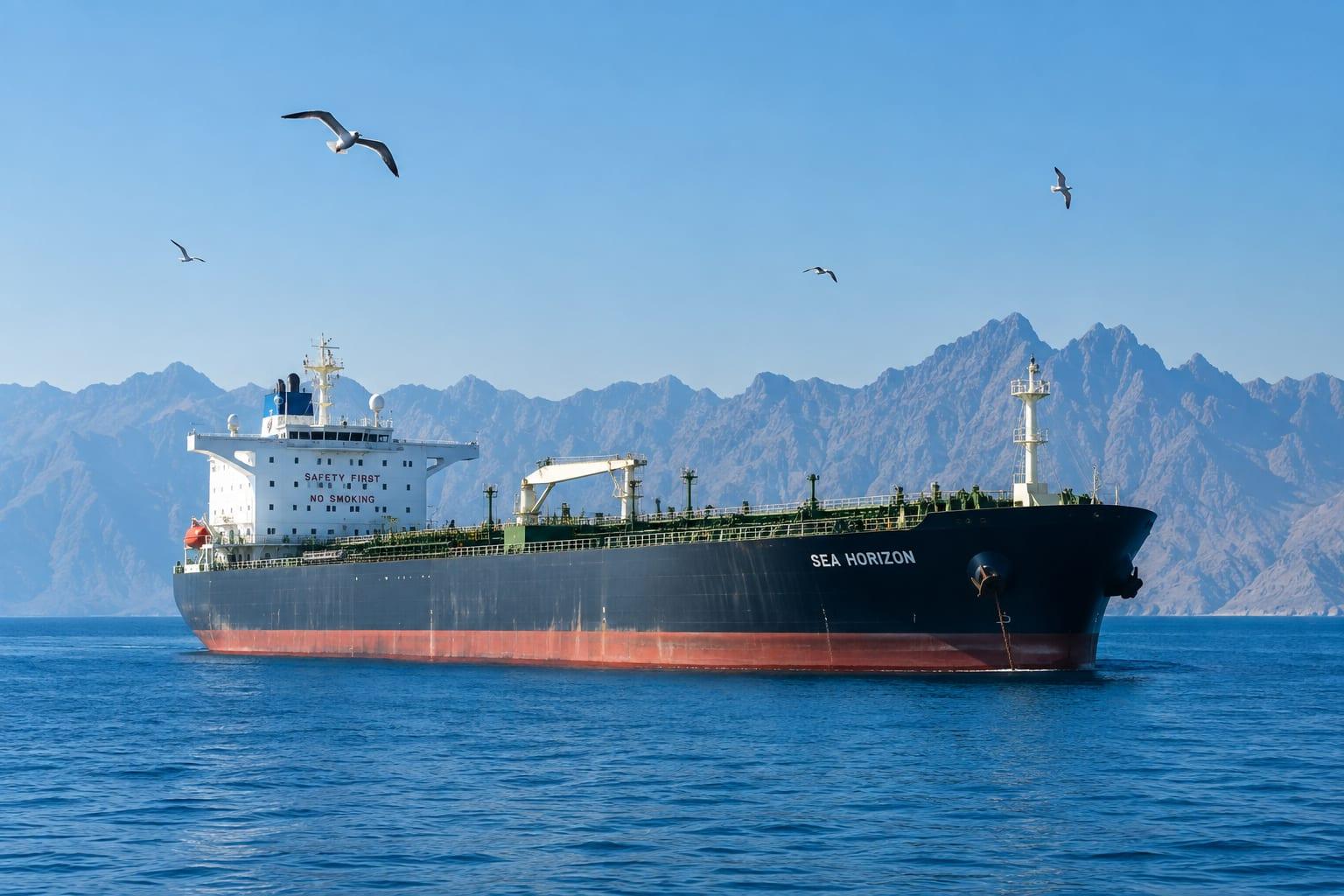
A US official is quoted saying Washington holds the upper hand in its standoff with Iran and feels no pressure to settle, as a senior Iranian official simultaneously insisted the Strait of Hormuz will stay shut and that Tehran will make no nuclear concessions. The exchange, carried across several social media accounts Thursday afternoon, marks the latest round in a back-and-forth over the waterway that has been at a near-standstill for weeks.
The American position was first carried by the account @zerohedge shortly after one o'clock in the afternoon Eastern time, attributing the language to Al Jazeera: "US official to Al Jazeera: Washington is in a strong position and controls the Strait of Hormuz and therefore we are not in a hurry to reach an agreement with Iran." The same formulation was posted minutes later by @FirstSquawk, which framed it as a direct statement from a US official. Neither post identified the official by name or agency, and the remarks as described amount to a claim about the state of the negotiations rather than a formal policy announcement.
If accurate, the message would signal that the Trump administration sees little cost in letting the current impasse run, on the theory that control of the strait gives it leverage. The posts do not say what form that control takes, nor do they describe any specific military or diplomatic mechanism behind it.
The Iranian side answered in blunter terms. @clashreport carried a statement from a senior Iranian official to Reuters: "Iran will make no nuclear concessions even if the U.S. accepts Tehran's proposal to reopen the Strait of Hormuz. The Strait of Hormuz will remain closed until Iran's conditions are met." @zerohedge amplified the same Reuters reporting later in the hour, describing it as a denial and repeating the core language: "SENIOR IRANIAN OFFICIAL SAYS HORMUZ WILL REMAIN CLOSED, NO NUCLEAR TALKS WITH US UNTIL IRAN'S CONDITIONS ARE MET."
The two statements, read against each other, describe a gap rather than a negotiation. Washington is said to see no hurry; Tehran is said to see no concessions. The conditions Iranian officials have attached to reopening the strait have been reported elsewhere: lifting sanctions on Iranian oil exports and ending the war on all fronts, including in Lebanon. That reporting, attributed to Iranian officials, describes demands Tehran has put forward, not terms the United States has accepted. The posts reviewed here do not spell out those conditions; they establish only that conditions exist and that Iran says they have not been met.
Both sides are describing a strait that is functioning differently. @FirstSquawk carried a second item Thursday afternoon citing NewsNation: "US OFFICIAL: NEARLY 40M BBLS OF OIL TRANSITED HORMUZ IN PAST 48 HOURS." That figure, if correct, would represent a substantial volume of crude moving through the waterway over a two-day window. It sits uneasily beside the account from the same official that Washington controls the strait, and beside the Iranian statement that the strait remains closed. The posts do not reconcile the two. Nor do they specify whether the transiting barrels moved under any arrangement involving Iran, or what flag or destination the shipments carried. Tracking of ship traffic through the strait has shown near-standstill conditions for weeks amid the Iran war, with the disruption sending prices of oil and other key goods higher. It is not yet known whether the figure cited reflects a change in that pattern or a definition of the strait's traffic that differs from the one used by shipping monitors.
There is a wider diplomatic backdrop. Secretary of State Marco Rubio offered off-the-cuff remarks to questioners at the United Nations this week, which the account @gatewaypundit described as making the administration's position on globalism clear. Rubio, according to that account, spoke about a seeming breakdown of international order. The post does not carry his full remarks. His comments came as the United Nations General Assembly convened in New York, where Israeli Prime Minister Benjamin Netanyahu delivered a speech lambasting Iran and defending the Gaza war, and where Palestinian leader Mahmoud Abbas urged that a stalled Gaza peace plan move forward. The Iranian posture on the strait is being advanced in that same diplomatic environment, with Tehran having put a proposal to the Trump administration and awaiting a response.
Coverage of the standoff has also noted that Iran's economy is deteriorating and that its ability to exert control over the strait may be under strain — factors that analysts have suggested could explain its willingness to engage with Washington at all. Talks between the two sides, described as intermittent and aimed at a gradual path out of the crisis, have been underway without a public breakthrough. The Iranian proposal to reopen the strait, and the American response to it, remain the central open question.
What the posts establish is a public messaging exchange: a US official quoted as saying Washington is in no hurry, and a senior Iranian official quoted as saying the strait stays closed and no nuclear concessions are coming. What they do not establish is that either statement reflects a settled internal position, or that the events they describe have occurred as described. Next News Network could not independently verify the claims attributed to the US official or to the senior Iranian official.
Several accounts carried the exchange within roughly half an hour of one another, including @zerohedge, @FirstSquawk, @clashreport and @gatewaypundit, giving the dueling statements a reach beyond the outlets that first obtained them. The underlying claim — that Washington controls the strait and is in no hurry, and that Tehran will not budge — is not independently confirmed and should be treated as what is being alleged by officials speaking through these channels.
Our Take
The striking thing here is not that Washington and Tehran disagree. It is that both sides are talking past each other in public while the waterway they are arguing about is the same waterway. One official says the United States controls Hormuz and therefore can wait. Another says Iran will keep it closed and will not trade nuclear concessions for its reopening. Those are not negotiating positions; they are statements designed to be read by the other side's domestic audience. The forty-million-barrel figure, if it holds, tells a third story entirely — that oil is moving, whatever the statements say. Republicans should watch whether the administration's confidence is backed by anything more than a talking point, and whether Tehran's refusal is a strategy or a symptom of an economy running out of room. Neither will be settled by a quote to a wire service. The pressure point is time, and both capitals are betting the other runs out of it first.
