
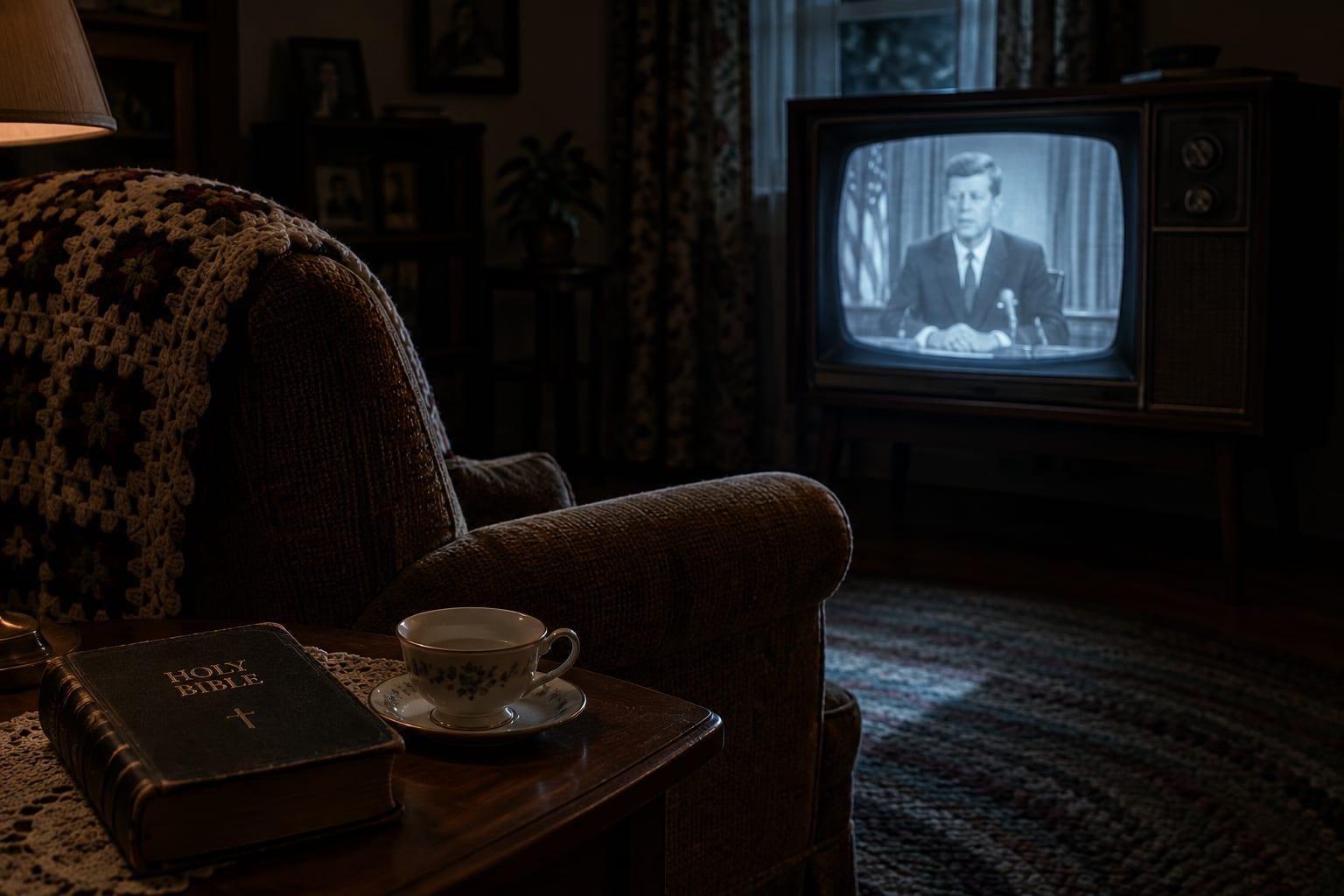
Archbishop Fulton Sheen never held public office, never ran a campaign and never commanded an army. Yet for a remarkable stretch in the 1950s, the Catholic priest from Illinois was one of the most watched men in America — and conservative commentator Michael Knowles says the message that made him a star is the same message that would get him destroyed today.
Sheen's Emmy-winning series "Life Is Worth Living" drew an estimated 30 million viewers an episode at its peak, a staggering share of a country that had only a few channels to choose from. He used that pulpit to preach faith, personal morality and the spiritual dangers of communism — and he did it in prime time, on network television, without apology.
Knowles, appearing on Fox News Politics, argued that Sheen would be labeled a "far-right extremist" in the current media environment if he delivered the same material today. The point, per Knowles, is not that Sheen shifted — it is that the culture moved under his feet.
Knowles said the famous Catholic archbishop would be branded a "far-right extremist" today without changing his message on faith and communism.
It is worth sitting with what Sheen actually said during his run. He dedicated entire broadcasts to the threat of Soviet communism, warning that its atheism and state worship were incompatible with human freedom. He attacked moral relativism before the term entered common use. He told viewers that the battle against totalitarianism was first a battle for the soul. Those were not fringe positions in 1952. They were the consensus of a country that had just fought a world war and was staring down a cold one.
Sheen's reach went beyond the studio. In 1951, FBI records show, he voiced support for Sen. Joseph McCarthy's anti-communist investigations, though he later expressed reservations about tactics. He won the Emmy for Most Outstanding Television Personality in 1952, beating Lucille Ball and Arthur Godfrey. Time magazine put him on its cover. He was, by any measure, mainstream.
Knowles' comparison lands because the ground has shifted so completely. A bishop who told a mass television audience that communism was a moral evil, that the family was under assault and that television itself could be a tool of the devil would be lucky to keep a YouTube channel today. The same technology Sheen used to reach tens of millions now funnels information through platforms that decide what speech is permitted.
Sheen was eventually pulled off the air in 1957, though the reasons remain debated among historians. He went on to serve as bishop of Rochester, New York, and later as national director of the Society for the Propagation of the Faith. He died in 1979. In 2012, the Vatican declared him Venerable — the first step toward sainthood — after an investigation into his life and writings.
What remains of his legacy is a body of work that reads, in 2026, less like mid-century nostalgia and more like a diagnostic manual. His warnings about mass media reshaping the moral imagination of a nation now look prophetic. His insistence that freedom cannot survive without virtue is a direct rebuke to a political order that treats rights as severed from duties. And his willingness to say it in front of a camera, without a fact-checker, a compliance team or a PR handler, is a reminder of what public speech used to cost and what it used to be worth.
Our Take
Knowles is right, and the fact that he has to say it out loud is the whole story.
Fulton Sheen was not a radical. He was a bishop who believed what the Church taught, said so plainly, and trusted the American people to listen. That made him a star in the 1950s and would make him a target now. The message never changed. The gatekeepers did.
What the left calls "extremism" is often just the old morality — the one that built this country, held families together and stood down the Soviet Union. Sheen preached it from a television studio in New York with nothing but a chalkboard and a crucifix. Today, a man saying the same things would be deplatformed before the first commercial break.
That should trouble Americans of every faith and no faith. Because the machinery that would silence a Fulton Sheen today is the same machinery that decides what the next generation is allowed to hear about God, about family and about the country they are inheriting. If the message of a Venerable archbishop is too dangerous for prime time, patriots should ask who decided that — and why they are still in charge.
