
Sen. John Fetterman of Pennsylvania said Saturday that it is "entirely possible" his party could win control of the Senate in November's midterm elections, while leaving the door open about his own political future. The comment, carried by CBS News, landed as Democrats across the country are pressing toward the final stretch of a campaign season that has become a referendum not only on control of Congress but on the party's own direction.
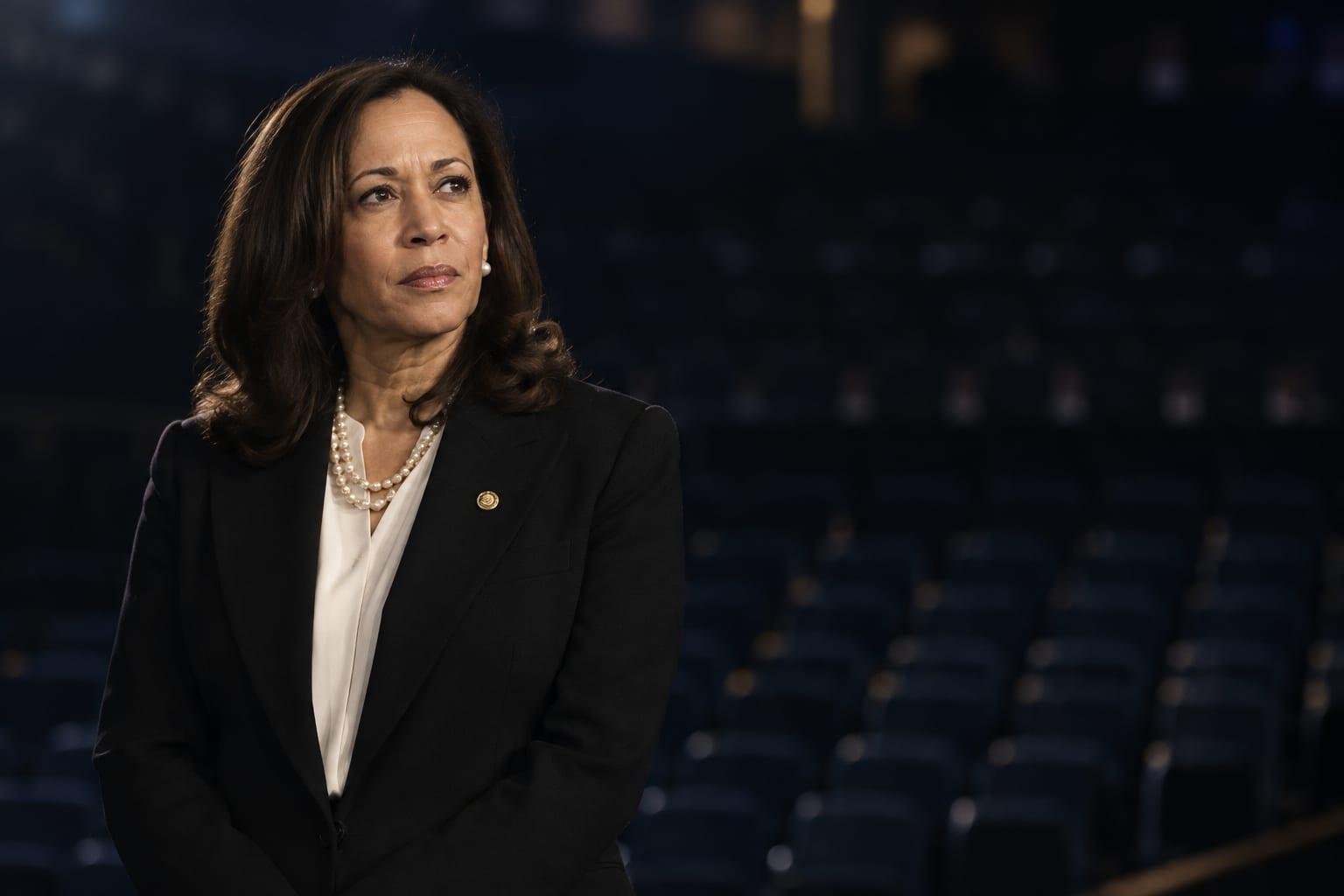
On the same day, a viral exchange circulated by the account @GuntherEagleman raised questions about how welcome Kamala Harris is on the campaign trail. The transcript of the video posted by that account describes a discussion among Democratic strategists about which swing-state candidates have asked the former vice president to appear with them — and which have not. "I know Abdul Al-Sayed recently had her in Michigan, but you don't see Sherrod Brown in Ohio and Roy Cooper in North Carolina asking her to come," the transcript reads, adding that "most of these swing states say, please stay away, we don't want you."
The same account framed the situation bluntly: "EVEN DEMOCRATS ARE BEGGING KAMALA HARRIS TO STAY HOME," it wrote, invoking a New York Post characterization of her midterm tour as "word salad" and asserting that swing-state candidates are treating her as a "poison pill." The account added that "Michigan might take the photo op" while "Ohio and North Carolina are saying please stay away."
In the video transcript, one participant argued that Harris's difficulty is not merely a matter of polling but of internal party confidence. "If you're Kamala Harris and you're going to attempt to do this for a third time, it's a problem," the speaker said. Another tied the reluctance to the aftermath of the 2024 election. "Democrats have always been the party of voting rights, of protecting democracy, and in 2024 they chose a candidate that nobody in their primary, in their base, voted for," the transcript reads. "And so they just installed her and the party of every vote counts nullified effectively every vote cast. And I think that has done a lot of damage to the Democrat establishment."
Asked whether Harris still has a future in the party, a Democratic participant in the discussion said the rationale is difficult to see. "Winning candidates that run three times tend to be ideologically consistent. Think of Ronald Reagan, think of Donald Trump. I still don't know what she stands for, and I'm a Democrat who eats, sleeps, and breathes this," the transcript reads. Another panelist, identified in the transcript as Chuck, said he does not see a future either, pointing to her recent appearances in Michigan. "Even the answers that she's given this week to some questions, she came into Michigan for El Sayed. They just, they instantly go viral on the Internet. It's even Democrats are calling it more word salad that they don't really need."
The discussion reflects a broader dynamic in this cycle, where candidates in competitive states are calculating whether a national figure helps or hurts on the ground. An op-ed published by the @dcexaminer account argued that November should not be treated as a routine midterm at all. "OP-ED: Stop calling November a 'midterm' — Michigan is fighting for its entire future," the account wrote, pointing to a state-level ballot that includes the governor's office, U.S. Senate control, the courts and the state constitution.
Michigan's importance was echoed in other coverage of the cycle. A local opinion column described an installment of a lunch discussion series breaking down the Michigan midterms, while an opinion piece elsewhere argued that President Donald Trump has become a midterm liability for Republicans, with voters told to vote as though he were on the ballot — precisely what worries candidates who are distancing themselves from him.
Abroad, the election is being watched for signs of American resolve. Secretary of State Marco Rubio said Iran is "miscalculating" if it believes November's U.S. midterm elections will weaken President Trump's position in negotiations to end the war, according to the account @MarioNawfal. "I think the Iranians misread our system," Rubio said. "I think the Iranians are under this illusion that Democrats are going to win." The remark came as anti-war organizing materials circulated online. An action-items post for the week of September twenty-seventh urged supporters to call the offices of Senators Peters and Slotkin and to "Demand an immediate end to the war against Iran," adding that "Trump is saying he will end the war after the midterms." A separate analysis piece noted that the Iran war has severely affected the American economy and is already having a significant impact on the midterm races.
Fetterman's remarks offered a counterpoint to the pessimism some in his party have voiced about their own prospects. Speaking Saturday, he said it is "entirely possible" Democrats could win Senate control, though he did not commit to his own plans beyond this cycle. His comments were carried by CBS News.
Next News Network could not independently verify the claims about which candidates have or have not invited Harris to campaign with them, nor the characterization of her tour as described by the accounts above. The underlying reporting on the private calculations of individual campaigns has not been confirmed by this outlet.
Our Take
The story here is not whether Kamala Harris remains popular. It is that a party heading into a midterm election is openly debating whether its most recent presidential nominee is an asset or a liability — and doing so in public, on the record, in swing states that will decide Senate control. That is not a sign of a party confident in its message. It is a sign of a party still litigating the last election while the next one is already upon it.
Fetterman's optimism about Senate control is notable precisely because it comes from a senator who has charted his own course within the party. But optimism is not a strategy. If Democrats in Ohio, North Carolina and Pennsylvania would rather run alone than stand beside the former vice president, that tells voters more about the party's internal health than any press release from Washington ever will.
And Rubio's warning to Tehran deserves attention for the opposite reason. America's adversaries are watching our elections closely, calculating whether a divided government will weaken the president's hand at the negotiating table. The answer to that calculation should be that our foreign policy does not hinge on a midterm outcome — but that answer only holds if the election does not hand our enemies a reason to think otherwise.
