
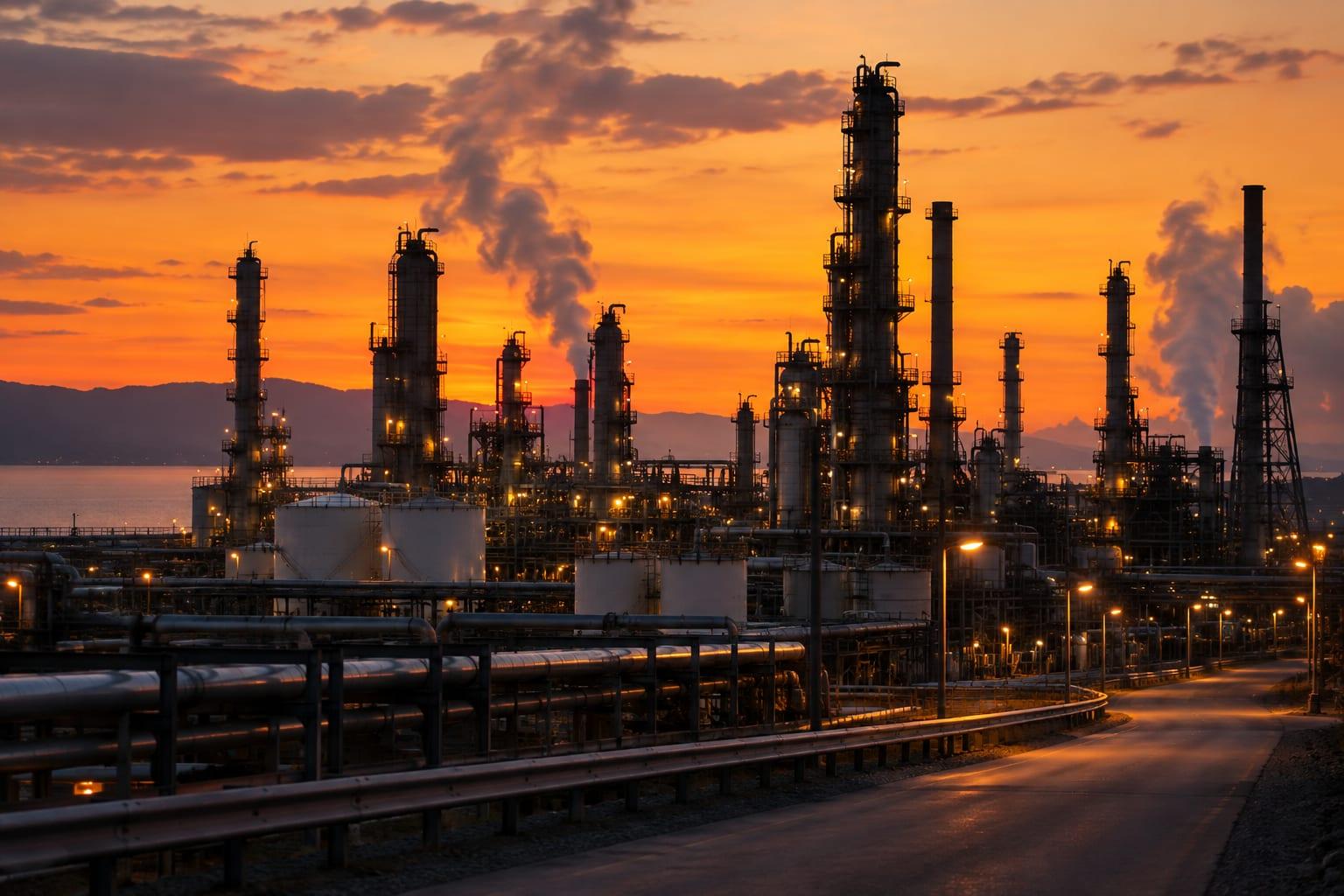
Energy Secretary Chris Wright said that the biggest problem facing gasoline and diesel prices is refinery capacity, telling an interviewer that the loss of Russian refining output and Mideast supply disruptions have tightened global fuel markets. He concluded by faulting the Biden administration and California Governor Gavin Newsom for closing American refineries.
The remarks, carried in a video posted by the account @Acyn, came as fuel costs draw fresh attention. In the transcript, Wright said that "Ukraine has just devastated Russian refining capacity" and that the conflict in the Middle East "has also interrupted flows." He said any progress in either conflict would bring downward pressure on prices.
Wright said the administration is "doing everything we can to grow America's refinery throughput," and that "the biggest problem right now with gasoline and diesel prices is refineries because the Russian refineries are devastated, like 40% down from where they were before."
He added that "we've lost some capacity in the Middle East that's not bringing products to market."
The secretary then turned to domestic policy, saying that "during the Biden administration, they celebrated closing over a dozen United States refineries" and that "Governor Gavin Newsom in California, in the last 12 months, forced the closure of two more refineries."
Wright described the consequences in stark terms: "It's the missing, that missing refining capacity is what's given that extra boost to prices. And we're working to build the first new refinery in the United States in decades."
The interview touched on the trajectory of prices, with Wright noting that current levels remain "under the $5 gallon high we saw under the Biden administration." He praised what he described as President Trump's energy approach, saying both of his terms were "all in on energy addition, growing American oil production, growing American natural gas production, growing American refinery production."
@Acyn posted the clip and framed it by saying Wright "does mention the Middle East and Russia/Ukraine while discussing high fuel prices... but concludes his answer by blaming those high prices on Joe Biden and Gavin Newsom."
The exchange lands amid a broader shift in coverage of the Russia-Ukraine war. A report from the @dcexaminer on Sunday carried the headline "How Ukraine's 40-day summer drone campaign to end the war with Russia backfired." The account's post pointed to a campaign that, by the outlet's telling, did not achieve its aims.
An analysis piece described in the coverage materials said Ukraine's drone offensive gave Kyiv a three-to-one edge over Russia, with large-scale drone raids delivering a comparable and at times greater explosive payload than Russian missile strikes. Another account of the summer air war, attributed to Alto, said the narrative shifted dramatically from the start of the summer to the end, with early Western claims that Ukraine was winning giving way to a different picture.
Those materials also reference a Ukrainian plan announced by President Volodymyr Zelensky on June twenty-fifth, when he said he had approved a forty-day plan to compel an end to the war. The reported results of that campaign remain contested in the coverage, with some accounts saying it fell short of its objectives even as Ukraine retained a significant drone advantage.
Separately, the Institute for the Study of War's September twenty-sixth assessment said Ukrainian forces appear to be shifting their counteroffensive tactics toward systematically targeting Russian efforts. The think tank's language described a tactical adjustment rather than a strategic shift, and it did not address fuel prices directly.
European officials, meanwhile, are expressing concern about what the coverage describes as the Kremlin pushing the limits of hybrid warfare. A report said Moscow has long embraced tactics that straddle the threshold of war, but that a string of increasingly brazen incidents has alarmed U.S. allies who fear what could come next. That reporting did not connect the incidents to refinery capacity or fuel markets.
The refinery discussion in the Wright interview reflects a longer-running debate over domestic energy infrastructure. The secretary's claim that more than a dozen U.S. refineries closed during the Biden administration, and that two more were forced to close in California in the last twelve months, could not be independently verified by Next News Network. The same applies to his assertion that Russian refining capacity is down roughly forty percent from its pre-war level, and to the figure of a three-to-one Ukrainian drone advantage described in the coverage materials.
The White House has not issued additional comment on the secretary's remarks beyond the interview itself. It is not yet known whether the administration will release specific timelines for the refinery expansion Wright referenced, or whether any new facility has secured financing or permits.
The @dcexaminer post and the @Acyn clip circulated alongside each other over the weekend, drawing together two threads that have dominated conservative energy commentary: the cost of fuel at the pump and the direction of the Russia-Ukraine war. Neither post offered a direct response from the Biden administration, Governor Newsom's office, or Ukrainian officials to the claims made in the interview.
Wright's answer did not address how quickly any of the described measures might affect retail prices, nor did he offer a specific forecast for when relief would arrive. He said only that progress in either conflict would bring downward pressure, and that the administration is working to expand refining capacity.
Our Take
Chris Wright did what conservatives have been waiting for: he named names. The cost of fuel is not an accident of weather or market whims. It is the bill for a decade of refinery closures, and Wright put the tab where it belongs, on the Biden administration and on Gavin Newsom's California. That the secretary can point to a forty percent collapse in Russian refining capacity and supply disruptions in the Middle East as compounding factors only makes the domestic picture worse, because those are forces outside our control while the shuttered American refineries were not. The administration's promise to build the first new refinery in decades is the right answer, but it is also an admission of how far the country has fallen. Promises do not lower prices. Steel and permits do.
