
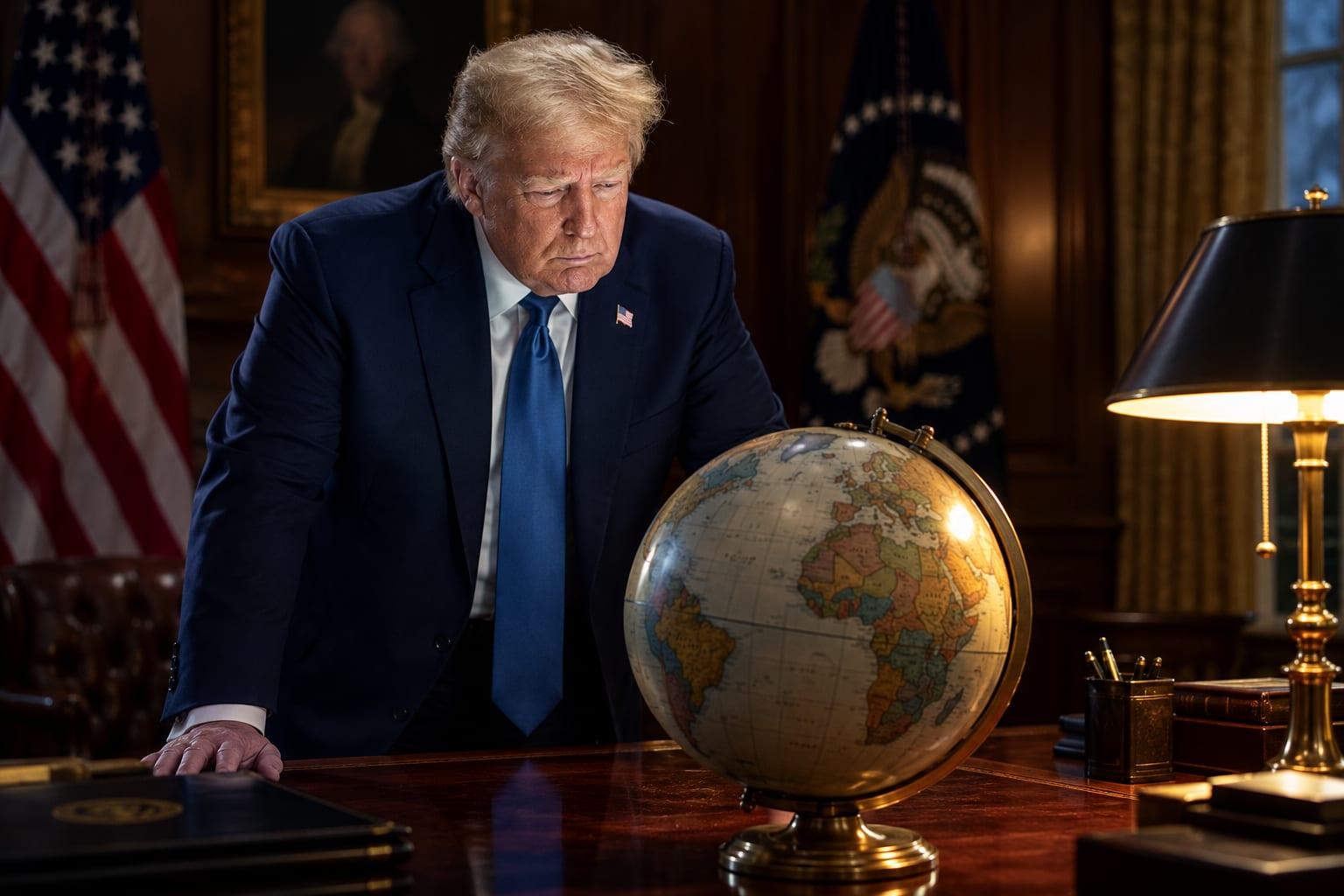
President Donald Trump said he is considering a ban on diesel exports "very seriously" and that the United States may implement one, according to an account that tracks breaking financial and political headlines. The same account, @FirstSquawk, noted that the president acknowledged the move could cause a small rise in gasoline prices.
The claim, carried by @FirstSquawk, spread quickly across financial and political feeds, drawing reactions from European officials, energy analysts, and administration critics who warned the proposal could backfire on American consumers and allies alike. The underlying claim has not been independently confirmed.
POLITICO reported that European officials say the prospect of a U.S. diesel cutoff is exposing the risks of relying on American fuel. The report, published about a day after the initial claim circulated, described the threat as one that "risks burning U.S. credibility" with allies who have come to depend on steady American diesel shipments.
The Daily Mail Online, in coverage published roughly two days after the claim first appeared, reported that experts and even some administration officials agree that trying to lower diesel prices by banning exports would have "terrible unintended consequences" for American consumers. The outlet characterized the move as a "weird gamble" that could leave Americans paying more at the pump, not less.
Separately, the Daily Mail reported that diesel was set to hit a record high price the same day Trump's consideration of an export ban was making headlines, with experts saying the threshold would be breached within days as the Middle East conflict enters its eighth month. That coverage tied the diesel price spike to the ongoing Iran war, framing the export ban discussion as a response to mounting energy costs.
The reaction was not limited to energy markets. Al Jazeera reported that Trump said he is rolling back Biden-era U.S. fuel economy rules for cars, describing the move as ending a so-called "EV mandate" that steered consumers toward electric vehicles. That announcement, carried by the outlet's automotive industry desk, added another front to the administration's energy policy posture as the diesel export question remained unresolved.
The sequence of events, as carried by the accounts and outlets above, began with the president's comment that he was weighing a diesel export ban "very seriously." From there, European officials responded with concern about supply reliability, energy experts warned of unintended domestic consequences, and market watchers pointed to record diesel prices already straining consumers. The fuel economy rollback announcement followed, further signaling a broad shift in the administration's energy approach.
The account @FirstSquawk was among the first to carry the president's comment, and its post framed the potential ban as a tradeoff: lower diesel costs abroad versus a possible small increase in domestic gasoline prices. That framing was picked up by the other outlets, which expanded on the potential ripple effects.
European officials, according to POLITICO, said the prospect of a U.S. cutoff is exposing the risks of relying on American fuel. The report did not name specific officials but described a growing unease among European governments about the reliability of U.S. energy exports under the current administration.
The Daily Mail's coverage emphasized that even some administration officials concede the export ban could have negative consequences. The outlet reported that experts warn the plan could leave Americans paying more at the pump, contradicting the stated goal of lowering diesel prices. The report characterized the situation as a "weird gamble" with unpredictable outcomes.
Meanwhile, the diesel price record was reported as an immediate concern, with the Daily Mail noting that experts expect the threshold to be breached within days. The report linked the price surge to the Middle East conflict, now in its eighth month, and the broader instability in global energy markets.
Al Jazeera's coverage of the fuel economy rollback added context to the administration's energy policy direction. The outlet reported that Trump said he would end a so-called "EV mandate" that steered consumers to electric vehicles, a move that aligns with his broader push to boost domestic fossil fuel production and consumption.
Next News Network could not independently verify the claim that Trump is considering a diesel export ban or the specific details surrounding the reactions described in the reports above.
The reports from POLITICO, the Daily Mail, and Al Jazeera were published within days of each other, each adding a layer to the story: European anxiety, expert warnings, record prices, and a parallel policy shift on fuel economy standards. Together, they show how a single comment from the president can reverberate across markets, alliances, and domestic politics.
What remains unclear is whether the administration will move forward with the export ban, what form it might take, and how European allies would respond if it does. The reports did not specify a timeline for a decision, and it is not yet known whether the president's comment will translate into formal policy.
The accounts and outlets carrying the story have not reported any official confirmation of the ban beyond the president's own words as relayed by @FirstSquawk. The reaction from European officials, experts, and market analysts continues to develop, with each outlet offering a different angle on the potential consequences.
For now, the diesel export ban remains a stated consideration, not a finalized action, and the debate over its merits is playing out across multiple fronts: energy markets, international alliances, and the domestic pump price.
Our Take
Once again, President Trump is putting America first, and once again, the globalist establishment is clutching its pearls. The very notion that the United States might prioritize its own diesel supply over exports to Europe has sent shockwaves through Brussels and the media elite, who have spent decades treating American energy as a public utility for the rest of the world. The Daily Mail's own reporting admits that even some administration officials are nervous, but that is exactly the kind of nervousness that comes from breaking a bad habit. For years, American consumers have watched diesel prices climb while U.S. fuel flowed overseas. If a temporary export ban can ease that burden, it is worth considering, even if it means a small uptick in gasoline prices. The European officials quoted by POLITICO are worried about "credibility," but credibility should begin at home. The president's simultaneous rollback of the Biden-era EV mandate shows he understands that Washington should not be picking winners and losers in the energy market. The experts warning of "unintended consequences" are often the same experts who cheered policies that sent prices soaring in the first place. This is a moment for bold action, not for apologizing to allies who have grown too comfortable with American generosity.
