
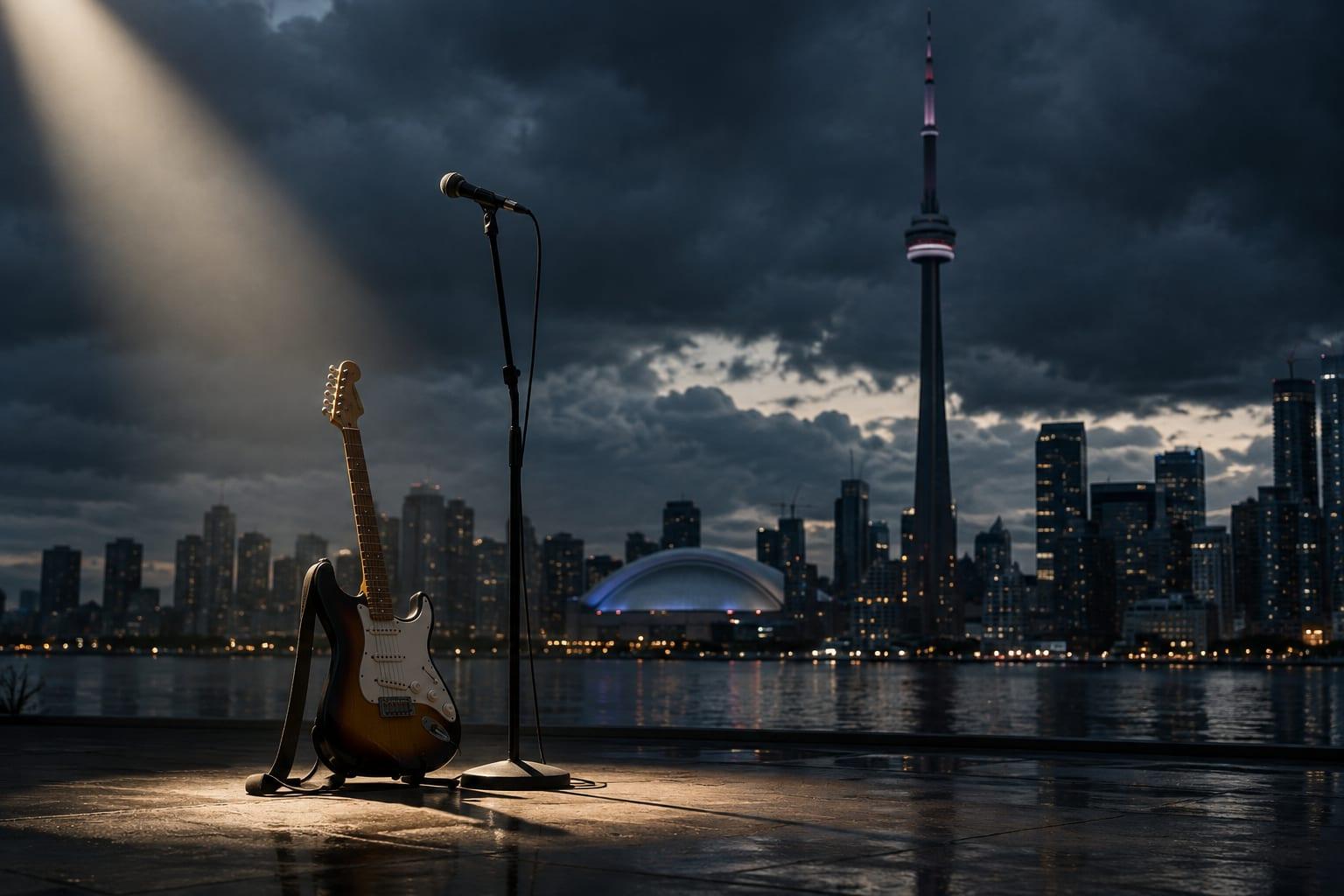
Rush frontman Geddy Lee has spent five decades staying out of politics, letting his bass do the talking while his band built one of the most fiercely loyal fan bases in rock history. That silence ended Monday.
Lee, the Toronto-born bassist, keyboardist and lead vocalist for the legendary Canadian prog-rock trio, endorsed Toronto City Councilor Brad Bradford in the city's mayoral election, set for Monday, October 26, 2026, according to RedState. Bradford is challenging incumbent Mayor Olivia Chow, who has presided over a documented spike in antisemitic hate crimes in Canada's largest city.
The endorsement was first reported by RedState, which noted Lee's long-standing public avoidance of political matters. Toronto Sun columnist Brian Lilley, writing in a piece published 13 hours before the RedState report, described the endorsement as a "wakeup call for Toronto, city in decline," framing it as a warning about the city's future under Chow.
The Numbers Behind the Endorsement
What pushed a Rock and Roll Hall of Famer off the sidelines? The data coming out of Toronto's police force is hard to ignore. According to Toronto police statistics cited by RedState, 82 percent of the 99 reported religious-based hate crimes in 2025 were committed against Jews.
On September 19, 2026, Bradford attended a meeting at a Toronto synagogue where he pledged to actively combat the rise in antisemitic attacks, RedState reported. Another mayoral candidate who attended the meeting joined Bradford in sharply criticizing Chow for not showing up.
Chow's record on the issue has been uneven at best. RedState documented that in 2025, she hesitated over a proposal to create "bubble zones" around Jewish houses of worship and businesses to shield them from protesters before ultimately agreeing to support the measure. She has also labeled the war between Israel and Palestinian militants following the October 7, 2023 attack — in which 1,200 Israelis were killed and brutally abused by Hamas — a "genocide" against Palestinians.
Lee's parents were Holocaust survivors, a biographical fact that has long informed his public identity but rarely his politics.
What's Actually at Stake in the Race
On policy, the contrast between the candidates is less dramatic than the endorsement might suggest. RedState noted there are "no striking differences" between Bradford and Chow on core issues. Bradford's platform centers on increasing housing supply by cutting government red tape, boosting police presence, and delivering more consistent public services — reliable transit, safe parks. Chow wants to expand public transportation while freezing fares, grow city-run mental health services, and promote energy efficiency.
Neither platform, RedState observed, "is the stuff of which conservative dreams are made."
But the synagogue meeting on September 19 reframed the race. Bradford has made the safety of Toronto's Jewish community a central commitment, while Chow's critics — including the candidate who joined Bradford at the synagogue — say she has treated the issue as an afterthought. The Toronto Sun's Lilley characterized the race in broader terms, portraying the city as being in decline and casting Lee's intervention as a signal to voters.
Why a Rock Star's Voice Matters Here
Lee is not a political commentator. He's a musician whose band — inducted into the Rock and Roll Hall of Fame in 2013 — is synonymous with Toronto. When someone like that breaks a lifetime of political neutrality, it tells you something about how serious the moment feels in his hometown.
The endorsement also lands in a country that has seen its Jewish community increasingly targeted. Toronto, home to Canada's largest Jewish population, has become a focal point for that tension. Whether Lee's voice will actually influence votes in the upcoming municipal election is uncertain, but his decision to speak at all is its own statement.
The race will be decided on Monday, October 26, 2026.
Our Take
It shouldn't take a rock star to say that synagogues in a major North American city need protection, or that 82 percent of religious hate crimes targeting one group is a five-alarm emergency. But here we are. Olivia Chow spent 2025 hemming and hawing over whether Jewish houses of worship deserved buffer zones from protesters — that's the kind of moral mush that lets hate fester. Labeling Israel's defensive war against Hamas a "genocide" while antisemitic attacks surge at home isn't just bad policy, it's a signal to the mob that they have permission.
Geddy Lee's parents survived the Holocaust. He knows better than most where this road leads when good people stay quiet. His endorsement of Brad Bradford isn't about tax policy or bus fares — it's about whether Toronto will stand with its Jewish community or keep making excuses for those who terrorize it.
Patriots, this is a reminder: the fight against antisemitism isn't a Jewish problem. It's a civilization problem. When someone with Lee's platform — a man who could have said nothing and kept his legacy untouched — speaks up, we should listen. And when politicians like Chow equivocate, we should vote them out.
What happens in Toronto on October 26 won't make cable news here. But it should. Because the same radical forces that cheer antisemitic violence in Canada are marching in American streets. The question for us is simple: will we have the courage to name it and fight it — or will we wait for a rock star to do it for us?
