
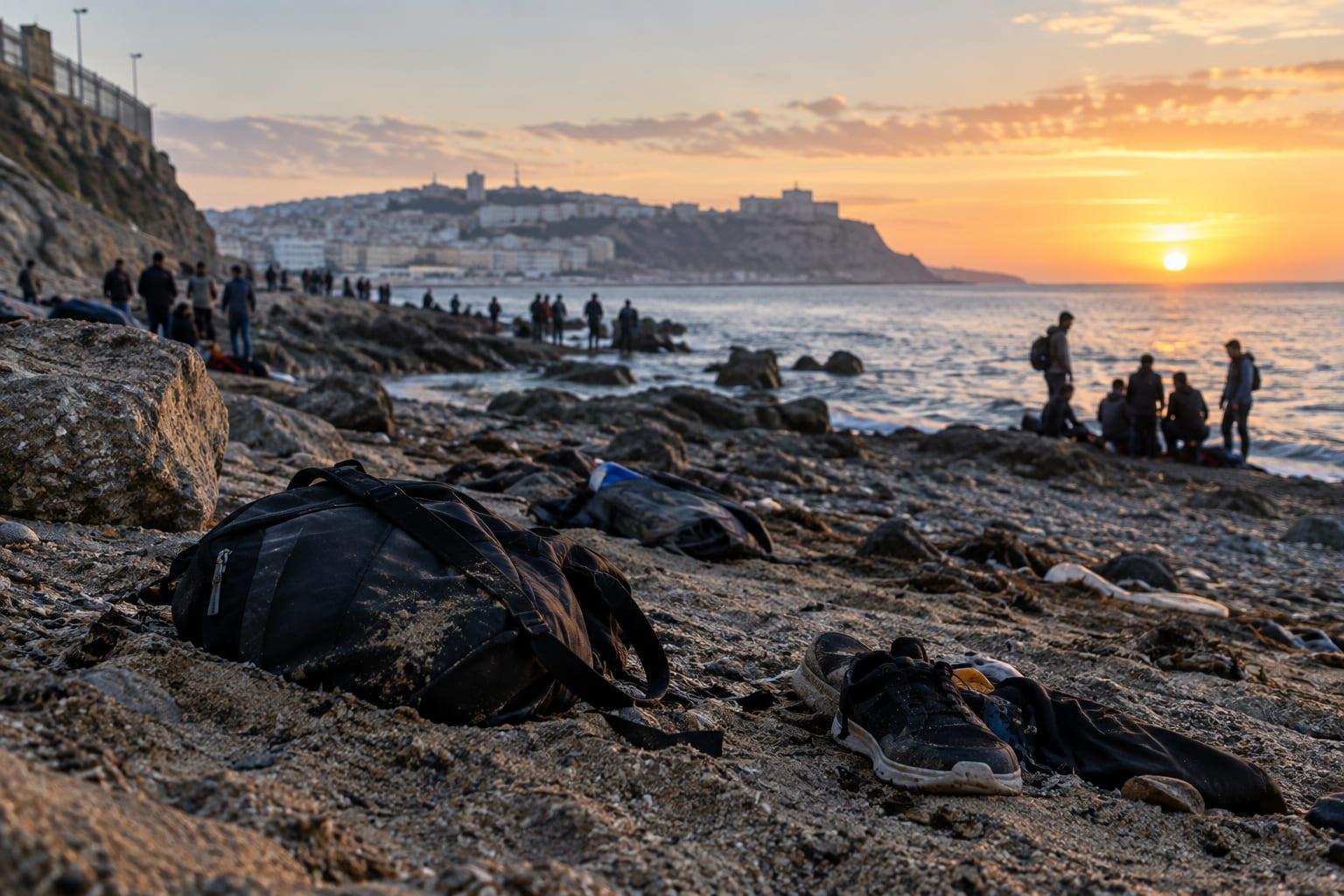
King Felipe VI of Spain has condemned the situation in the Spanish enclave of Ceuta as "unacceptable," as new footage circulating online appears to show large groups of migrants from the Maghreb still present on the territory's beaches and streets, nearly two months after Spanish officials declared the migration crisis resolved.
The footage, shared by the account @MarioNawfal, shows what the account describes as large groups of migrants on the beaches and streets of Ceuta, sixty-two days after the initial surge. The scenes, according to the account, clash with claims by Spanish officials that the situation was under control. The account's post reads in part, "Spain says the Ceuta crisis was resolved. So what are we looking at?"
The account @MarioNawfal is among those carrying the claim, along with other accounts and outlets that have amplified the story. The footage itself has not been independently verified by Next News Network, and the description provided by the account cannot be confirmed. The underlying claim that large groups of migrants remain in Ceuta is disputed, and Spanish authorities have not confirmed the specific scenes shown.
The reaction to the situation has spread beyond social media. King Felipe VI's condemnation marks a rare intervention by the Spanish monarch, who described the mass illegal migrant invasion as "unacceptable." The King's remarks, reported by multiple outlets, come as the Spanish Senate rejected a bilateral Friendship Treaty with France, adding a political dimension to the crisis.
Italy has extended airport and port checks on travelers from Spain, citing the migration surge. Madrid has responded with the same measure against arrivals from Italy until October eighth. The tit-for-tat measures reflect growing unease among European Union member states about the handling of the Ceuta situation.
French President Emmanuel Macron has backed Spain over the crisis, urging firm EU action. In a joint appearance with Spanish Prime Minister Pedro Sánchez, Macron called for greater EU unity on migration, economic and geopolitical issues. The show of support comes despite the Spanish Senate's rejection of the bilateral treaty, highlighting the complex diplomatic landscape.
The Spectator, in a piece titled "Ceuta is a tinderbox," noted that it has been nearly nine weeks since tens of thousands of migrants poured across the Moroccan frontier into Ceuta. Most quickly returned to Morocco, but estimates of how many remain in the enclave, which has a population of just eighty-three thousand, have varied alarmingly. The uncertainty has fueled speculation and concern.
The account @MarioNawfal's post is one of several social media reactions that have amplified the story. The post includes video footage that the account claims shows the current situation. The footage, according to the account, depicts migrants on the beaches and in the streets, contradicting official statements. The account's caption questions the disparity between official claims and the visual evidence.
Other accounts have also shared similar footage and commentary, contributing to a growing narrative that the crisis is far from resolved. The spread of these posts has been marked by a lack of engagement figures being cited, but the accounts carrying the material include a mix of independent journalists and citizen reporters. The story has also been picked up by conservative outlets in the United States and Europe.
The Spanish government has not issued a new statement in response to the footage. Officials have previously maintained that the situation was under control and that most migrants had returned to Morocco. The King's comments suggest a recognition at the highest level that the situation remains serious.
The geopolitical context is significant. Ceuta is a Spanish exclave on the North African coast, bordering Morocco. It has been a flashpoint for migration for years. The mass influx earlier this year was widely seen as a pressure tactic by Morocco, though Rabat has denied this. The Spanish government's handling of the crisis has been criticized by opposition parties and now by the King.
The Italian decision to extend checks on travelers from Spain is a direct response to the migration surge. Italy has faced its own migration challenges and is wary of secondary movements within the Schengen area. The reciprocal Spanish measures against Italy suggest a breakdown in trust among EU partners on border control.
Macron's support for Spain is notable given the French President's own domestic pressures on migration. He has called for firm EU action, but the EU has struggled to agree on a unified migration policy. The rejection of the Friendship Treaty by the Spanish Senate adds a layer of complexity, as it signals political resistance to closer ties with France.
The Spectator's characterization of Ceuta as a "tinderbox" underscores the potential for further escalation. With a population of only eighty-three thousand, the presence of even a few thousand migrants represents a significant demographic and social challenge. Estimates of the number remaining vary widely, from a few hundred to several thousand, according to the publication.
The footage shared by @MarioNawfal and others has not been geolocated or timestamped by Next News Network. The account claims it is from the past few days, but that cannot be confirmed. The Spanish government has not verified the footage, and independent verification is lacking.
Next News Network could not independently verify the claims made in the social media posts or the footage they contain.
The story has gained traction on social media platforms, with users sharing the footage and commenting on the discrepancy between official statements and what they see as evidence of an ongoing crisis. The accounts carrying the material include @MarioNawfal, as well as other users who have reposted the content. The lack of engagement figures in this report is deliberate, as the focus is on the substance of the claims and the reactions they have provoked.
The King's intervention is significant because the Spanish monarchy typically avoids direct political commentary. His use of the word "unacceptable" signals deep concern. The Spanish Senate's rejection of the Friendship Treaty, meanwhile, suggests that the political class is divided on how to handle both migration and relations with France.
The Italian measures and Spanish countermeasures are set to last until October eighth, but they could be extended. The EU has not yet commented on the specific situation in Ceuta, though Macron's call for unity suggests that discussions are ongoing. The crisis has the potential to reshape EU migration policy and bilateral relations.
As the situation develops, the gap between official claims and on-the-ground footage continues to fuel skepticism. The Spanish government's credibility is on the line, and the King's remarks may force a reassessment. For now, the footage and the reactions it has generated remain unverified, but they have succeeded in keeping the spotlight on Ceuta.
Our Take
Once again, the Spanish government's claims of resolution are contradicted by the evidence on the ground. Sixty-two days after the crisis was declared over, footage shows migrants still present in Ceuta, and the King himself has called the situation "unacceptable." This is what happens when open-border policies meet reality: chaos, denial, and a loss of sovereignty. Italy's decision to reinstate border checks on Spain is a sensible response to a failed migration policy, and Macron's backing of Sánchez is more about EU politics than solving the problem. The Spanish Senate's rejection of the Friendship Treaty shows that even Spain's own politicians recognize the danger. Ceuta is a warning to every Western nation: secure your borders, or someone else will do it for you.
