
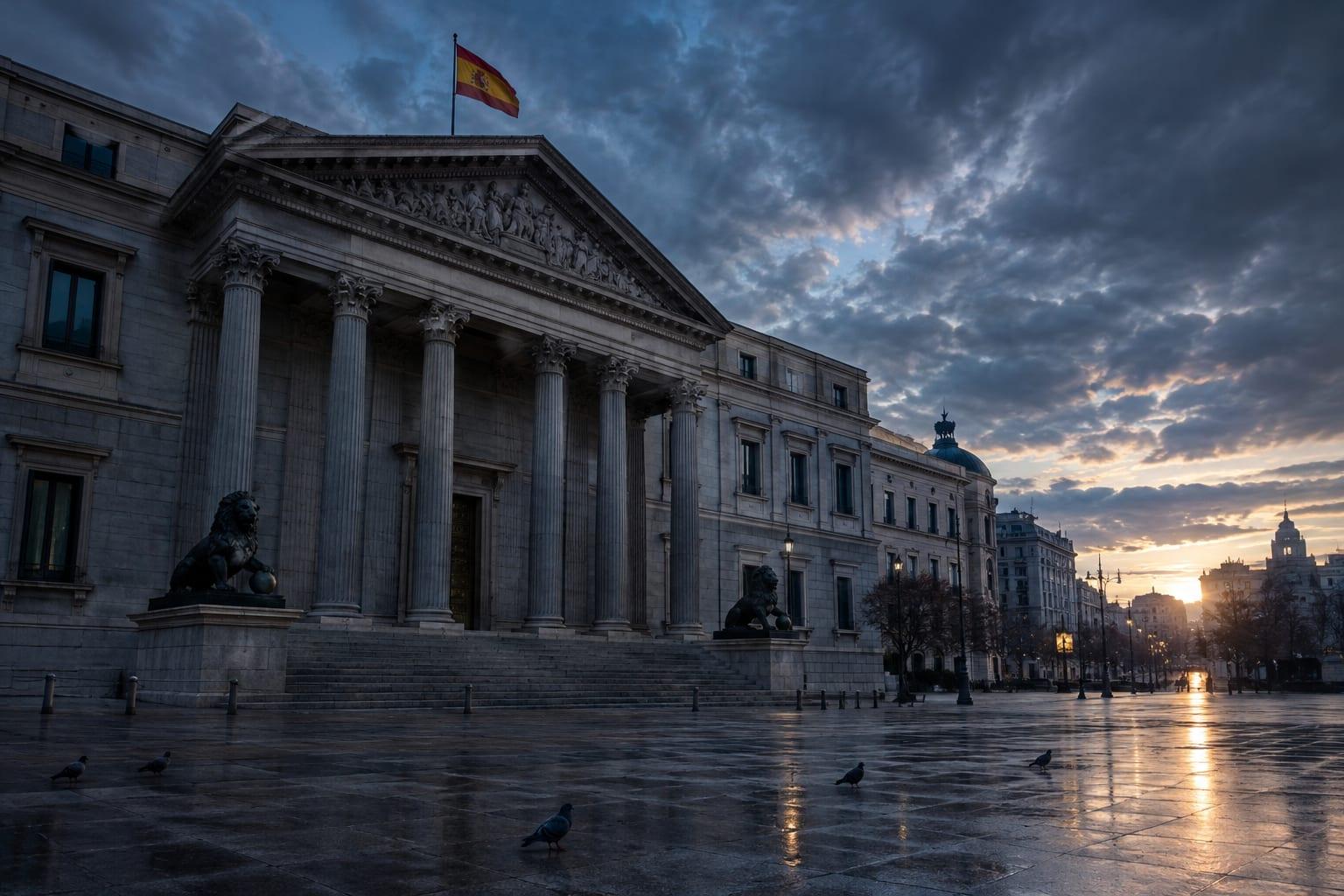
Spanish Prime Minister Pedro Sánchez announced Sunday that he is dissolving parliament and calling a snap general election for Sunday, November 29, pulling the vote forward from its previously scheduled date in 2027.
The announcement, carried first by the wire service Reuters and quickly amplified across social media, followed the Spanish parliament's rejection of the government's attempt to tackle the country's housing crisis amid protests over unaffordable rents and evictions. Reuters reported the election call as a direct consequence of that parliamentary defeat, which came on Friday, October second.
In remarks carried in video posted by the account @clashreport, Sánchez told Spaniards: "I also know that in part of that social majority today there is dissatisfaction. I know that they are outraged to see how their interests, the interests of the people on foot, are trampled on in Parliament for the benefit of a few."
He continued: "I also know that we ourselves have made mistakes and have not managed to do everything that we had proposed. It is also true that there are still many injustices to correct, many social goals to conquer and many problems to solve, especially in the areas of inequality, public services and access to housing."
Sánchez framed the coming contest as a choice about the country's direction, saying in the same video that Spaniards "have to decide what role you want to play in it, and also what role you want Spain to play in it." He asked voters whether they want to "join that ultraderechist wave that involves where it governs, or if you want Spain to continue being a valuable art of openness and social justice and environmental responsibility." He added that the alternative, as he described it, was handing "the reins of the country to an ultraderechist coalition that has not proposed anything, and whose only objective is to derogate and cut the rights and freedoms that we have been building during these last eight years."
The account @visegrad24 carried a transcription of the same remarks in which Sánchez said he had decided "after informing the Head of State" to convene an extraordinary Council of Ministers "to dissolve the General Courts and to convene General Elections that will be held on Sunday, November 29, according to the deadlines established by the law." In that version, Sánchez said he needs "a much wider progressive majority with which to double the elites, to conquer new social advances and to continue transforming Spain."
The announcement was first flagged on social media by @clashreport at 7:14 a.m. Eastern, with a one-line bulletin: "BREAKING: Spanish PM Pedro Sánchez announces a snap election for November 29." Five minutes later, @MarioNawfal posted that reports of an early vote had already been "rattling the euro this morning, so markets weren't exactly caught off guard." Reuters confirmed the call at 7:19 a.m.
By mid-morning, the framing had split. @visegrad24 opened its first post by describing Sánchez's government as having "collapsed" and said the trigger was "a major defeat on October 2, when right-wing" — the post was cut off at that point — before following up at 8:15 a.m. with a second post asserting that the election comes "under pressure from upcoming corruption trials against his wife, brother and closest associates as well as the public's anger with the migrant invasion of Ceuta." Those are claims carried by the account, not findings established in the coverage reviewed for this report. The same post by @visegrad24 said Sánchez announced he is dissolving parliament under that pressure.
Other outlets described the trigger differently. The Guardian reported the election was called after rightwing parties voted down emergency legislation aimed at tackling the housing crisis. The BBC said Sánchez's announcement came after his series of measures to tackle the housing crisis was defeated in parliament on Friday. Al Jazeera likewise reported that Sánchez called the early vote after Parliament rejected housing relief measures proposed by his minority government. Euronews noted that Sánchez had spent the weekend in consultations and that a migration crisis in Ceuta and corruption cases involving figures close to his Socialist Party had piled pressure on his government — language that treats those matters as pressure on the government rather than as adjudicated facts.
The reaction spread across accounts with sharply different audiences. @visegrad24, which has a large following among European conservatives, and @MarioNawfal, which aggregates breaking international news, both drove the story to English-speaking readers within minutes of the Spanish announcement. @clashreport carried both the one-line bulletin and the on-camera remarks, giving readers the prime minister's own words rather than a summary. Reuters supplied the wire-service backbone that most of the later posts leaned on.
What the next seven weeks look like is not yet known. Spanish law sets the campaign calendar from the date of dissolution, and no candidate list, coalition arrangement or polling has been finalized in the material reviewed here. It is also not yet known how the housing protests that preceded Friday's parliamentary defeat will factor into the campaign, or whether the parties that voted the government's housing package down will present a competing plan.
Next News Network could not independently verify the claims circulating on social media about the reasons for the election call, including the corruption cases and the situation in Ceuta described by @visegrad24.
What is documented is narrower and clearer: Sánchez announced the dissolution and the November 29 date, parliament had rejected his housing measures, and the vote will now come roughly a year earlier than originally planned.
Our Take
The Spanish left has spent eight years telling voters that the only thing standing between them and the far right is Pedro Sánchez personally. On Sunday he tested that proposition and asked for a bigger mandate — after his own housing bill died in the chamber he controls. Note the sequence the wire services reported: the legislation failed first, the dissolution came second. That is not a leader seizing a favorable moment. That is a leader reacting to a loss he could not absorb.
Note also the language he chose. Sánchez told Spaniards they must decide whether to join an "ultraderechist wave" or keep Spain as what he called a bastion of openness and social justice. That is the same playbook he has run since 2018, and it is the reason the housing protests mattered. The people sleeping in cars outside Madrid and Barcelona were not voting on a theory of Spanish democracy. They wanted rent they could pay. His government could not deliver that with its own majority, and now the question goes back to the electorate.
The secondary claims — corruption cases involving his wife, his brother and his closest associates, and the migration surge in Ceuta — are being pushed hard by right-of-center accounts and have not been confirmed here. Voters will hear them anyway. What is confirmed is that Sánchez spent the weekend in consultations, chose a Sunday in late November, and asked for more seats rather than fewer. November 29 will tell us whether the social majority he keeps invoking still exists, or whether eight years of Sánchez was itself the thing Spaniards were waiting to vote on.
