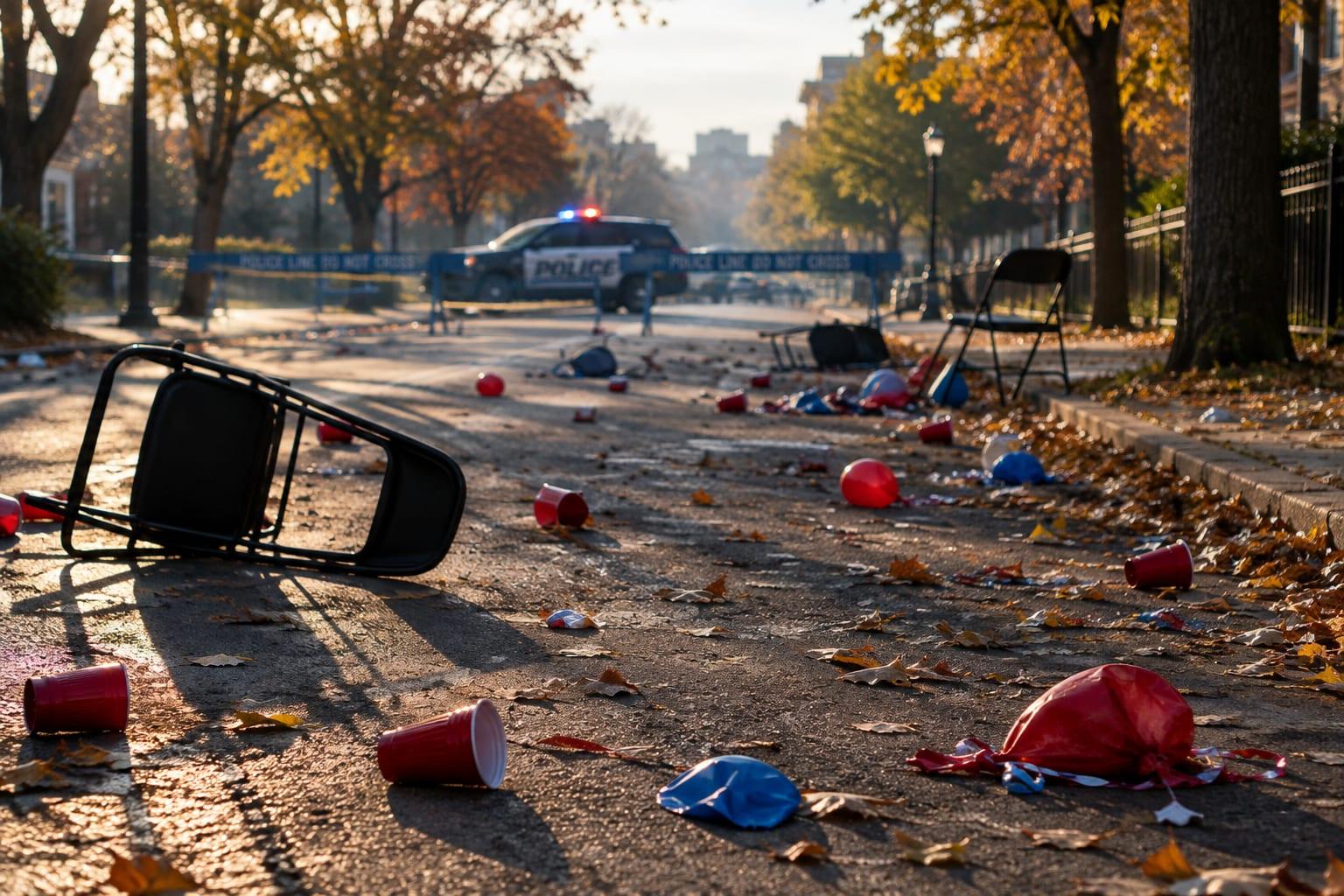
Two people were shot dead and nearly three dozen were injured at a neighborhood block party early Sunday morning in southern Georgia, according to a report from the Washington Times and other coverage attributed to the Georgia Bureau of Investigation, which said deputies from the Dooly County Sheriff's Office were on patrol around the time of the incident in Vienna, a rural city in the south-central part of the state.
The Washington Times account, posted at 1:53 a.m. Eastern on October fifth, stated simply that two were killed and dozens injured at the gathering. Within hours, the story lines were picked up and repeated by regional outlets including WRAL.com, which cited law enforcement officials and placed the toll at two dead and nearly three dozen wounded. The AP later described the event as a chaotic weekend homecoming party that erupted in gunfire, with investigators still working to determine what happened. A local account, 13wmaz.com, reported that the GBI said the majority of the thirty-five injured had been shot, and that the victims had been identified. One other post from a separate account described the incident as a mass shooting in Vienna and attributed the figures to the GBI.
The National coverage moved quickly through the day. Early Monday morning posts from the Washington Times account established the essential facts as reported: two dead, dozens hurt, a block party, a rural Georgia town. By Sunday afternoon other outlets were adding context, including that the gathering was tied to a homecoming weekend and that the Dooly County Sheriff's Office had deputies on patrol nearby when the gunfire began. By Sunday night the AP was reporting that investigators were still working to determine what happened, a phrase that signaled the sequence of the shooting was not yet clear to authorities.
Reactions in the following hours came chiefly from the outlets carrying the story and the accounts that echoed them. WRAL.com repeated the law enforcement framing: two shot dead, nearly three dozen injured, a block party, early Sunday morning. The 13wmaz.com account added the identification of the victims and the GBI's statement that a majority of the injured had been shot, a detail that distinguished the Atlanta-area affiliate's version from the earlier wire copy. The account that labeled the incident a mass shooting in Vienna repeated the GBI's two dead and thirty-five injured, and placed the timing at the early morning hours of Sunday, October fourth. Each of these accounts attributed its figures to law enforcement or the GBI, and none appeared to have independent reporting beyond those agencies.
What the accounts did not agree on, or did not address, was the identity of any suspect, the sequence of events that led to the gunfire, or the condition of the injured. The AP account said investigators were still working to determine what happened, which is the clearest statement available that the underlying event is not fully established. The 13wmaz.com report that a majority of the thirty-five injured were shot implies that some of the injured may have been hurt in the resulting chaos rather than by gunfire, but that detail was attributed to the GBI and not independently confirmed by other outlets.
By Monday morning the story had traveled from the initial wire alert through regional television and digital outlets to the broader national conversation, with each account adding a layer: the homecoming context, the patrol presence, the victim identifications, the breakdown of injuries. None of the accounts named a motive, a suspect, or a cause. The coverage described a rural community in Dooly County, a town called Vienna, and a weekend gathering that turned deadly in the early hours of Sunday.
Next News Network could not independently verify the underlying claim that two people were killed and dozens injured at the block party. The accounts described here are attributed to the Washington Times, WRAL.com, the AP, 13wmaz.com and the GBI, and the figures and details should be understood as what those outlets and agencies have reported and what has been claimed on social media, not as independently confirmed fact by this network.
The story is still developing. Authorities have not released a full account of what happened, and the GBI has not said publicly what it believes occurred in the moments before the shooting. The identities of the two dead have been reported by at least one local outlet, but the circumstances of their deaths have not been independently established. The condition of the injured, the number who remain hospitalized, and whether any suspects are in custody are all questions the coverage has not yet answered.
What is clear from the coverage is the sequence of how the story reached the public: an initial wire alert from the Washington Times account in the early hours of October fifth, followed by regional pickup at WRAL.com, then an AP account adding the homecoming context and the note that investigators were still working to determine what happened, then a local affiliate adding the victim identifications and the GBI's breakdown of the injuries, and finally a separate account repeating the mass shooting framing with the GBI's figures.
Each of those accounts carried the same core numbers, but each framed the event through its own sourcing: law enforcement officials, the Georgia Bureau of Investigation, the coroner. The reader following the story across the day would have seen the same two dead and thirty-five injured repeated, but with shifting context and detail, and without any account claiming to have independently confirmed what happened inside the gathering.
Our Take
The coverage of the Vienna shooting shows how a single wire alert can become a national story within hours, with each outlet adding a layer of context without adding a layer of verification. The figures are attributed to the GBI, and the GBI's account is the source for nearly every outlet carrying the story. That is not a criticism of the GBI, which is a professional law enforcement agency, but it is a reminder that when a story moves this fast, the public is often reading the same sourcing repeated in different fonts. The AP's note that investigators were still working to determine what happened is the most important sentence in the entire day's coverage, because it tells the reader that the sequence of events is not yet established. The rest of the coverage, including the victim identifications and the breakdown of the injuries, is detail that will matter later, when the full account is released. For now, the responsible thing is to report what the agencies have said, attribute it clearly, and resist the temptation to fill in the blanks with speculation about motive, suspect, or cause. The people of Vienna, Georgia, deserve that much, and so do the readers who are trying to understand what happened in their state.