
Conservative commentators are arguing that the botched execution of Christa Pike in Tennessee has denied justice to the family of the young woman she was convicted of killing, as Pike's attorneys renew their push for the state to commute her death sentence.
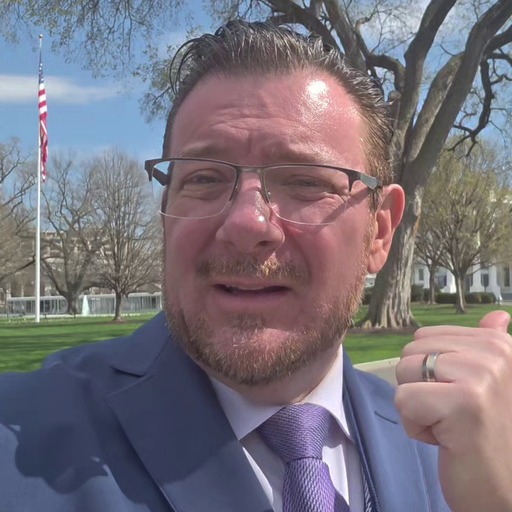
Mollie Hemingway of The Federalist said the real cost of the case is that justice has still not been served. "We have a horrific, brutal, torture and murder of a young woman, and justice has still not been served three decades later," she said in comments posted Monday by the outlet's account, @FDRLST.
In a video accompanying that post, Hemingway expanded on her argument, describing the case in graphic terms. "Like the real cost to society is of justice," she said. "We have a horrific brutal torture and murder of a young woman and justice has still not been served three decades later. And a lot of this is because there's this cottage industry to prevent justice from occurring. There are a lot of high powered attorneys you can get to make any kind of swift execution of justice, no pun intended, possible."
Hemingway went on to say that legal maneuvering had kept the case alive for years. "And so a lot of the game playing that's been done by the various attorneys on this case have prevented justice from this woman's family and the people of Tennessee and the people of the country," she said. "And it's important that we understand that when you take a life that is a very serious thing and the brutal nature in which this was done. I mean, she was a Satanist. She carved a pentagram into the skin of the woman. I mean, it's just absolutely diabolical stuff here."
The comments came as other coverage of the same subject spread across the news cycle. CBS News reported that Pike's attorneys have renewed their push for the state to commute her sentence, with the message "Take death off the table." NPR published a first-person account from Catherine Sweeney, who was in the witness room when Tennessee attempted to execute Pike on September 30, noting that an attempted execution in May had also failed.
Fox News reported that Gary Wayne Sutton's December 3 execution is on hold after the botched lethal injection prompted Governor Bill Lee to halt deaths in the state for the year. Another report said Pike, sentenced to death for murdering her classmate Colleen Slemmer in 1995, had not regained consciousness since the failed attempt, and that Department of Correction Commissioner Frank Strada is preparing to resign while an independent review of the procedure proceeds. A separate piece carried the headline "Botched Execution Denies Justice for Victim," framing the outcome as a denial of justice to the victim's family amid the lethal injection controversy.
The reaction from @FDRLST sits alongside that coverage as the latest entry in a debate that has now touched the governor's office, the state corrections department and Pike's own legal team. Hemingway's argument is that the prolonged litigation itself, rather than any single failed procedure, is the central injustice. She characterized the attorneys involved as participants in a system that delays outcomes indefinitely.
The underlying facts of the case, as described in the coverage, concern the 1995 killing of Colleen Slemmer. Pike was sentenced to death for that murder. Three decades later, the state of Tennessee has attempted to carry out that sentence twice, and both attempts failed. The account Hemingway gave of the crime's details, including her description of satanic elements and a pentagram carved into the victim's skin, is consistent with how the case has been characterized in prior coverage, though Next News Network could not independently verify the specific claims made in the video.
What the posts do not establish is a resolution. Pike's attorneys are asking for a commutation, which would remove the death penalty from her case entirely. The state has paused executions while an independent review is completed, and the corrections commissioner is departing. Sutton's scheduled execution, which had been set for December 3, is now on hold. Whether Pike regains consciousness, whether the review changes the state's procedures, and whether the governor's halt extends beyond the current year are all open questions.
The spread of the reaction has been wide. The @FDRLST account carried Hemingway's comments. CBS News carried the commutation push. NPR carried the witness account. Fox News carried the execution halt and the impact on Sutton's case. Separate reports carried the news of Pike's condition and the commissioner's resignation. Each outlet has approached the story from a different angle, but the through-line in the conservative commentary is that the victim's family has waited three decades without a resolution.
Hemingway's closing point in the video was about the gravity of the underlying crime. "It's important that we understand that when you take a life that is a very serious thing," she said, before describing the brutality of the killing as she characterized it. That framing -- that the seriousness of the crime is what makes the delay intolerable -- is the core of the conservative argument now circulating alongside the straight news coverage.
It is not yet known when the independent review will conclude, when or whether Pike's commutation request will be acted upon, or when Tennessee will resume executions. It is also not known whether Pike will regain consciousness. Those unanswered questions are the context in which the reaction is unfolding.
Our Take
Three decades is a long time to wait for justice, and Mollie Hemingway is right to say so. The family of Colleen Slemmer has now watched two attempts to carry out the sentence against Christa Pike end in failure, with a third execution in the state postponed and a corrections commissioner on the way out. Whatever one thinks of the death penalty, the case for finality in the legal system does not depend on that view. When a sentence handed down by a jury cannot be carried out, and when the litigation around it stretches across generations, the people who suffer most are the ones who were promised that the law would speak clearly.
Hemingway's broader point deserves attention too: the machinery of delay has become its own industry. Attorneys who file motion after motion are doing their jobs, but the cumulative effect is that a case can outlast the public's memory of the crime and the family's ability to see it resolved. That is not a partisan observation, and it should not be treated as one. It is a statement about how the system functions when nobody is held to a timeline.
The state of Tennessee now has a review to complete, a commissioner to replace and a governor's halt to explain. The commutation request from Pike's attorneys asks the state to take death off the table entirely. However those questions are answered, the standard should be the one Hemingway set out: the victim's family, and the public, deserve an ending. Right now they have only another delay.